 zishengelectric




Project Partners
Phone/WhatsApp: 8619131285373
Email: info@zishengtransformer.com
Factory Headquarters: No. 118, Jingyi Street, Economic Development Zone.
Search productSearch post
Project Partners
Phone/WhatsApp: 8619131285373
Email: info@zishengtransformer.com
Factory Headquarters: No. 118, Jingyi Street, Economic Development Zone.
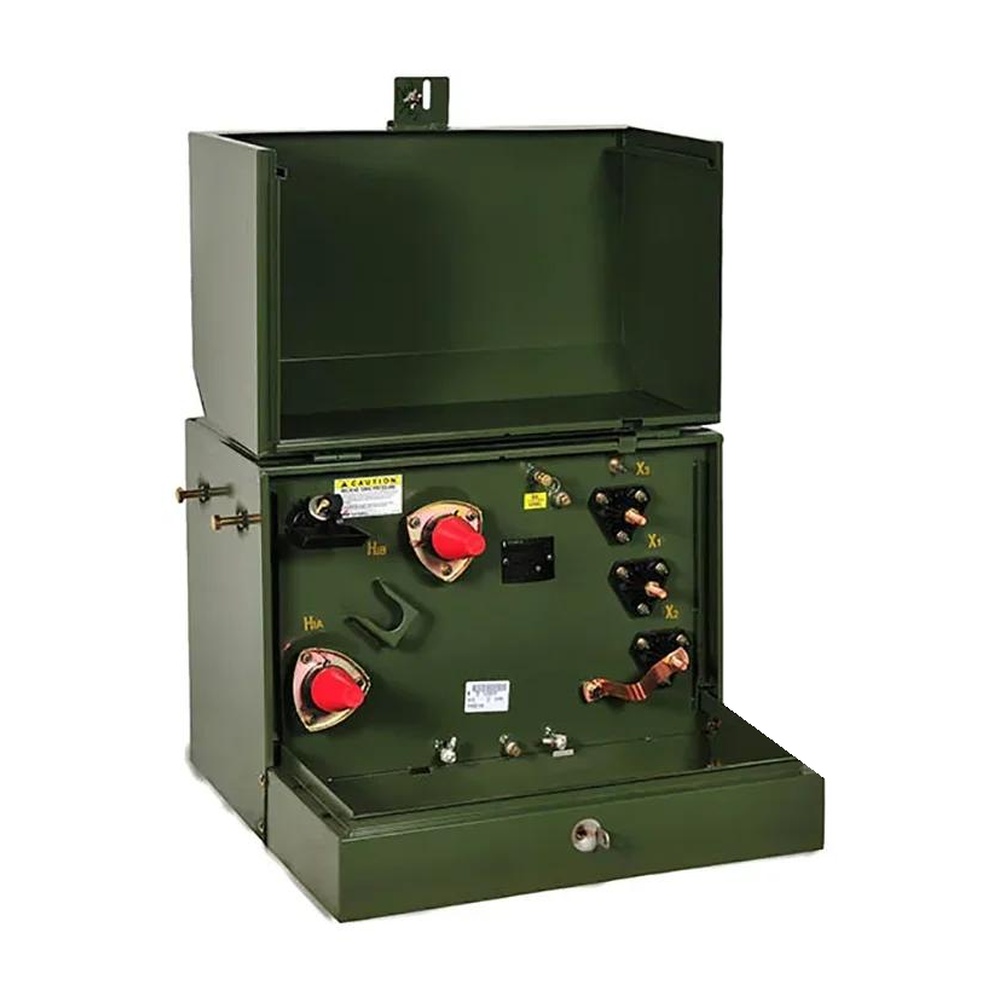
A 630kVA single-phase pad-mounted transformer provides a ground-level connection between a medium-voltage underground feeder and a compatible low-voltage service. Capacity is apparent power; usable real power depends on load power factor and the thermal operating conditions. Evaluate diversified demand, motor starting and future expansion before approving the rating.
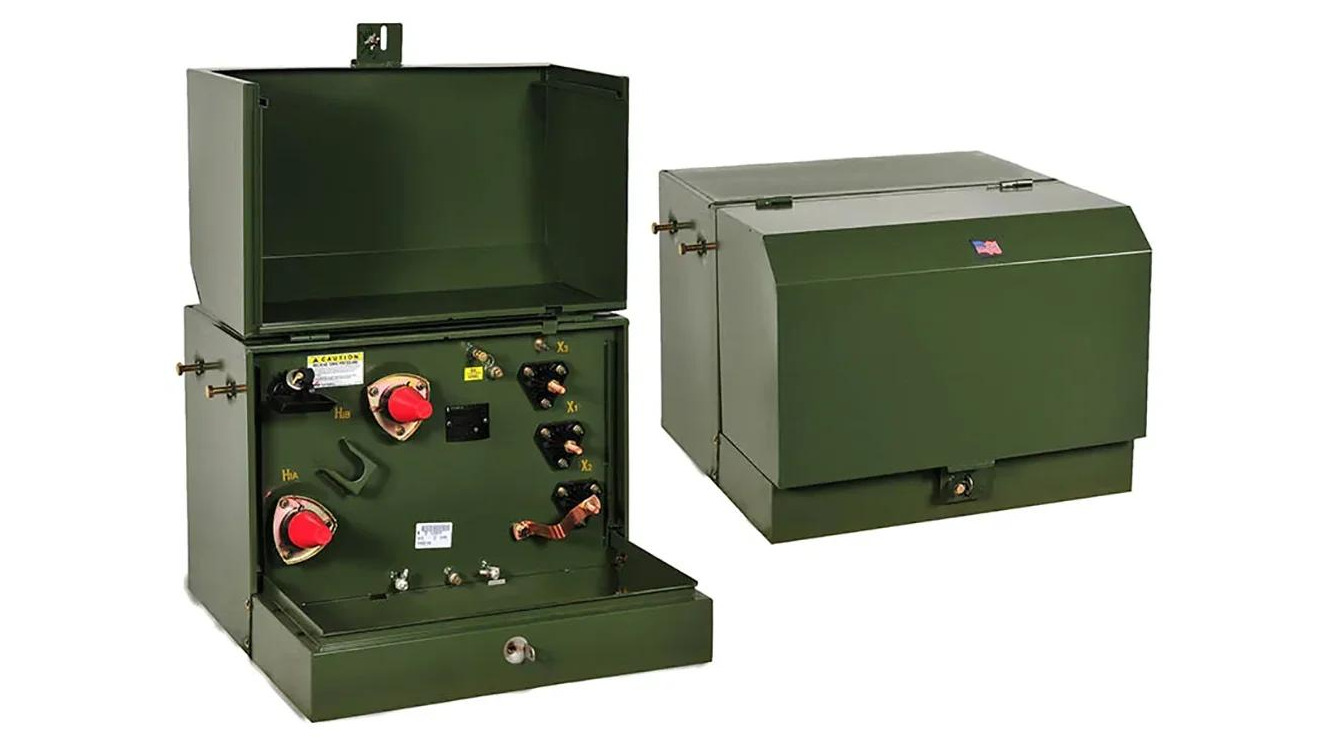
Coordinate the cabinet outline, foundation footprint, cable entry openings, door clearance and lifting access before civil work. Radial feed serves a terminal connection; loop feed provides incoming and outgoing primary cable interfaces. Switching and isolation capability depend on the specified switch and connectors. Confirm dead-front or live-front construction explicitly rather than treating them as interchangeable.
The core and winding assembly must suit the selected voltage, frequency and guaranteed loss requirements. Copper and aluminum windings are alternatives to be specified at order. Compare measured losses, impedance and temperature-rise requirements alongside conductor material.
ONAN means Oil Natural Air Natural: oil circulates naturally within the transformer and heat dissipates to surrounding air without fans. Alternative fluids require confirmation of material compatibility, thermal limits and the correct cooling designation. BIL, or Basic Impulse Insulation Level, describes lightning-impulse withstand; select the primary and secondary insulation levels separately and coordinate them with surge protection.
Provide installation altitude, ambient temperature range, solar exposure, flooding risk, humidity and corrosion conditions. Higher altitude, severe heat or coastal exposure requires engineering review of insulation clearances, thermal rating and enclosure finish. Keep ventilation and operating access clear.
State the applicable IEEE/ANSI, CSA or IEC requirements, local utility specification and mandatory efficiency rule in the enquiry. Standards compliance, third-party listing and certification require documents covering the offered design. Specify a single primary connection and secondary service, frequency, tap range, feed arrangement, fluid, enclosure and protection scope in the approved schedule.
The residential service design uses a 630kVA single-phase pad-mounted transformer to supply compatible household loads through underground cables. Capacity selection requires a diversified load schedule, motor-starting assessment and review of future heating and vehicle-charging demand.
| Design Item | Coordination Requirement |
|---|---|
| Capacity | 630kVA, subject to load and thermal assessment |
| Primary supply | Confirm actual winding voltage and utility grounding arrangement |
| Secondary service | Confirm required voltage and wire arrangement before approval |
| Frequency | Select 50Hz or 60Hz to match the supply |
| Feed arrangement | Radial or loop feed according to the utility network |
| Installation | Outdoor foundation coordinated with cable entries, drainage and access |
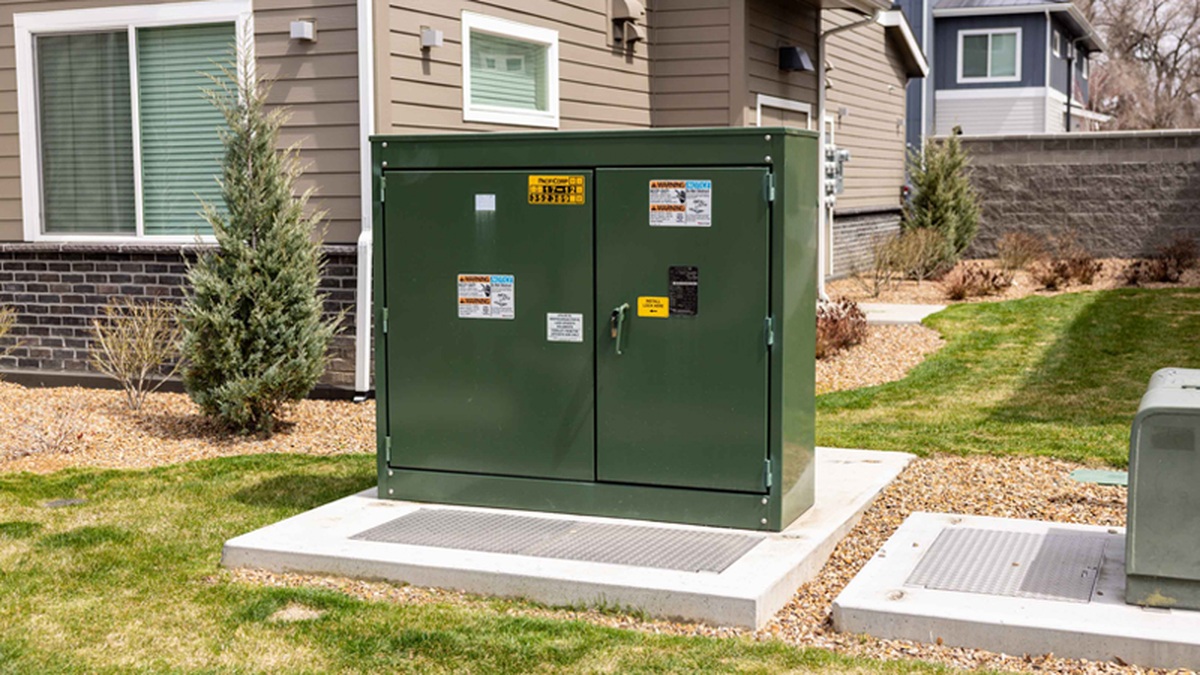
Agree primary connectors, fuse coordination, surge protection and grounding with the utility. Size secondary conductors for the selected voltage, load balance, installation method and voltage drop. Approve the foundation and terminal drawings before site construction.
The procurement specification defines routine test records, additional test requirements, witness points, packing restraints and delivery documents. Installation and energization follow the approved drawings, protection schedule and local electrical requirements.
| Parameter | Specification |
|---|---|
| Rated capacity | 630 kVA |
| Phase | Single phase |
| Installation | Pad mounted; underground cable distribution |
| Primary voltage | 11,950V primary winding or customized; specify line-to-line or line-to-neutral connection with the utility |
| Secondary voltage | 240/120V, 480/240V, 277V or agreed service; select one compatible configuration |
| Frequency | 50Hz or 60Hz, specified at order |
| Polarity / winding connection | Confirm terminal polarity and connection diagram; Ii0/Ii6 reference options |
| Winding material | Copper or aluminum, selected at order |
| Cooling | ONAN mineral-oil design; alternative fluid and cooling designation require review |
| Primary feed | Radial or loop feed, specified at order |
| Tap range | Optional off-circuit ±2 × 2.5%; confirm arrangement |
| Impedance | Nominal 2%; customized impedance from 1.1% to 5.75%, subject to design review |
| Insulation level and temperature rise | To be specified for selected voltage, fluid and applicable standard |
| Losses and efficiency | Guaranteed values and applicable regulatory basis to be agreed |
| Altitude and ambient conditions | Altitude up to 1,000m; higher-altitude designs available after site review. Specify the ambient temperature range. |
| Tank and finish | Mild steel or 304 stainless steel; ANSI 70 light gray, Munsell green or customized finish |
| Equipment dimensions (L × W × H) | To be confirmed on the approved outline drawing |
| Equipment net weight, including oil | To be confirmed in the approved mass schedule |
| Insulating oil weight | To be confirmed for the selected tank and insulating fluid |
| Shipping gross weight and packing dimensions | Specified separately after the packing arrangement is selected |
| Accessories | Project-selected bushings, fuses, switch, tap changer, grounding, pressure relief and indication |
At 240V, 630kVA corresponds to approximately 2,625A at rated output. This calculation does not establish conductor ampacity or the permissible imbalance of a split-phase service. Agree cable sizing, terminal capacity, load balance and protection with the responsible electrical designer and utility.
Restrain the transformer through approved structural points and protect bushings, terminals, operating handles and the enclosure finish. Secure loose accessories separately and identify them on the packing list. Select a pallet, timber frame or crate according to the handling route and order requirements, with moisture protection and treated timber where applicable.
Confirm equipment net weight and dimensions separately from shipping gross weight and packing dimensions. Use designated lifting points and handling equipment rated for the approved lifting weight. On arrival, check for impact damage, cabinet distortion, cracked fittings and leaks, and reconcile serial numbers and accessories with the delivery documents before installation.
Check cabinet construction, cable compartments, bushings, grounding points, nameplate and supplied accessories against approved drawings. Agree the inspection records and witnessed Factory Acceptance Testing (FAT) requirements before manufacture.
Temperature-rise, lightning-impulse, sound and other design or special tests follow the selected standard and contract. They are not automatically repeated on every unit. Request documents covering the actual offered design.
The inspection and test plan establishes the procedures, acceptance limits and required records for the ordered configuration.
| Inspection or Test | Purpose |
|---|---|
| Visual and dimensional inspection | Check enclosure, base, terminals, grounding points, fittings and nameplate against drawings. |
| Winding resistance | Check winding and connection consistency with temperature recorded. |
| Ratio and polarity | Verify voltage ratio, specified taps and single-phase terminal identification. |
| No-load loss and current | Evaluate the magnetic circuit at specified voltage and frequency. |
| Load loss and impedance | Verify guaranteed performance with applicable temperature correction. |
| Applicable dielectric tests | Assess insulation withstand at the selected test levels. |
| Tank tightness and accessory checks | Check seals and fittings and verify supplied operating interfaces as applicable. |
Temperature-rise, impulse, sound and other design or special tests are specified separately under the selected standard. Witnessed Factory Acceptance Testing (FAT) requires agreed witness points and notification periods. Unit-specific reports should identify the serial number and tested configuration.
Serve a compatible residential service or diversified group of dwellings. Confirm split-phase demand, service imbalance and future heating or vehicle-charging loads.

Supply lighting, office and compatible refrigeration loads where the utility provides a single-phase service. Include compressor starting and simultaneous demand; three-phase equipment needs a suitable three-phase supply.

Support compatible single-phase loads through underground cables. Check motor starting, feeder length and voltage drop, and compare alternative service arrangements for larger motors.
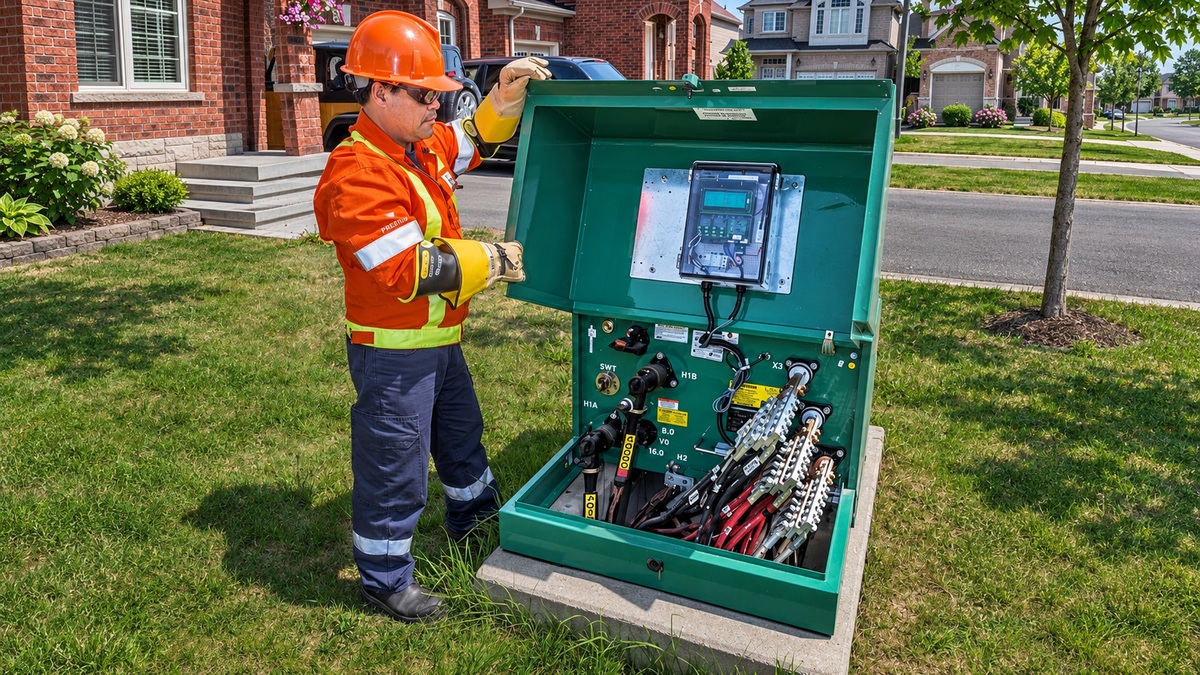
Replace or reinforce a single-phase underground supply point after confirming primary connectors, fault duty, fuse coordination, cabinet access and foundation compatibility.
Compatible single-phase loads whose diversified apparent-power demand and starting duty fit the rating. It cannot directly supply three-phase motors or other three-phase equipment.
630,000VA divided by 240V gives 2,625A; at 480V it gives 1,312.5A. These are full-rated single-phase currents, not conductor ampacity ratings. Check terminal capability, cable grouping, installation conditions and permitted service imbalance.
Provide the utility system voltage, actual primary winding voltage and grounding arrangement. Select the required secondary service, such as 240/120V or 480/240V, and specify 50Hz or 60Hz. Available voltage options are separate order configurations.
The single-phase model supplies a compatible single-phase service. A three-phase model supplies a three-phase system and requires different windings, terminals and protection coordination. A 480Y/277V three-phase service must not be specified as this single-phase unit.
Use the arrangement required by the utility feeder. Loop feed provides incoming and outgoing primary cable interfaces. Actual switching and isolation capability depends on the supplied switch and connectors.
Provide altitude, ambient temperature range, humidity, salt exposure and flooding risk. Review insulation clearances, thermal rating, cabinet material and coating for the installation conditions.
Agree the inspection plan, applicable routine tests, separately specified design or special tests and any witnessed FAT. Request unit-specific reports, approved outline and connection drawings, a nameplate schedule and handling instructions.
Send the load schedule, primary and secondary voltage arrangement, frequency, feed type, connector and protection requirements, site conditions, applicable standard and inspection scope. Confirm final equipment dimensions and shipping gross weight separately.
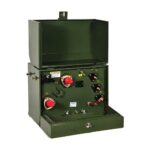 630kVA Single Phase Pad Mounted Transformer