 zishengelectric





news
News Center
Providing high-quality power to the world
Search productSearch post
news
Providing high-quality power to the world
Why Tropical-Ready Design Determines Project Reliability
A transformer failure in a Vietnamese coastal industrial park or a Thai solar farm is never just a component issue. Production halts. Revenue slides. The unplanned maintenance costs no project owner budgeted for suddenly appear.
Across Southeast Asia, the operating environment itself is often the biggest threat to reliable power distribution. We know this because we’ve been called in to fix what standard equipment couldn’t handle.
We’ve diagnosed insulation systems silently degraded by relentless humidity. We’ve replaced enclosures eaten through by airborne salt. We’ve traced moisture ingress paths that monsoon rains exploited in poorly sealed cable boxes. These field observations shape how we design every transformer that leaves our factory.
Transformers built for this region need more than correct voltage ratios and kVA ratings. They need engineering decisions made early—accounting for heat, moisture, corrosion, and continuous duty cycles. When those decisions are right, the equipment runs reliably for decades.
We are a transformer manufacturer focused on Southeast Asian markets. Our work supports EPC contractors, utilities, industrial operators, and renewable energy developers. Our product range covers oil immersed power transformers, dry type transformers, pad mounted transformers, pole mounted transformers, and complete distribution systems. Every unit is built to international standards including IEC 60076.
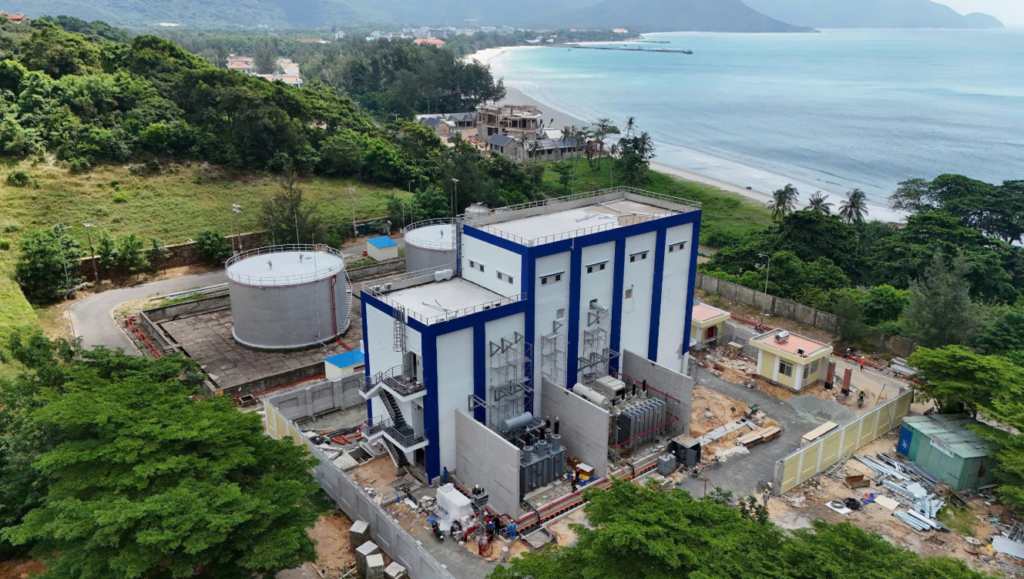
Most of Southeast Asia experiences tropical weather year-round. High ambient temperatures. Persistent high humidity. Intense seasonal rainfall. These conditions create a combination of thermal and electrical stress that standard transformer designs rarely account for adequately.
Insulation absorbs moisture over time, progressively lowering its dielectric strength. Ferrous metal components develop corrosion at rates far exceeding those seen in temperate installations. Cooling efficiency drops when ambient heat is already pushing operating limits. The result is a compounding effect: each environmental factor accelerates the damage caused by the others.
A transformer engineered for these conditions starts with different design assumptions.
We specify Class H or F insulation systems rated for sustained thermal endurance. Sealing profiles and gasket materials are selected for moisture diffusion resistance, not just initial fit. Anti-corrosion treatments follow C4 or C5-M coating specifications, applied to tank surfaces, lifting lugs, and connection points. Cooling fin and radiator geometry accounts for heat dissipation when ambient temperatures exceed 40°C.
These are not add-on features. They are fundamental design parameters, because the operating environment leaves no room for compromise.
A significant share of Southeast Asia’s industrial capacity sits near the sea. Vietnam’s coastal industrial zones. Indonesia’s port-based manufacturing complexes. The Philippines’ island power systems. Malaysia’s marine infrastructure corridors. These locations put medium voltage and low voltage equipment directly in the path of salt-laden air and marine humidity.
Salt accelerates galvanic corrosion in ways inland humidity never does. Transformer tanks, structural supports, bolted connections, and cable entry points can degrade faster than project planning timelines anticipate.
For these applications, we implement additional protection layers at the manufacturing stage: corrosion-resistant coating systems rated for marine atmospheres, weather-tight bushing terminations, marine-grade alloys on exposed fittings, and robust sealing designs that prevent salt mist ingress. The goal is straightforward: extend service life and eliminate the reactive maintenance that coastal environments typically force upon standard equipment.
Southeast Asia has become a globally integrated manufacturing hub. Electronics fabrication, automotive assembly, semiconductor production, food processing, textiles, and heavy industry all depend on uninterrupted power. Production uptime requires transformers that deliver stable voltage regulation, high efficiency, and continuous duty capability.
Two transformer types serve most industrial applications in the region.
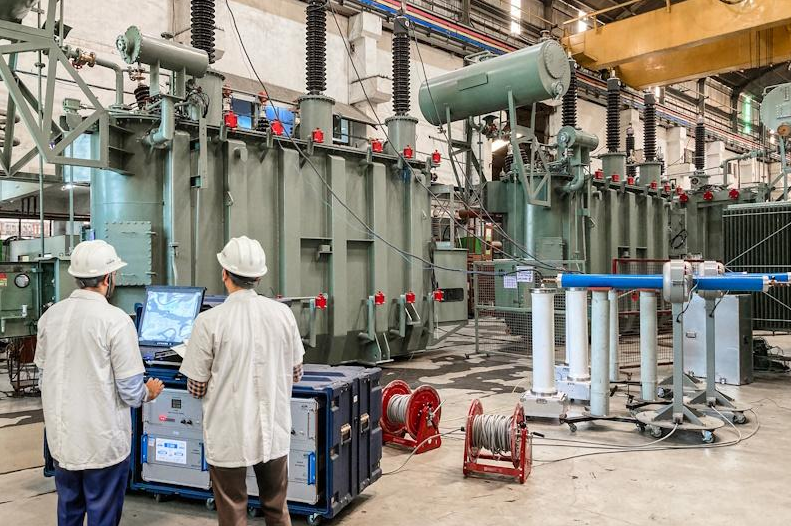
When projects call for high capacity, outdoor substation installation, and continuous heavy industrial loading, oil immersed transformers remain the most widely trusted solution. The dielectric oil provides both electrical insulation and convective cooling. These units offer robust overload handling, effective heat dissipation, and proven long-term reliability when properly maintained. They are the workhorse of industrial substations, utility distribution networks, and large-scale infrastructure.
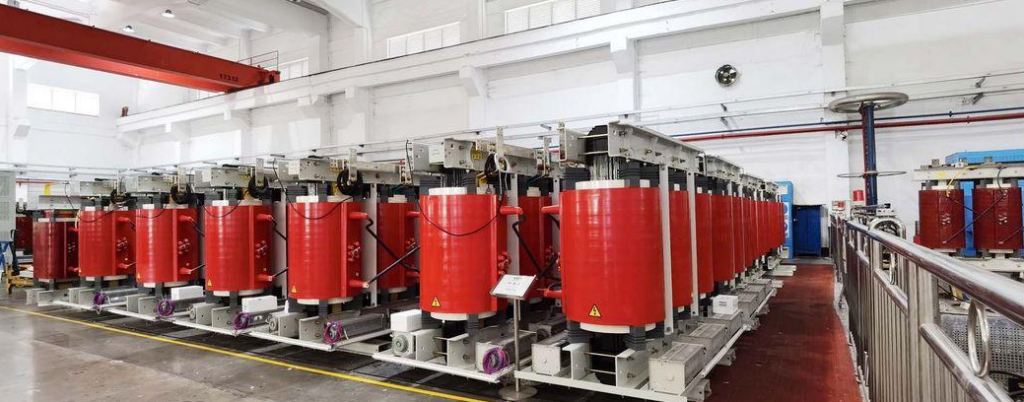
Where fire safety and indoor space constraints drive specification decisions, cast resin dry type transformers are the better fit. Commercial high-rise buildings, manufacturing cleanrooms, data centers, hospitals, and underground substations commonly use them. Compared with oil-filled alternatives, these units provide superior fire behavior ratings (F1/F0), reduced maintenance demands, and flexible indoor installation without oil containment requirements.
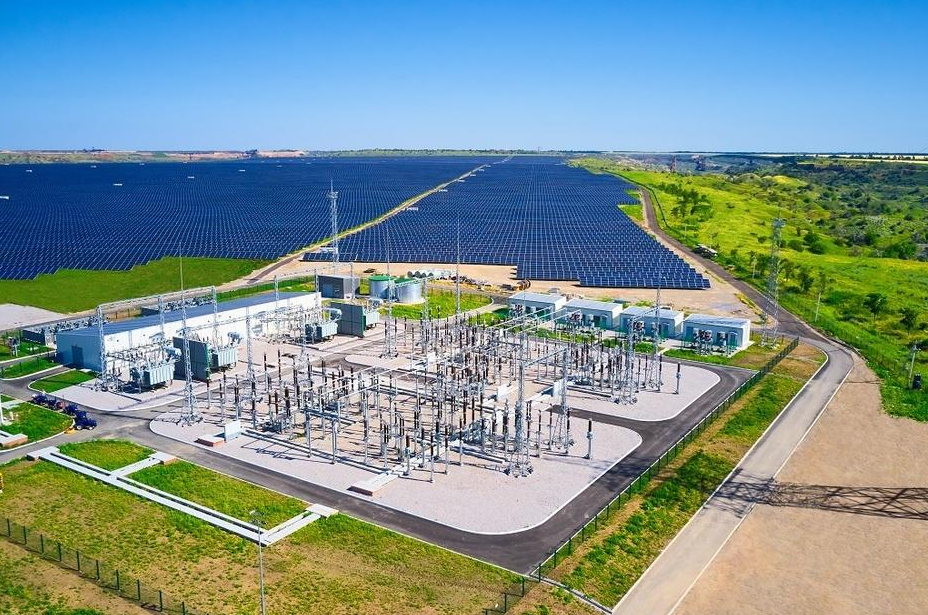
Renewable energy investment across ASEAN continues to accelerate. Utility-scale photovoltaic farms, onshore wind projects, and battery energy storage systems are being deployed from Ninh Thuan to Sulawesi. Transformers form the critical interface between generation assets and the grid.
Solar step-up transformers, collector transformers, and substation units directly influence energy output and project revenue. When a transformer underperforms or suffers a winding fault, the financial impact goes far beyond the repair invoice. Grid feed-in is curtailed. PPA revenue erodes. The Levelized Cost of Energy calculation shifts in the wrong direction.
For IPPs and EPC contractors, specifying transformers designed for harmonic loads and intermittent renewable duty cycles is a financial decision as much as a technical one. Reliability at this interface protects project returns over the entire asset lifecycle.
A recent utility-scale solar project in Southern Vietnam illustrates how site conditions drive transformer specifications.
The developer’s operating reality:
After reviewing the site parameters, we supplied an engineered package including high-efficiency oil immersed power transformers, factory-assembled medium voltage switchgear, and auxiliary distribution equipment.
Engineering priorities on this project:
The equipment has operated reliably since commissioning, delivering stable power conversion through multiple monsoon seasons. When we work on projects like this, the objective is never just meeting the specification sheet—it is making sure the equipment performs under actual site realities.
Procuring transformers for international EPC projects requires looking beyond nameplate ratings. Production capability and testing rigor shape field performance over the asset’s two-to-three-decade operating life.
Our manufacturing process covers every critical stage:
Before shipment, each transformer undergoes routine testing:
For Southeast Asian projects where site access and logistics can be complex, verified factory test documentation provides essential confidence before equipment reaches the installation site.
Our transformer solutions support a range of energy and industrial applications:
EPC contractors and project owners evaluating transformer suppliers for Vietnam, Thailand, Indonesia, or the Philippines can focus on these practical areas:
Environmental Fit
Confirm the offered thermal class, insulation type, and corrosion protection grade match the actual site microclimate—coastal, tropical highland, or industrial brownfield.
Electrical Performance
Verify guaranteed no-load losses and load losses against your project’s energy efficiency targets and lifecycle cost model.
Standards Compliance
Insist on IEC 60076 compliance. For utility-connected projects, confirm alignment with local specifications such as EVN, PLN, or MEA/PEA requirements.
Technical Support
A dependable supplier provides technical drawings, factory test reports, installation supervision capability, and accessible after-sales support for the region.
Which transformer type works best in Southeast Asia?
Both oil immersed and dry type transformers are widely used. Selection depends on project capacity, installation environment, fire safety requirements, and operating conditions. The right choice matches the specific site—there is no universal answer.
Can transformers handle tropical climates?
Yes. Transformers engineered for tropical conditions incorporate moisture-resistant insulation, corrosion-protected enclosures, and enhanced cooling systems designed for sustained high ambient temperatures.
Do you manufacture to IEC 60076 standards?
Yes. We supply fully IEC 60076 compliant transformers and accommodate additional utility-specific and project-specific technical requirements.
Can transformers be customized for renewable energy EPC projects?
Absolutely. We routinely customize capacity, voltage taps, impedance values, and enclosure protection ratings to meet the specific needs of solar and wind EPC contracts.
Manufacturing growth, renewable energy expansion, and infrastructure investment across Southeast Asia demand power equipment designed for the region’s environmental realities. Tropical heat, humidity, and coastal conditions are not edge cases—they are the everyday operating environment.
With proven manufacturing processes, rigorous quality control, IEC-compliant testing, and engineering support built around project requirements, we help customers across the region specify and install transformers that perform reliably for the long term.
Planning a project in Southeast Asia? [Contact our engineering team for a technical consultation and quote.] We will help you match the right transformer design to your site conditions.
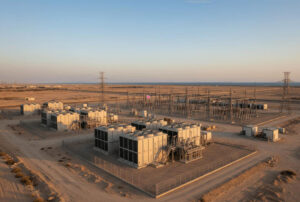
Power infrastructure across Saudi Arabia, the UAE, Qatar, and Oman operates under conditions that would quickly derate or destroy standard electrical equipment. In these environments, transformer failure is rarely a manufacturing defect—it is almo...
View details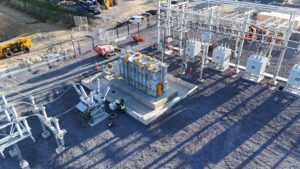
A stable electricity supply is essential for infrastructure development, industrial production, and commercial operations. As a core component of power distribution systems, transformers directly influence power reliability, energy efficiency, and...
View details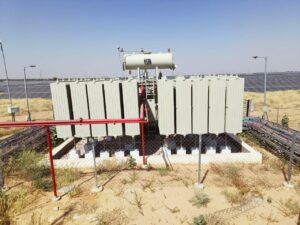
A distribution transformer isn't a commodity you grab off a shelf. Pick the wrong one, and you're looking at nuisance tripping, early failures, or an expensive piece of gear that never runs efficiently. At Zisheng Electric, we've been on the recei...
View details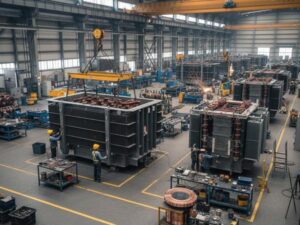
In EPC projects, transformer issues rarely appear during the quotation stage. They usually become visible later — during installation, inspection, or commissioning, when changes are costly and project schedules are already under pressure. A transf...
View details