 zishengelectric





news
News Center
Providing high-quality power to the world
Search productSearch post
news
Providing high-quality power to the world
Zisheng Electric treats transformer nameplate verification as a practical interface between the delivered machine and the engineering records used to connect, protect and maintain it. A transformer can arrive with a complete test dossier yet still present a mismatch between the physical rating plate, the approved data sheet and the owner’s asset register. That mismatch deserves a documented answer before it becomes an operating assumption.
The task is more demanding than photographing a plate or copying its largest rating into a spreadsheet. The reviewer must establish which transformer the records describe, what conditions qualify each rating and whether an apparent difference represents a transcription error, an approved change or an unresolved equipment issue. This engineering briefing explains that review without prescribing universal nameplate contents or acceptance tolerances.
Start with the manufacturer’s identity, serial number and project equipment designation. These identifiers serve different purposes. A factory serial number connects the physical unit to manufacturing and test records. A project tag connects it to a location and function in the substation. The owner’s asset number supports maintenance and financial records. Similar-looking identifiers should not be silently substituted for one another.
Record the relationship between them explicitly. If a project includes two transformers of the same design, separate their evidence from the beginning. A report for the adjacent unit may contain entirely plausible ratings and still be the wrong report. Likewise, a shipping crate number can identify an accessory package without identifying the transformer to which every component belongs.
Take one photograph showing the plate’s location on the equipment and another that makes its entries readable. Record the date, equipment tag and inspection location. Avoid glare that obscures etched characters, and retain the original image rather than relying only on text extracted by software. If a character remains uncertain, ask for clarification; a guessed digit can connect an entire dossier to the wrong machine.
Arrange inspection under the site’s approved access conditions. A nameplate review does not authorize entry into an energized enclosure or approach to exposed electrical parts. If safe access is unavailable, record the limitation and arrange an authorized inspection instead of treating a distant or incomplete photograph as verification.
Collect the approved transformer data sheet, final rating-plate drawing, applicable drawings, factory test reports and accepted change records. Note the revision and approval status of each. A tender sheet describes what was requested at an earlier stage; it is not automatically the final basis after an approved design change. An uncontrolled brochure is still less suitable for deciding the rating of a particular serial-numbered unit.
The official description of IEC 60076-1:2011 identifies it as the general part of the power-transformer series and describes its scope, including exceptions. For an IEC-specified purchase, establish the contractually applicable edition and any other applicable parts. The public catalogue description does not supply a complete nameplate acceptance checklist; the responsible reviewer needs the actual governing documents.
When two records disagree, writing “use the latest document” is inadequate unless that document was approved for the relevant purpose. Identify who can confirm the correct value and whether the answer changes the equipment, the records or both. The manufacturer’s technical response, EPC engineering disposition and owner’s acceptance may have different roles. Preserve those roles in the discrepancy register.

A number on a plate is meaningful only with its units, winding reference and associated condition. Review power ratings together with cooling designations and the available equipment configuration. Review voltage entries with the identified terminals and tap arrangement. Review an impedance entry with its stated base and reference conditions before comparing it with a study input or test result.
This is a reconciliation exercise, not permission to reinterpret a transformer rating. If the plate, approved data sheet and report appear inconsistent, obtain an engineering explanation. Do not change a protection setting, operating limit or acceptance result merely to make the spreadsheet agree. A corrected label cannot establish electrical performance that has not been substantiated.
A plate may describe the available tap arrangement while the commissioning record describes the selected position. Those are different facts. Confirm the meaning of position numbers and voltage entries from the approved arrangement, then reconcile the as-left record separately. A photograph of a position indicator is useful evidence, but it does not replace the checks required by the manufacturer’s instructions and the commissioning plan.
The connection designation also needs a consistent reference across the plate, drawings and engineering studies. Our transformer vector group guide discusses the wider system implications. The nameplate check should flag a discrepancy for the responsible designer; it should not attempt to resolve connection or phasing questions by changing text alone.
A useful review table identifies the physical observation, comparison source, engineering consequence and closure evidence. Avoid a single “OK” box for the whole plate. One entry may be clear while another remains unresolved, and the project team needs to understand which downstream work is affected.
| Item to reconcile | Why the distinction matters | Evidence to compare | Required disposition |
|---|---|---|---|
| Serial number and project tag | A correct report for another unit does not establish this unit’s identity. | Physical plate, approved equipment register and serial-specific factory reports. | Confirm the mapping and correct each affected record through its owner. |
| Power and cooling ratings | An operating limit may depend on the installed cooling configuration. | Approved data sheet, plate drawing and offered cooling arrangement. | Resolve missing qualifications before releasing loading assumptions. |
| Voltage and tap entries | Available tap positions and the commissioned position answer different questions. | Rating plate, winding/tap documentation and as-left commissioning record. | Confirm both the rating information and the separately recorded setting. |
| Connection designation and terminals | An unexplained mismatch can affect the basis of studies and site connections. | Approved connection drawing, plate and relevant verification records. | Refer to the electrical designer and manufacturer for documented resolution. |
| Impedance information | Values can be miscompared when the stated bases or conditions differ. | Guaranteed data, final report and the plate entry with its qualifications. | Record the accepted value and basis used by the study owner. |
| Accessory identification | The transformer rating does not define every accessory’s own supply or configuration. | Installed accessory plate, approved component schedule and component manual. | Close component-specific differences without inventing main-unit equivalence. |
| Mass or fluid information, where specified | Different assembly or transport conditions can lead to incorrect planning assumptions. | Approved plate information, final arrangement and shipment documents. | Identify the applicable condition before using the value for planning. |
The main transformer plate is only one identification point. Depending on the supplied design, the tap-drive mechanism, cooling motors, monitoring devices and other components can carry their own model or rating information. Check the components actually included in the package against the final component schedule. Do not assume that a common enclosure appearance proves identical internal equipment.
Keep this review proportionate. A component model change that was already approved should link to its approval and revised instructions. An unexplained difference needs technical assessment. The purpose is to preserve the delivered configuration, not to demand that every accessory repeat all information from the main transformer plate.
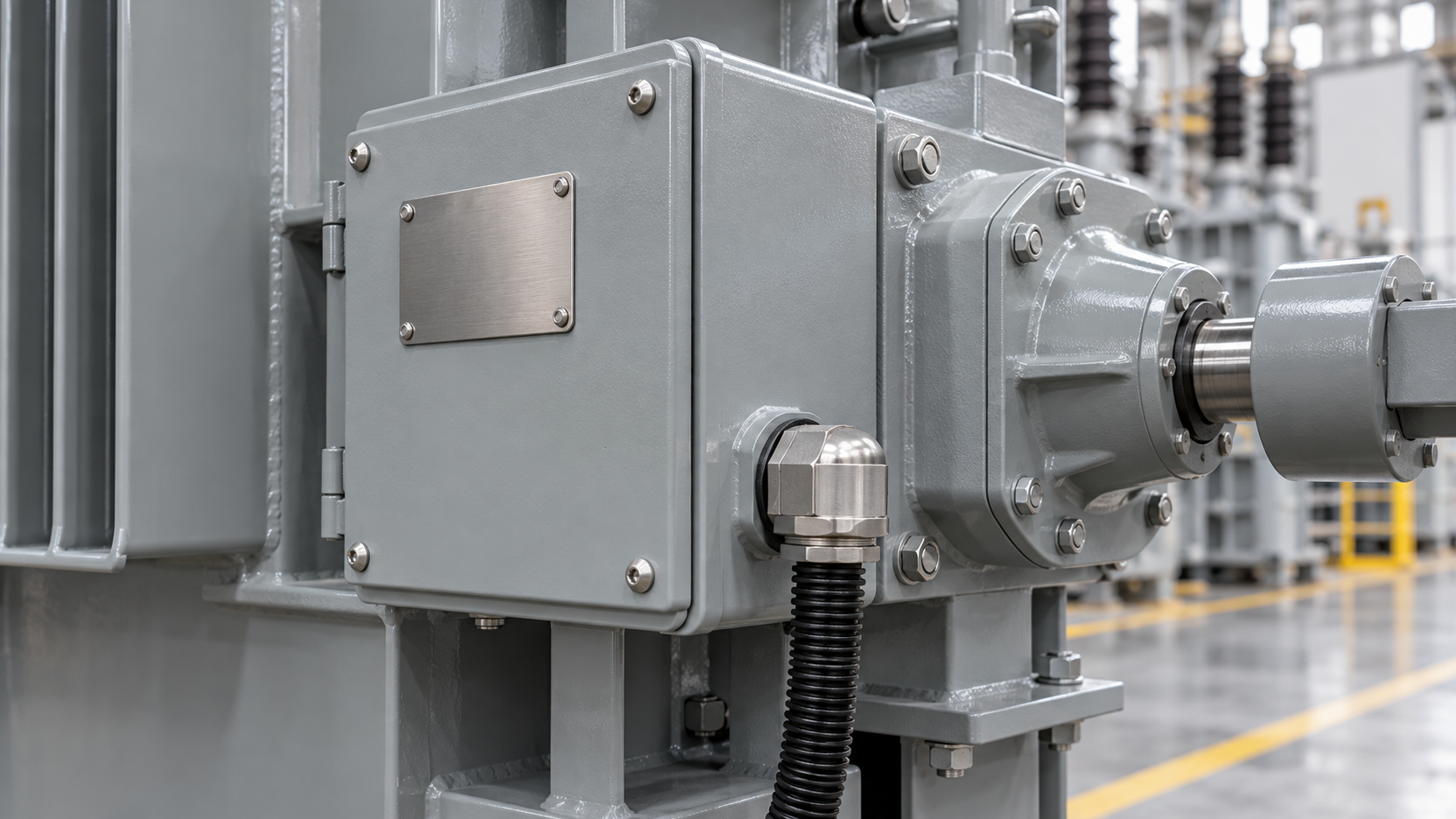
A label helps identify equipment; it is not a complete operating procedure. For example, an accessory voltage marking alone does not establish its connection arrangement, protection requirements or permitted operating sequence. Link the installed model to its applicable instructions. If the wrong manual is attached to a correct component, the handover still contains a defect even though the physical item matches the schedule.
Separate a documentary transcription issue from an unresolved physical configuration difference. A mistyped asset-register entry may be corrected by the document owner once the source is confirmed. A plate entry that conflicts with the manufacturer’s confirmed final rating requires a controlled manufacturer-led disposition. A difference that raises doubt about which equipment was delivered needs a broader identity and technical review.
Do not let the apparent size of the error determine its significance. A single character can distinguish units, connections or component variants. Conversely, a formatting difference may have no engineering effect once its meaning is established. Record the explanation and its evidence rather than simply marking every difference “minor.”
Consider two nominally identical transformers whose final reports were filed under the wrong project tags. The serial numbers on the physical units and reports allow the team to detect the swap. The correct response is to reconcile the equipment-to-report mapping, check affected registers and confirm whether any settings or acceptance decisions used the misplaced files. Reprinting tags without examining those dependencies would leave the underlying error unresolved. This is an illustrative review scenario, not a report of a Zisheng Electric customer project.
For changes that affect approved engineering information, use the responsibilities described in our transformer design change control guide. A nameplate discrepancy can reveal a missed revision elsewhere. Closing the visible label while leaving an obsolete drawing in the installation package creates another opportunity for the same mistake.
Where a replacement plate is required, obtain approved content and installation instructions from the responsible manufacturer. Retain the reason for replacement and identify the equipment concerned. The site team should not independently engrave a different rating, overwrite a serial number or use an adhesive correction as a substitute for an approved permanent solution.

Check the completed replacement against the approved correction, photograph it in position and link the record to the discrepancy. Confirm that superseded documents are identified and that the final equipment register points to the accepted evidence. Any handling of the old plate should follow the agreed disposition so that conflicting identification does not remain in circulation.
The responsible parties should state what the completed review permits. Acceptance of identification records does not automatically release transport, installation or energization. If an unresolved discrepancy affects a planned activity, identify the restriction and the person authorized to close it. Preserve that decision with the relevant project release record rather than leaving it in an isolated email.
A practical handover package contains the final plate photographs, approved plate drawing, equipment-to-serial mapping, reconciled data references and closed discrepancy records. It should also identify any outstanding restrictions. The owner should be able to retrieve the same evidence later without relying on the person who attended the factory inspection.
For equipment such as a 2500kVA oil-immersed transformer or a 220kV/230kV power transformer, agree the identification and documentation requirements alongside the electrical specification. These product references do not establish the final ratings or configuration of a particular order. Transformer nameplate verification should connect the purchased equipment to its approved, serial-specific evidence.
Send Zisheng Electric your drawings, data sheets, load lists, technical specifications, single-line diagrams, grid parameters, environmental conditions and installation-site conditions. Include the equipment-tagging convention, required plate language, document approval process and any existing discrepancy photographs. Our engineering team will review the requirements and respond to project inquiries within 24 hours.

Plan transformer temperature instrument calibration at EPC handover. Review oil and winding indications, alarm contacts, remote signal scaling, reference evidence, test hold points and release decisions with Zisheng Electric.
View details
Plan a transformer first-service thermal survey with safe access, representative load records, cooling checks, evidence ownership and clear EPC handover decisions.
View details
Build a transformer DGA baseline for EPC handover: connect oil history, sample identity, laboratory methods and first-service review responsibilities.
View details
Plan transformer operator training for EPC handover with role-based sessions, current equipment records, practical scenarios and assessment evidence.
View details