 zishengelectric





news
News Center
Providing high-quality power to the world
Search productSearch post
news
Providing high-quality power to the world
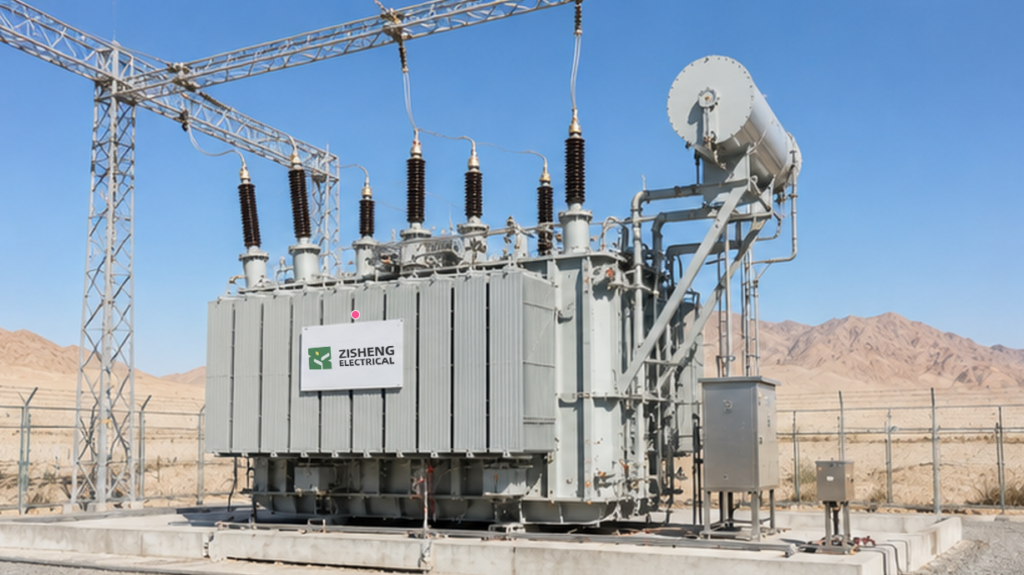
At Zisheng Electric, some of the most demanding transformer projects we handle are not necessarily the largest units.
The difficult projects are often the ones where several requirements meet at the same time: high ambient temperature, utility-specific standards, consultant approval, tight construction schedules, third-party FAT, special accessories, shipping restrictions and frequent engineering revisions.
A transformer may pass IEC routine tests and still cause trouble during project execution if its interfaces, environmental design or documentation do not match what the EPC contractor, consultant and local utility actually require.
From our engineering side, these are the areas we pay the most attention to before production starts.
One of the first mistakes in international EPC procurement is treating the Middle East as a single technical market.
It is not.
Saudi Arabia and the UAE are a good example.
Saudi Electricity Company specifications for distribution transformers specify 60 Hz, and one SEC specification requires transformers to be designed for normal operation at an ambient temperature of 55°C under Saudi environmental conditions.
In Abu Dhabi, the transmission system operates at a nominal 50 Hz.
That difference alone affects electromagnetic design.
Frequency influences core flux density, excitation current and losses. A transformer design should not be transferred between 50 Hz and 60 Hz projects by changing the nameplate frequency alone. Volts per turn, core flux density, excitation current, losses and thermal performance must be checked for the specified system frequency.Voltage levels, neutral arrangement, insulation level, tap range and utility requirements also vary by project.
transformer supply for Middle East EPC projects, we therefore prefer to confirm the actual project specification before freezing the design rather than starting from a generic “Middle East model.”
Before electromagnetic design begins, our engineers normally review:
This early clarification saves much more time than correcting a transformer after the GA drawing has already been approved.
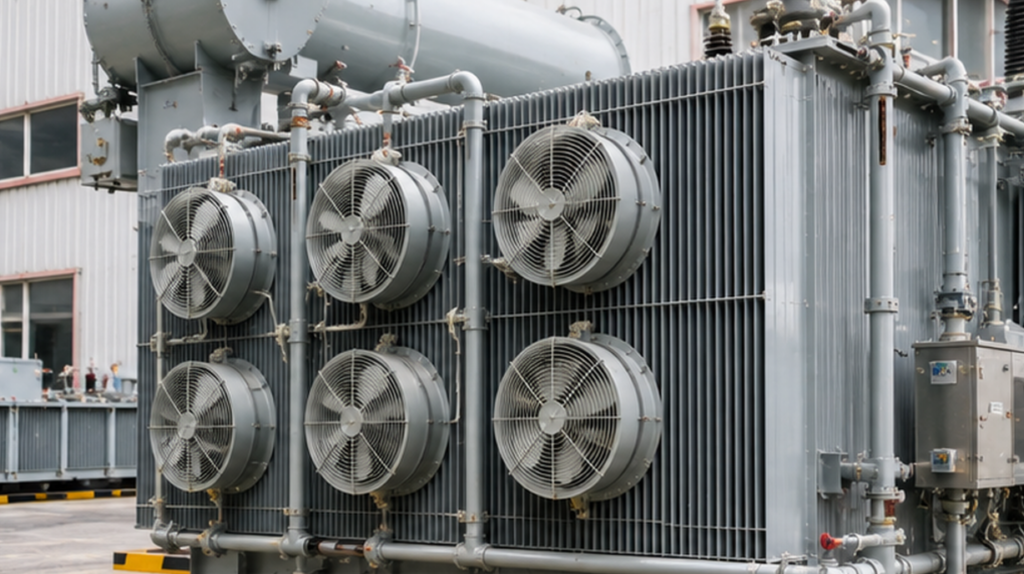
High temperature is probably the most obvious Middle East requirement, but it is still frequently underestimated.
A transformer designed around normal IEC reference conditions cannot automatically be assumed to deliver identical thermal performance at a desert project site.
IEC 60076-2 defines temperature-rise requirements and test methods for liquid-immersed transformers, while IEC 60076-7 specifically addresses the relationship between ambient temperature, loading, operating temperature and transformer thermal ageing.
For an EPC project, the question is not simply:
“Can the transformer operate at 50°C?”
The engineering team should ask:
“At the specified ambient temperature and load profile, what are the expected top-oil temperature, winding temperature and hot-spot margin?”
That may affect:
Saudi SEC distribution-transformer specifications provide a useful example of how local requirements can go beyond a generic IEC statement, including specific temperature-rise limits and high-ambient operating requirements.
For desert installations, dust must also be considered. Radiators and ventilation openings that perform well in a clean factory environment may lose cooling effectiveness if dust accumulates over time.
For coastal projects, corrosion becomes another issue. Paint system, exposed steel parts, fasteners, terminal boxes and sealing materials should be checked against the actual site environment.
A specification that only says “outdoor transformer” is not enough.
A 20 MVA transformer can be electrically correct and still arrive on site with the wrong interface.
We see this risk repeatedly in EPC work.
Transformer manufacturing sits between several engineering disciplines:
electrical design, civil works, protection, control, cabling, switchgear and construction.
If these teams are working from different revisions, problems show up during installation.
Typical examples include:
| Interface | Common EPC Risk | What Should Be Confirmed Before Production |
| HV/MV terminals | Cable termination does not match bushing arrangement | Terminal type, phase spacing, cable size |
| Transformer foundation | Base or roller position does not match civil drawing | GA dimensions, wheel gauge, loading points |
| LV busduct | Busbar centerline mismatch | Terminal orientation and dimensions |
| Protection | CT ratios or alarm contacts differ from relay design | CT data, terminal schedule, protection logic |
| OLTC | Control voltage/interface not coordinated | Motor supply, AVR, remote control |
| Neutral | Grounding arrangement differs from system design | Neutral bushing and grounding method |
| SCADA | Signal list finalized too late | I/O list, protocol and terminal allocation |
| Cable boxes | Entry direction conflicts with site layout | Bottom/side entry and gland plate details |
This is why we do not regard the GA drawing as a simple dimensional drawing.
For an EPC contractor, it is an interface-control document.
Once civil foundations, cable trenches and switchgear layouts have been released for construction, a seemingly small transformer drawing revision can become expensive.
“IEC 60076 compliant” is important, but it does not automatically mean a transformer satisfies every Middle East project requirement.
A typical EPC technical hierarchy may include:
international standard → local utility specification → owner specification → consultant requirement → project datasheet → approved vendor drawings
The manufacturer has to identify conflicts between them.
Saudi Electricity Company documentation gives a good example. Its transformer procurement requirements include clause-by-clause compliance, technical data schedules, component documentation, raw-material certificates and relevant type-test reports in addition to the transformer itself.
For the supplier, this creates a very practical challenge.
If a deviation is discovered after manufacturing starts, changing the transformer may involve more than modifying paperwork. It can require changes to:
At Zisheng Electric, our preference is to issue a technical deviation list during the clarification stage instead of hiding differences inside a quotation.
A deviation that is visible before purchase can usually be discussed.
A deviation discovered during FAT is already a schedule problem.
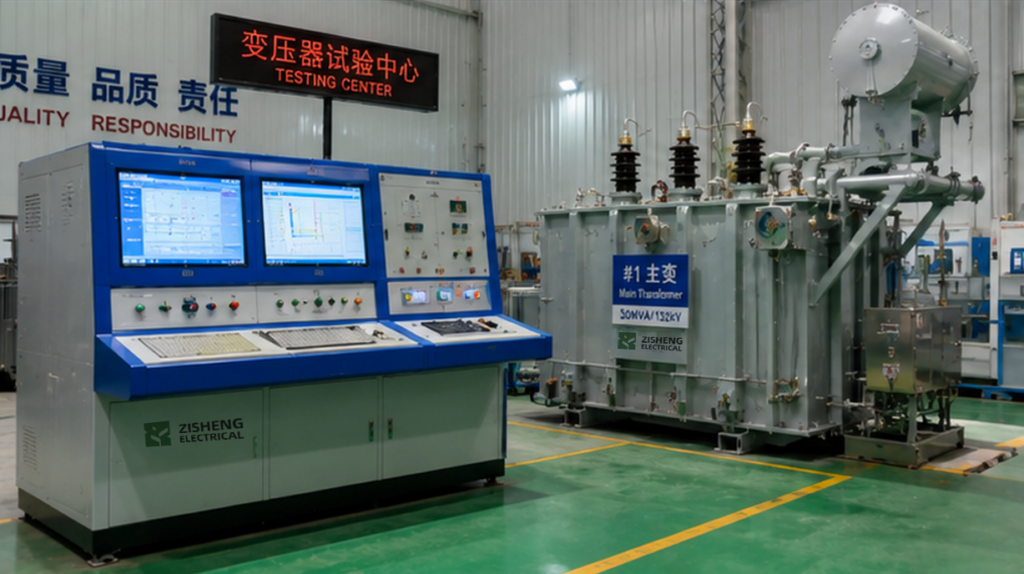
For many Middle East transformer EPC projects, FAT is not an internal factory activity.
The EPC contractor, consultant, owner or third-party inspection company may witness the tests.
Before manufacturing is completed, the team should already agree on:
ITP → Hold Points → Witness Points → Test Procedure → Acceptance Criteria → FAT Date → Documentation Package
Routine testing normally includes measurements such as winding resistance, voltage ratio, no-load loss, load loss, impedance and dielectric tests according to the applicable transformer design and standard.
Additional project requirements may include temperature-rise testing, lightning impulse testing, partial-discharge measurement, sound-level testing or other type/special tests.
It is to identify the required test scope before the transformer enters production.
Some tests require additional preparation, equipment scheduling or third-party laboratory coordination.
A late request can move the shipping date even when the transformer itself is already finished.
For EPC projects, our engineering and quality teams normally organize the inspection package around:
This allows the inspection team to review the transformer against an agreed technical baseline instead of reopening design questions during FAT.
Transformer procurement schedules are often calculated from the required site-arrival date backward.
That sounds simple until a large transformer has to be moved.
The EPC team needs to consider:
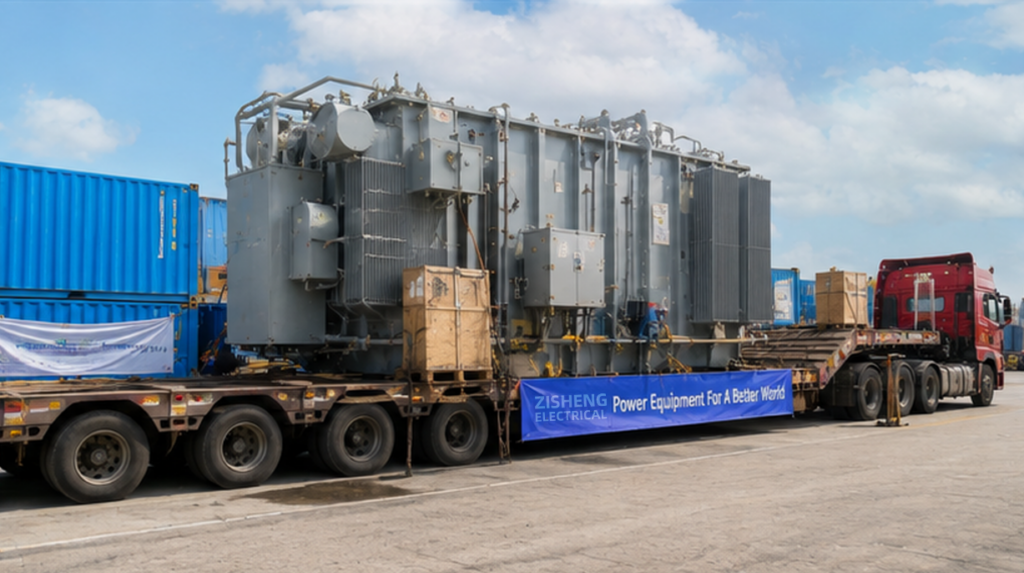
factory completion → FAT → punch-list closure → release note → dismantling for transport → export packing → inland transport → port handling → sea freight → customs → site transport → reassembly
Large radiators, conservators, bushings or accessories may need to be removed for shipment depending on transformer size and transport limits.
The manufacturer therefore needs to know transportation restrictions before finalizing the mechanical design.
For Middle East projects, another common pressure point is that transformer production runs in parallel with civil construction.
If the actual transformer dimensions change after foundation work has started, both sides lose time.
Our preferred approach is to freeze the main mechanical interfaces early even when minor accessory drawings are still under review.
A transformer works as part of a power-distribution system.
For industrial plants, solar projects, infrastructure and substations, the supply package may include:
power transformer + MV switchgear + RMU + LV switchboard + protection + control + auxiliary equipment
For example, impedance influences fault current.
Vector group affects system configuration.
Transformer CTs have to match the protection scheme.
OLTC control may need to communicate with the station control system.
MV cable terminations must fit both transformer and switchgear.
The more equipment packages come from different suppliers, the more important interface management becomes.
For this reason, EPC contractors should define clear responsibility boundaries in the technical specification.
You can see our broader approach to coordinated transformer and distribution-equipment supply on the EPC Electrical Equipment Supply & Power Distribution Solutions page.
Shipment is not the end of a transformer EPC contract.
When the equipment reaches site, the project team may still need support with:
Technical documents must therefore be usable by the commissioning team, not only sufficient to close a FAT document checklist.
Zisheng Electric also maintains technical and after-sales support for EPC projects covering project documentation, spare parts and commissioning assistance.
For more detail on this stage, see our guide on transformer after-sales support for EPC projects.
| Project Challenge | Possible Result | Recommended Control |
| Wrong frequency or grid assumption | Increased losses or incompatible design | Confirm utility and project data before design |
| High ambient temperature | Reduced thermal margin | Recalculate cooling and temperature rise |
| Late GA revision | Foundation/cable mismatch | Freeze critical interfaces early |
| Utility specification missed | Consultant or utility rejection | Complete clause-by-clause compliance |
| FAT scope confirmed late | Shipment delay | Approve ITP and tests before production |
| Multiple equipment suppliers | Interface conflicts | Maintain interface responsibility matrix |
| Shipping dimensions ignored | Transport restrictions | Review logistics during mechanical design |
| Incomplete final documents | Commissioning delay | Build MDR/document package during production |
| Weak after-sales coordination | Slow site troubleshooting | Define support and spare-parts scope before shipment |
For us, successful Middle East transformer EPC supply starts before the purchase order.
The engineering team first needs to understand the electrical system, environmental conditions, local utility requirements and equipment interfaces.
Only then should the design be frozen.
This approach is especially important in Saudi Arabia, the UAE and other Gulf markets where high ambient temperature, project-specific utility standards, owner approvals and tight construction schedules often appear in the same contract.
For a related Saudi project discussion, you can also read our Saudi EPC Project Power Distribution Equipment Selection article.
For supplier qualification and EPC engineering capability, link to What Capabilities Should a Transformer Supplier Have for EPC Power Projects?.
Oil-immersed transformers、Substation transformers、Packaged transformers、Pole-mounted transformers、Dry-type transformers、Other power distribution equipment equipment。
We support IEC-compliant design, Factory Acceptance Testing (FAT), and third-party inspection and supervision.
For high-voltage applications, our 110kV/115kV power transformer range can be configured for project-specific capacity, voltage ratio, impedance, tap changer, cooling system and environmental requirements.
If you are preparing a Middle East EPC tender or technical specification, send us your:transformer datasheet, SLD, project specification or equipment schedule.Our engineering team will review the requirements and respond to project inquiries within 24 hours.
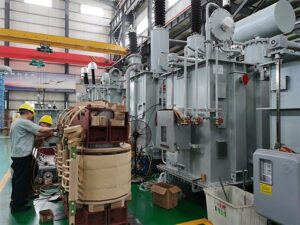
Distribution transformer selection based on real project data: altitude derating tables, impedance calculations, loss comparisons, FAT checklists, and field failure analysis.
View details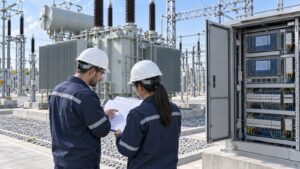
Coordinate transformer protection interfaces for EPC projects, including CT inputs, mechanical trips, alarms, relay logic, SCADA, FAT and handover.
View details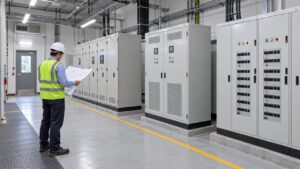
Coordinate a substation auxiliary power system for EPC projects: AC/DC loads, backup supply, charger duties, cable interfaces and acceptance records.
View details
A field-focused EPC guide to transformer cable termination interfaces, covering bushings, cable boxes, clearances, earthing, FAT checks and commissioning handover.
View details