 zishengelectric



news
News Center
Providing high-quality power to the world
Search productSearch post
news
Providing high-quality power to the world
A transformer sound level FAT report can show a value below the purchase-order limit and still leave an EPC team without enough evidence to accept it. At Zisheng Electric, the useful procurement question is whether the reported quantity, operating condition and measurement record actually match the agreed guarantee. This review guide is for EPC electrical engineers, package buyers and quality inspectors checking a supplier’s acoustic report before equipment release.
Start with three documents: the approved acoustic guarantee, the accepted test procedure and the complete report. A headline result alone is not an acceptance package. The checklist below helps identify missing evidence without turning every reporting omission into a claim that the transformer has failed.
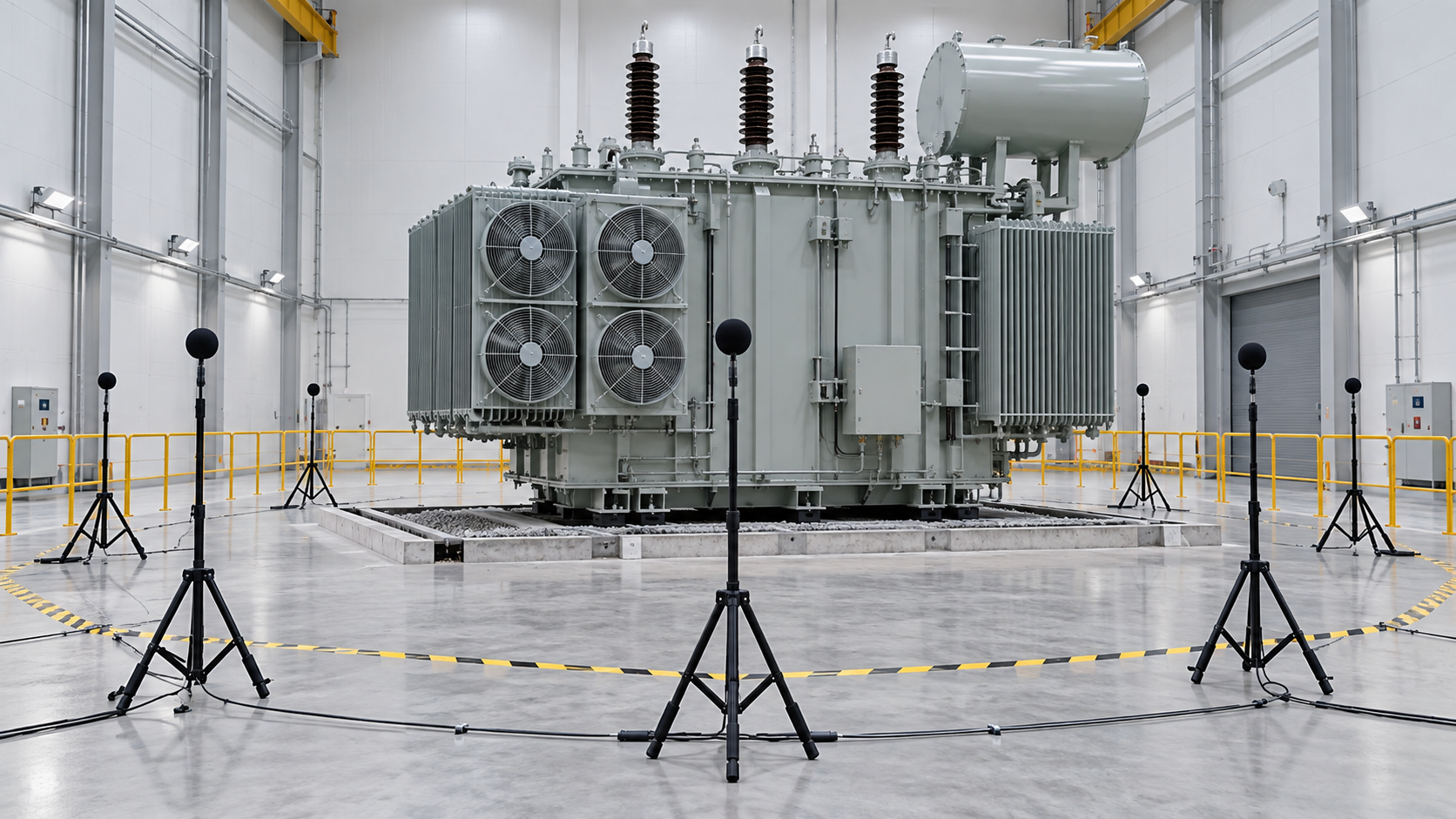
Sound power level describes a source’s acoustic emission; sound pressure level describes the pressure measured at a location. Both use decibels, but they are different quantities. Distance and the acoustic environment affect sound pressure. An A-weighted sound power result, LWA, therefore cannot be compared directly with an A-weighted sound pressure limit, LpA, simply because both numbers carry “dB(A).”
IEC 60076-10:2016 covers pressure and intensity measurement methods used to determine sound power levels of transformers and associated cooling equipment. Its primary application is factory measurement. The companion IEC 60076-10-1 application guide supports use of those techniques. Confirm the edition specified by the contract rather than silently substituting a different edition. Neither reference, by itself, supplies the project’s environmental noise limit.
Ask the reviewer to copy the guaranteed quantity, weighting, operating case and limit into the report review sheet. Then place the reported quantity alongside it. If the descriptors differ, resolve the basis before discussing compliance. Brüel & Kjær’s explanation of sound power and sound pressure is a useful reference for this distinction.
The following matrix is a proposed EPC document-review tool, not a replacement for the standard’s detailed procedure. Assign one owner and a due date to each unresolved row. A supplier response should identify the revised document or original test record that closes the question.
| Review item | Evidence to locate | Action if evidence is missing |
|---|---|---|
| Equipment identity | Serial number, rating and tested assembly linked to the purchase item | Reconcile the report with the equipment schedule before approval |
| Guarantee basis | Quantity, weighting, limit, applicable edition and agreed acceptance rule | Obtain a common basis; do not compare unlike decibel values |
| Operating case | Applied voltage, frequency, tap position and stated load or excitation condition | Request original operating logs and an explanation of case coverage |
| Cooling configuration | Fan and pump groups, operating states and equipment included in the result | Identify any guaranteed cooling case not demonstrated |
| Measurement arrangement | Contour or surface drawing, positions, heights and dimensions required by the chosen method | Ask the test laboratory to reconcile the drawing and measurement file |
| Measurement validity | Instrument identity, calibration evidence, background records and applicable corrections | Have the responsible acoustic specialist assess whether the data remain usable |
| Result and disposition | Traceable calculation, required frequency data, uncertainty treatment and approval | Close the technical query or arrange an approved repeat test |
A report labelled “transformer noise test” is too broad for a multi-case guarantee. Create a separate line for every contractual case and reference the corresponding result. Where different cooling stages are guaranteed, the report should make their coverage explicit. Do not treat a fan-off result as proof of a fan-on requirement.
Record whether the report covers the transformer, cooling equipment or a defined combined condition. Ask the laboratory how any separately obtained results were used. Do not add decibel values arithmetically or assume that an untested contribution is negligible. Where a calculation or estimate is permitted, request its stated basis and approval instead of presenting it as a direct measurement.
Also compare the tested hardware with the approved supply configuration. A substituted fan, changed radiator arrangement or temporary panel can create a review question even when the serial number is correct. The useful response is a documented assessment of the difference, followed by any necessary retesting. Avoid an automatic rejection based only on a drawing revision number.
Begin with a small sample of the reported measurement positions. Can the laboratory identify each position on its arrangement drawing and retrieve the corresponding original reading? Can it explain the calculation from the recorded measurements to the final result? This is a traceability check; it does not authorize the EPC reviewer to invent correction factors.
Background sound deserves its own review entry. Request the recorded background conditions and the chosen method’s validity checks. A nearby machine starting during a measurement may require assessment, but the response depends on the method and recorded evidence. “Background corrected” without a supporting record is not enough to close the query.
Distinguish document completion from a technical validity problem. An omitted calibration certificate may be recoverable from the laboratory’s records. An undocumented operating condition may be harder to reconstruct. Preserve the original report, request a controlled revision and keep a clear account of what changed. Do not replace an inconvenient result with a new PDF that has no revision history.
For borderline results, use the project’s agreed FAT measurement uncertainty and acceptance rule. Measurement uncertainty is not an automatic allowance that can be subtracted from a result until it passes.
Consider a hypothetical procurement review, not an actual Zisheng Electric test. The approved guarantee requires an A-weighted sound power result for a specified forced-cooling case. The submitted summary instead gives an average sound pressure value, and the attachment lists the fans as stopped.
The correct first disposition is “compliance not demonstrated.” The figures do not prove either compliance or an equipment failure against the specified case. Ask the supplier whether the complete test records include the required sound power calculation and cooling configuration. If valid supporting records exist, issue a controlled report correction. If the required case was not tested and cannot be substantiated under the agreed procedure, arrange an approved test to close the gap.
This distinction protects both schedule and technical integrity. A clerical omission should not trigger unnecessary equipment rework, while a missing test case should not disappear behind a reassuring headline number.
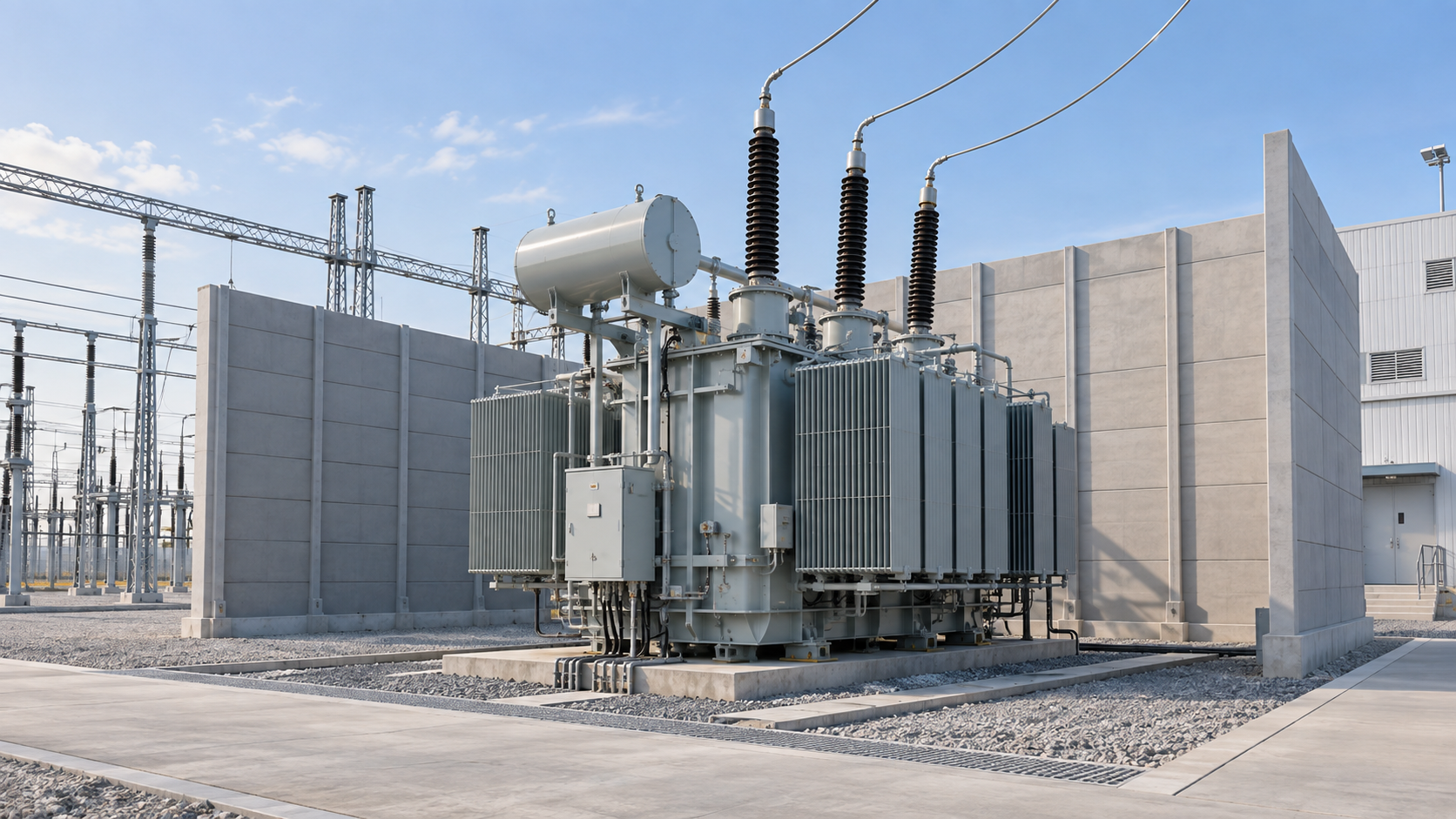
The accepted factory report becomes an input to the project acoustic assessment. It does not, on its own, demonstrate compliance at a residential receptor or site boundary. The EPC team still needs the installed arrangement, relevant operating cases and site acceptance responsibilities to be coordinated. Use the broader transformer noise control plan for those interfaces.
Close the package with a clear status: accepted against the specified equipment criterion, awaiting identified evidence, or requiring further test or corrective action. Name the approving authority and link unresolved items to the project’s release process. A promise to add a barrier later should not silently replace a contractual equipment guarantee.
No. It needs an identified quantity, operating condition and measurement basis. The report must allow the reviewer to compare the result with the actual guarantee.
Not necessarily. Separate missing documentation from a demonstrated exceedance. Request traceable evidence and use the approved disposition process.
No universal project limit is proposed here. The buyer must agree the equipment criterion, test scope and acceptance rule for the specific project.
When discussing a 35kV–46kV power transformer with Zisheng Electric, send the equipment datasheet, acoustic guarantee, cooling cases, applicable standard edition and proposed witness requirements. If a report is already available, include its arrangement drawing and open technical queries. This allows the discussion to focus on the evidence needed for your EPC acceptance decision rather than a standalone noise number.
Review substation cable trench cover acceptance through loading duties, frame support, panel fit, maintenance access and traceable EPC handover evidence.
View details
Review OLTC dynamic resistance measurement at FAT: distinguish current ripple from resistance, check comparable traces and close anomalies with OEM evidence.
View details
Understand transformer routine, type and special tests. Learn what each proves and how EPC buyers should define reports, test scope and tender exclusions.
View details
Plan transformer coating inspection for EPC projects: review paint records, thickness evidence, transport damage, compatible repairs and release boundaries.
View details