 zishengelectric





news
News Center
Providing high-quality power to the world
Search productSearch post
news
Providing high-quality power to the world
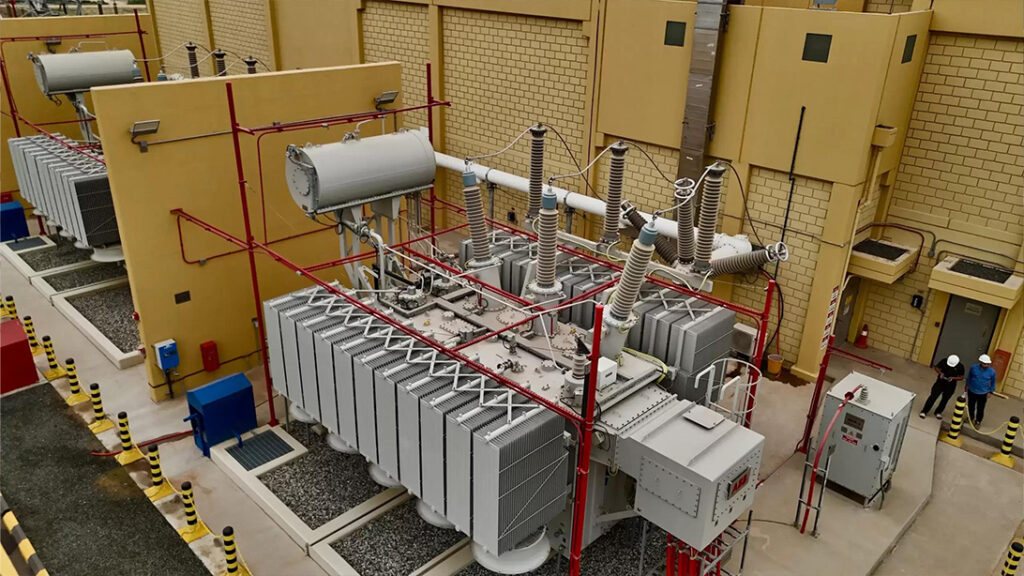
Over the past few years, we have participated in transformer supply for more than a dozen substation and solar power projects across the Middle East and Africa. To be frank, it has been frustrating to see EPC contractors repeatedly run into the same problems when selecting transformer suppliers.
Some problems start during supplier qualification. The documentation looks impressive, but once the factory is inspected, key testing equipment is incomplete or unavailable.
Others appear during contract execution. Delivery dates keep slipping, while installation crews at site are left waiting with little they can do.
Then there are the more complicated cases. We have seen equipment arrive at the destination port only for the customer to discover that radiators or accessories were damaged during transportation. What follows is usually a chain of discussions involving insurance claims, responsibility allocation, replacement parts, and reshipment. A problem that initially looks minor can quickly delay an important project milestone.
In this article, I want to explain the complete logic behind transformer supplier selection from the perspective of a technical engineer.
No unnecessary detours and no pile of technical jargon. Just the problems we have encountered in real projects and the lessons we have learned from them.
One common mistake among EPC contractors entering these markets for the first time is to directly apply experience from domestic or Southeast Asian projects.
The actual conditions can be very different.
Ambient temperature is the first challenge.
In parts of the Middle East, including Saudi Arabia, Kuwait, and Iraq, extreme summer ambient temperatures can approach or exceed 50°C.
For projects under these conditions, simply stating that a transformer “complies with IEC 60076” is not enough. The supplier must also review the transformer design against the actual project specification, including temperature rise, cooling capacity, and the thermal aging margin of the insulation system.
IEC 60076 defines normal service conditions together with the corresponding design and testing requirements for power transformers. When the maximum ambient temperature exceeds the standard normal service conditions, the transformer’s thermal design must be reassessed.
This means the supplier needs to perform additional calculations rather than relying on a standard design.
We once encountered a supplier whose tender documents clearly stated “compliant with IEC standards.” After commissioning, however, the measured top-oil temperature remained close to the alarm threshold for several hours around midday.
The transformer itself was not poorly manufactured.
The real problem was that the thermal design margin was insufficient for the actual site environment.
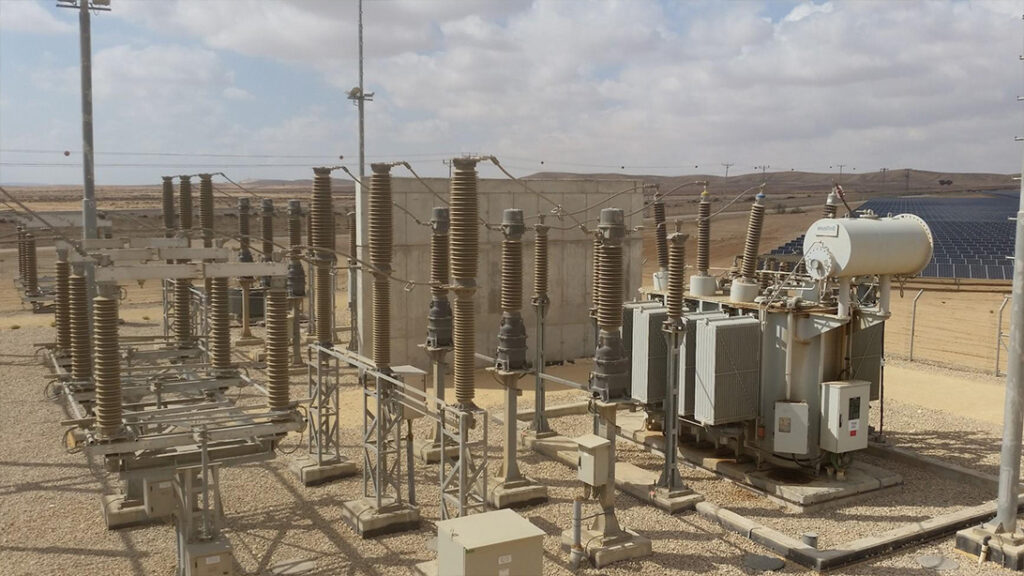
Grid structures vary significantly from country to country.
Grid frequency is not uniform across the Middle East and Africa. Saudi Arabian projects commonly operate at 60 Hz, while markets such as the UAE and Qatar typically use 50 Hz. At the design stage, the supplier must confirm the project’s rated frequency, voltage level, and system grounding arrangement rather than simply reusing parameters from another market.
Across Africa, grid frequencies, voltage levels, and distribution systems also vary by country. 50 Hz is common, but the final design should always follow the local utility requirements and project technical specification.
Voltage levels are equally diverse, with 33 kV, 66 kV, 132 kV, and 220 kV all commonly encountered depending on the network.
When evaluating a transformer supplier, one of the first questions should be whether the manufacturer has actual delivery experience with the required frequency and voltage combination. It is much better to confirm this at the supplier qualification stage than to discover design compatibility issues after the engineering drawings have already been finalized.
Logistics and installation conditions are often underestimated.
One of our customers selected a European-brand transformer for a project in Saudi Arabia. The equipment itself was excellent, but the transformer body and accessories were shipped in seven separate batches.
The resulting management burden for customs clearance, inland transportation, and site storage was far higher than expected.
More importantly, the manufacturer’s installation supervisor charged by working day. Once civil works or crane availability caused a delay, every additional day generated real project cost.
Grid fault characteristics must also be considered.
In some African countries, the power system is relatively weak, with lower system short-circuit capacity and frequent voltage fluctuations.
This can directly affect transformer operation in two ways. First, the on-load tap changer (OLTC) may operate more frequently than under stable grid conditions. Second, the transformer winding must have sufficient mechanical strength to withstand short-circuit stresses.
When evaluating a transformer supplier, ask specifically how its short-circuit withstand capability is verified.
The manufacturer should be able to explain whether the design is supported by:
For critical projects, it is also worth reviewing the impedance measurements before and after testing, together with records of the mechanical inspection of the active part.
The following evaluation framework is based on the supplier qualification checklist we use internally at Zisheng Electric.
It has gone through four major revisions. Each revision came from lessons learned on actual projects — and in some cases, those lessons were expensive.
Compliance with the IEC 60076 series is the basic requirement.
But do not stop at checking whether the manufacturer has certificates. Look carefully at what those certificates actually cover: voltage class, capacity range, frequency, and transformer type should match the requirements of your project.
Another point that is often overlooked is the third-party type test report.
This should not simply be an internal factory test report. For major projects, documentation issued or witnessed by recognized organizations or laboratories such as KEMA, CEPRI, or accredited national transformer testing centers can provide much stronger evidence of technical capability.
For critical voltage classes and important projects, particular attention should be paid to supporting documentation for:
The exact type tests or special third-party test reports required should ultimately follow the owner’s technical specification and tender documents.
When EPC contractors review a supplier’s project references, I recommend doing subtraction rather than simply counting the total number of projects.
First, remove small off-grid power projects that are not comparable.
Then remove special-purpose transformers that do not match your application, such as rectifier transformers or electric furnace transformers.
What remains is the reference list that actually matters.
Then ask several practical questions:
Does the supplier have projects in the Middle East or Africa at the same voltage class?
How long was the actual delivery cycle?
How long have the transformers been operating after final acceptance by the end user?
A list of comparable regional deliveries from the past three years is often far more useful than an impressive corporate brochure.
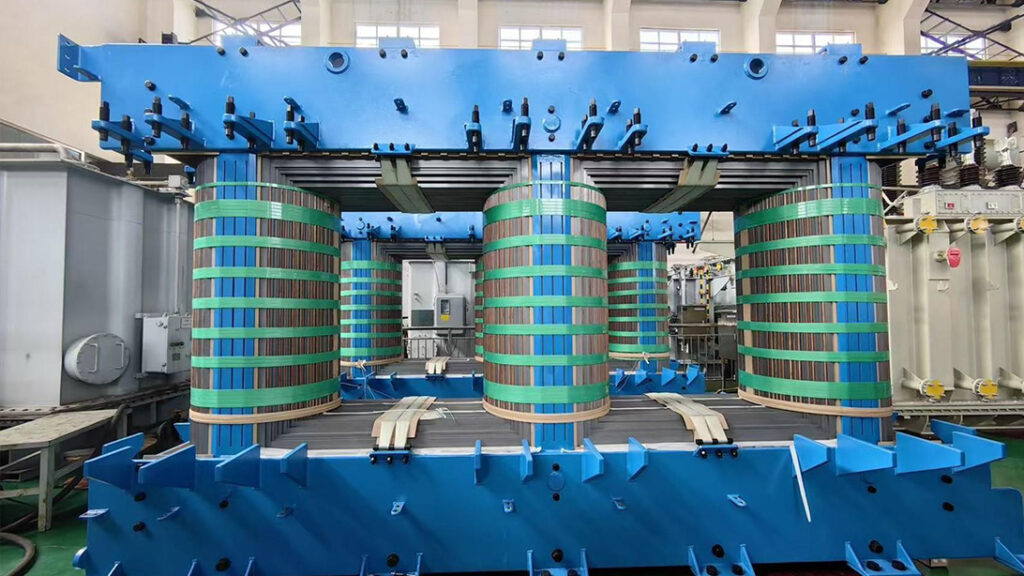
There are two hard indicators here.
Source of electrical steel and winding conductors.
Electrical steel, winding conductors, and insulation materials are among the most critical raw materials in a transformer.
The grade and processing quality of the electrical steel directly affect no-load loss and excitation performance. The conductor material, winding structure, clamping system, and mechanical support design are closely related to load loss and the winding’s mechanical stability under short-circuit conditions.
A reliable transformer supplier should be able to clearly identify the material grade, origin, and incoming inspection procedure.
If the supplier cannot explain these points clearly, that is already a warning sign.
Testing capability.
Factory testing is the final line of defense before a transformer is released for shipment.
In addition to routine items such as voltage ratio, DC winding resistance, insulation resistance, no-load loss, and load loss testing, high-voltage power transformers should also complete the required induced AC withstand test and partial discharge measurement in accordance with IEC 60076-3 and the project technical specification.
These tests are used to evaluate the integrity of turn-to-turn insulation, layer-to-layer insulation, and the main insulation system.
Where possible, these tests should be carried out in the manufacturer’s own test laboratory. During customer or third-party witnessing, the supplier should be able to provide the complete original test records and partial discharge traces, rather than only a final pass/fail statement.
For Middle East projects, ask the manufacturer to provide a clear tropicalized or high-temperature design proposal.
Has the radiator surface area been increased beyond the standard design?
Is a higher-capacity breather required?
Has the sealing system of the tap changer oil compartment been reinforced for prolonged operation under high ambient temperatures?
For coastal locations, salt-spray environments, or highly corrosive industrial sites, the coating system should be selected according to the actual corrosivity category of the project environment.
Some demanding projects specify C4 or C5 corrosion protection systems, but the final coating category should always be determined by the owner’s specification and actual site conditions rather than applied as a generic requirement.
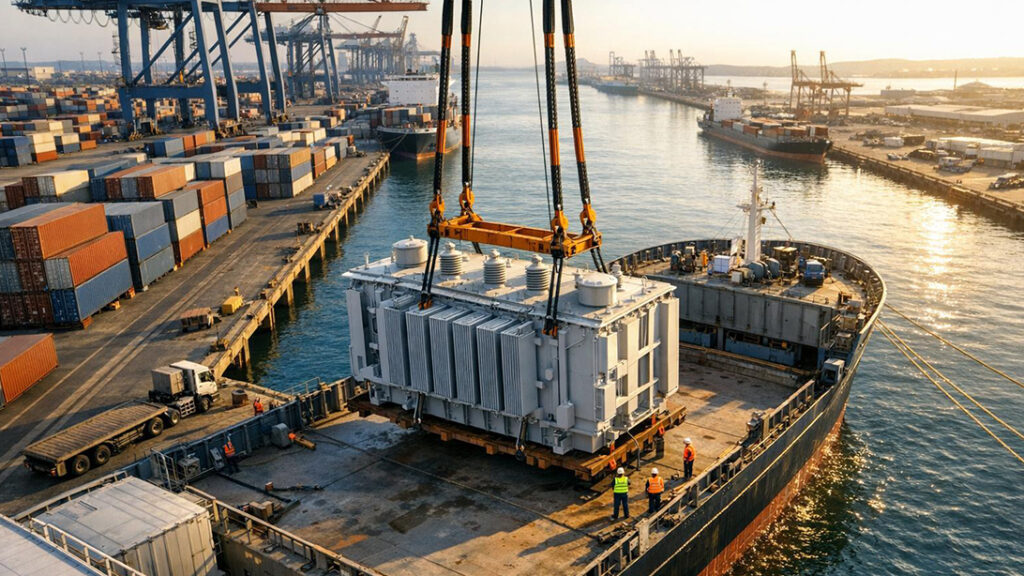
This is one of the most important factors determining the condition of the equipment when it finally reaches site, yet it is also one of the easiest to overlook.
The difference in supplier experience often becomes most obvious at this stage.
An experienced transformer manufacturer knows which components can be shipped exposed, which parts require vacuum treatment and nitrogen filling, and how anti-tilting supports and internal bracing should be arranged for ocean transportation.
We once encountered an extreme case where the Buchholz relay had not been properly secured against vibration before shipment. When the equipment was unpacked at the destination port, the glass tube inside the relay had already broken.
For overseas projects, I recommend requiring the manufacturer to provide a 3D packing arrangement together with lashing and reinforcement calculations.
This is not excessive documentation. It is basic protection for equipment that may travel thousands of kilometers by truck, port handling equipment, and ocean freight before installation.
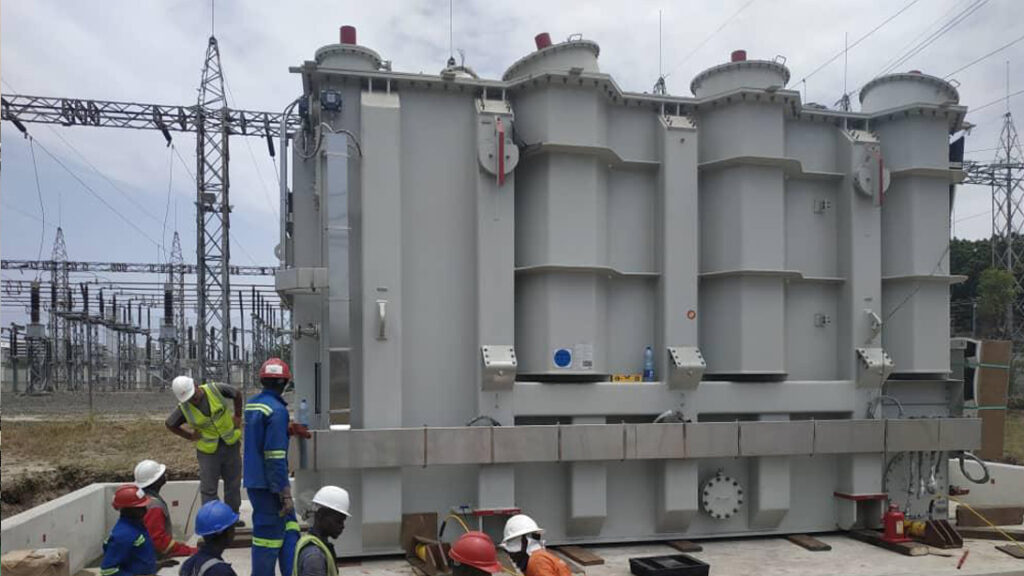
The equipment itself accounts for only half of a successful project. The other half comes from installation and commissioning.
When evaluating a supplier, several practical questions should be clarified in advance:
Does the site supervision engineer already have the required local visa or travel documentation?
Is the engineer’s English or French good enough to communicate smoothly with the site consultant, contractor, and commissioning team?
Installation schedules in the Middle East and Africa often overlap with periods of extreme heat. Has the manufacturer prepared a specific installation procedure for high-temperature working conditions?
These issues may seem secondary during tendering, but they become very real once equipment arrives on site.
This criterion is particularly important when evaluating unfamiliar suppliers offering prices that are significantly below the market average.
The main cost of a transformer is driven by materials such as copper or aluminum conductors and electrical steel. When a quotation is substantially lower than the mainstream market level, the EPC procurement team should carefully verify the following:
Many price differences are not visible on the nameplate. They are hidden inside the internal configuration or excluded from the contractual scope.
Some suppliers win contracts with very low prices and later recover margin through variation claims. Others reduce material or configuration standards to protect their profit.
Both situations can create schedule, quality, and commercial risks for an EPC project.
For larger EPC contracts, it is also worth reviewing the supplier’s registered capital, business continuity, major project execution history, production schedule, and ability to secure key raw materials.
Where necessary, ask for bank references or audited financial statements.
At a minimum, the EPC team should confirm that indicators such as accounts receivable turnover and inventory turnover are broadly consistent with normal industry levels.
For many African projects, spare-parts availability is a major concern.
Before contract signing, clarify the lead time for critical spare parts such as tap changer components, Buchholz relays, and bushing current transformers.
Also ask how the supplier responds to failures.
If an urgent fault occurs, will the manufacturer ship critical spare parts first and complete the commercial paperwork afterward?
Or will nothing move until a new purchase order is issued?
That difference can become extremely important when a transformer is out of service.
The Middle East generally has a more mature service network, but local support still needs to be confirmed.
Does the supplier have a regional service representative or authorized partner?
Time-zone differences and public holidays can sometimes create more frustration than the technical fault itself.
The following checklist is based on the framework we use internally:
| Evaluation Area | Recommended Checks | Key EPC Concern |
|---|---|---|
| Standards and Testing | IEC 60076 applicability, type test and special test documentation | Does the documentation cover the required voltage class and project specification? |
| Comparable Project References | Projects in the same region, voltage class, and application | Does the supplier have real experience executing similar projects? |
| Manufacturing Capability | Core production, winding, drying, final assembly, and testing | Are critical manufacturing processes controlled in-house? |
| Material Traceability | Electrical steel, copper, insulating oil, bushings, OLTC | Are batch traceability and incoming inspection records available? |
| Environmental Adaptability | High temperature, dust, salt spray, and high-altitude design | Can the supplier provide project-specific calculations or technical explanations? |
| FAT Capability | Routine, type, and special tests | Can the owner or a third party witness the tests? |
| Packing and Transportation | Packing plan, split shipment, transportation monitoring | Has long-distance international transportation risk been considered? |
| On-Site Service | Installation guidance, commissioning, and SAT support | Is there a clear personnel and response plan? |
| Documentation Delivery | Datasheet, GA drawing, ITP, QAP, and manuals | Does the documentation meet EPC document-control requirements? |
| After-Sales and Spare Parts | Recommended spare parts, fault response, and long-term technical support | Will support remain available after project handover? |
Q: The manufacturer says, “We manufacture according to IEC standards.” Is that enough?
No. It is important, but it is not enough.
Compliance with IEC 60076 is the baseline. The normal service conditions defined in the standard do not cover every project environment.
For projects involving high ambient temperature, high altitude, salt spray, heavy dust, or special load characteristics, the transformer still needs project-specific design verification against the owner’s technical specification.
I would always ask to see the actual design calculations, including the temperature-rise correction factors and environmental input conditions used by the manufacturer.
Q: Can a remote video factory audit replace an on-site audit?
After the pandemic, many manufacturers became comfortable with video-based factory audits.
Video can show you the workshop. What it cannot easily show is the quality of day-to-day management.
For example:
How well is the material area managed?
What is the actual 5S condition?
How experienced are the testing personnel?
How are non-conforming materials or products handled?
These details are much easier to assess in person.
At the very least, the contract should retain the customer’s right to conduct an on-site factory audit after contract award.
Q: Is selecting the lowest-price supplier always a bad idea?
Not necessarily.
But I recommend doing one simple calculation.
Over the full life cycle of a transformer, both no-load loss and load loss create continuous operating cost, especially for transformers that remain energized or heavily loaded for many years.
Therefore, quotation comparison should include not only the equipment purchase price, but also:
These values should be incorporated into a life-cycle cost calculation.
Instead of pushing only for a lower equipment price, it may be more valuable to ask a reliable transformer supplier for a loss-optimization proposal.
For an EPC contractor, this approach is easier to justify to the owner and usually creates fewer operational problems after handover.
After working on EPC projects for many years, I have become increasingly convinced that selecting a transformer manufacturer is not really about choosing a piece of equipment.
It is about choosing a partner who can handle project uncertainty together with you.
Projects in the Middle East and Africa involve more variables, demanding climates, and long logistics chains. When something goes wrong, it is rarely a problem that can be solved with a single phone call.
That is why my recommendation has always been simple:
Review qualifications more carefully. Check project references in more detail. Make the contract more specific. Price can be negotiated, but the technical and quality baseline should not be compromised.
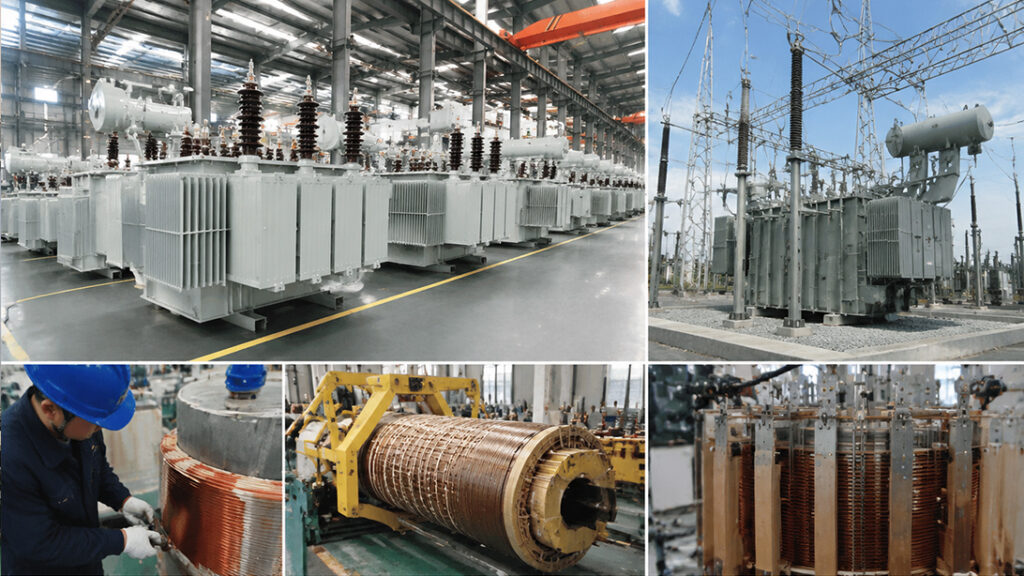
Over the years, Zisheng Electric has accumulated practical project experience across the Middle East and Africa. Our product range includes Oil-immersed transformers、Substation transformers、Packaged transformers、Pole-mounted transformers、Dry-type transformers。
A reliable transformer supplier is worth the time an EPC contractor spends evaluating.
And a transformer supplier that truly understands the pressures, risks, and coordination challenges of EPC projects is even harder to find — which makes that relationship even more valuable.
Full-cycle EPC transformer service covering design freeze, manufacturing, FAT, overseas logistics, on-site installation and commissioning for Middle East and Africa power projects.
View details
Build a practical transformer FAT witness plan for EPC projects, covering hold points, document readiness, routine tests, functional checks, punch items and shipping release.
View details
Evaluate transformer suppliers before tendering with an EPC checklist covering design, manufacturing, quality records, testing and site support.
View details
Learn how EPC teams plan transformer logistics route surveys, including shipping dimensions, axle loads, bridge capacity, turning radius, site access and offloading requirements.
View details