 zishengelectric





news
News Center
Providing high-quality power to the world
Search productSearch post
news
Providing high-quality power to the world
Zisheng Electric works with EPC contractors and project owners to convert transformer installation progress into auditable energization readiness. A transformer commissioning punch list is the control record for that transition. It should identify each incomplete, defective or unverified item, assign responsibility, define acceptable closure evidence and prevent unresolved risks from being hidden inside a general “ready” statement.
The punch list is not a collection of cosmetic observations. It links site walkdowns, test records, protection interfaces, document approvals and operational handover. When classification rules are weak, teams may close a serious protection or oil-containment issue with only a photograph. When ownership is unclear, a minor missing label can remain open until energization day and delay the entire switching program.

The list should control four questions: What is wrong or incomplete? What risk does it create? Who must correct and verify it? What evidence permits closure? A useful record also identifies the system, equipment tag, exact location, drawing or specification reference, discovery date, target date and current status.
Keep the punch list connected to the project turnover system. Each item should be traceable to a subsystem or commissioning package so that readiness can be evaluated at the correct boundary. A transformer may be mechanically complete while its protection, auxiliary power, fire interface or SCADA signals remain incomplete. One overall percentage cannot express those dependencies.
Before inspection, mark the turnover boundary on the approved single-line diagram and layout. Include the transformer, bushings or cable boxes, marshalling cabinet, cooling equipment, tap-changer controls, neutral equipment, surge arresters, earthing connections, local control panels and interfaces to protection, SCADA, fire protection and auxiliary supplies. Civil works such as foundations, bunds, access and drainage may also sit inside the release boundary.
| Class | Typical decision rule | Examples | Minimum closure evidence |
|---|---|---|---|
| A — energization blocker | Could compromise safety, insulation, protection, primary connection or statutory/project release | Incorrect phasing, open CT secondary, unverified protection trip, oil leak at critical joint, missing earth connection | Rectification record, inspection or retest result, approved responsible signatures and revised status |
| B — operation or reliability restriction | Does not necessarily prevent a controlled energization but affects normal operation, monitoring, redundancy or maintainability | One cooling stage unavailable, alarm not mapped, heater circuit incomplete, noncritical accessory defect | Technical risk assessment, temporary control if allowed, responsible approval and dated permanent-action plan |
| C — minor completion item | No credible impact on safe energization or required operating function | Paint touch-up, final engraving plate, housekeeping outside electrical clearances | Photograph or inspection record and verifier acceptance |
| Documentation hold | Physical work may be complete, but required evidence or approved record is missing | Unsigned test sheet, obsolete drawing revision, missing calibration reference, incomplete redline | Approved document uploaded to the controlled system with correct revision and cross-reference |
Class names differ across EPC organizations. The letters above are a practical model, not a universal standard. The project procedure must define its own terminology and authority. The important point is that classification is based on consequence and release criteria, not on how quickly an item can be fixed.
“Check transformer” is not a usable item. A closeable description identifies the equipment tag, location, observed condition, required condition and reference. For example: “TR-01 marshalling cabinet, cable entry row B: two unused gland openings are not sealed; install approved blanking plugs in accordance with cabinet ingress-protection detail E-421, then photograph and inspect.”
Avoid combining unrelated defects. A single item covering missing labels, an oil seepage and an untested alarm is difficult to assign and impossible to close cleanly. Split observations when they require different disciplines, evidence or approval routes.
Every item should have one accountable owner, even if several parties contribute. “Vendor/EPC/site” is not ownership. Assign the organization and responsible function, then record supporting parties separately. Target dates should consider testing windows, access permits, material lead time and the energization sequence.

Verify bushing condition, terminal tightness records, phase identification, surge-arrester connections, neutral equipment, cable or busduct clearances, flexible connectors and support loads. Confirm that shipping covers and temporary transport braces have been removed where required. Inspect for foreign material, damaged porcelain or composite insulation, oil contamination and signs of abnormal mechanical stress.
Check the tank, cooler banks, marshalling cabinet, cable boxes, neutral equipment, surge arresters and local panels against the approved earthing drawing. Bonding jumpers across flexible or removable sections must be present where specified. Verification should include visual inspection and the project’s required continuity records.
Confirm oil level indications, valve positions, leak status, radiator installation, fan rotation, pump operation where applicable, cooler-control logic and alarm contacts. Check silica-gel breather or sealed-system arrangements according to the supplied design. Do not use generic inspection steps that assume every transformer has the same preservation system.
Verify AC and DC supplies, protective devices, cabinet heaters, lighting, socket outlets where provided, tap-changer motor supply, local/remote selection and cooling-control circuits. Cable ferrules, gland sealing, spare-core treatment and terminal tightness should match project workmanship rules.
Inspect foundation and anchoring, oil containment, drainage routing, fire barriers or detection interfaces, safe access, lifting provisions, fencing and housekeeping. A mechanically minor obstruction can become an operational problem if it prevents radiator cleaning, tap-changer maintenance or bushing access.
Closure evidence should match the risk. A photograph can prove that a label was installed; it cannot demonstrate protection trip logic or winding resistance. Electrical and functional defects generally require a signed retest record. Drawing discrepancies require an approved revision or controlled redline. Material substitutions require the documented technical approval defined by the project.
Maintain evidence identifiers inside the punch list rather than storing files in an unreferenced folder. Record the test-sheet number, drawing revision, transmittal, photograph identifier or nonconformance closure. The verifier should be able to reproduce the closure decision without relying on personal memory.
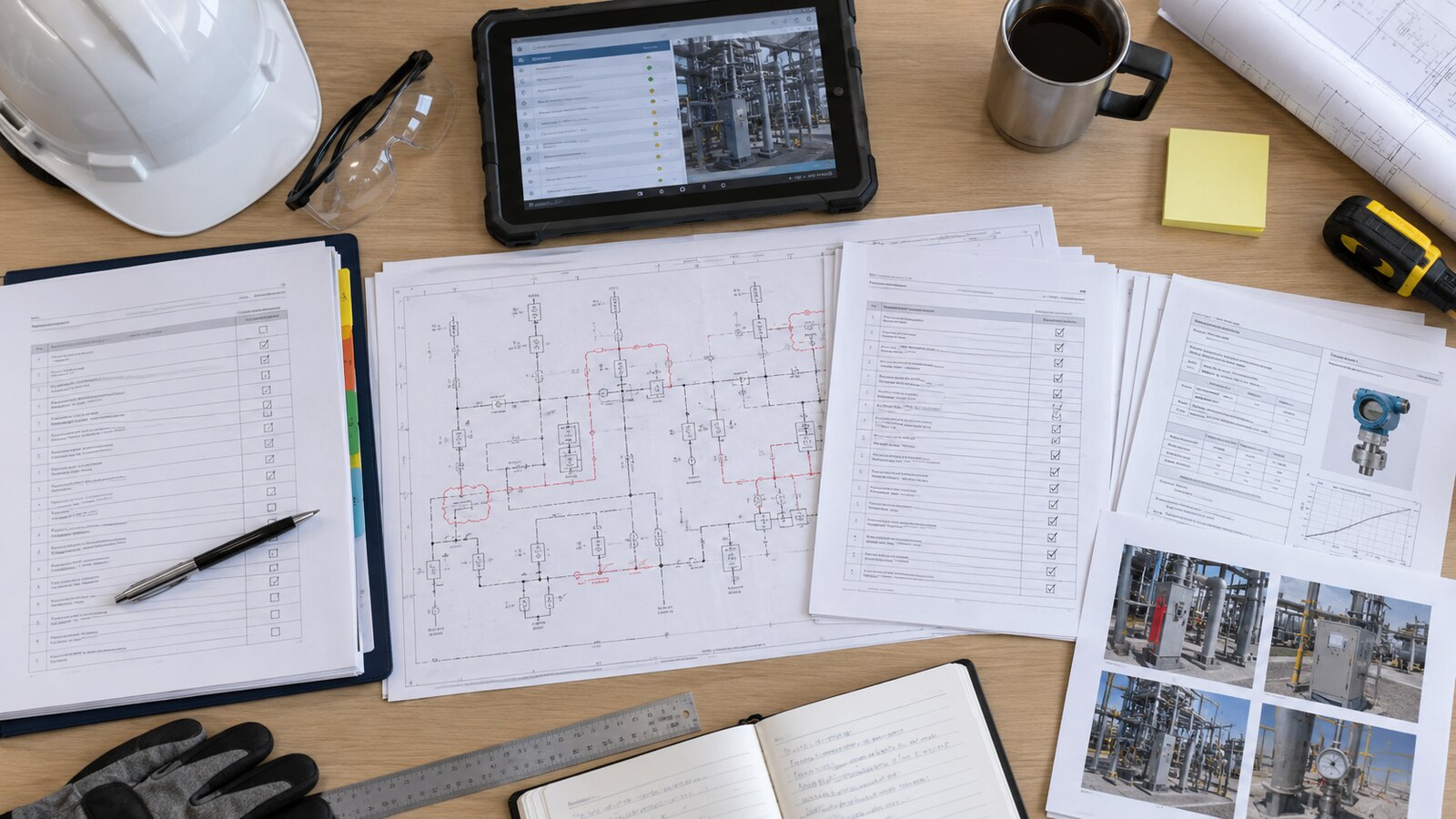
Some projects permit controlled energization with defined class-B items open. This must not become an informal shortcut. A temporary acceptance should state the remaining risk, operating restriction, compensating control, responsible authority, expiry or review date and permanent corrective action.
For example, operating with one automatic cooling stage unavailable may be considered only after confirming actual loading, temperature monitoring, alarm availability and an approved operating limit. The decision belongs to the project’s authorized engineering and operations representatives. The supplier should provide technical input but should not unilaterally declare the condition acceptable.
Never defer an item that invalidates the protection scheme, exposes personnel to unsafe conditions, leaves the transformer inadequately earthed, compromises insulation or prevents required emergency actions.
A punch item should move through defined states such as open, action complete, ready for verification, closed or rejected. “Action complete” means the responsible party believes the correction is finished; it is not the same as independent closure. The appointed verifier should inspect the condition, review the evidence and either close the item or return it with a clear reason.
Record every status change with date, user and comment. Preserve earlier descriptions instead of rewriting an item until the original observation disappears. If the correction changes cable routing, terminal allocation, device configuration or protection logic, start the applicable drawing and configuration-control process before closure. The final record must show both the physical correction and the approved design state.
Duplicate observations are common when several disciplines walk the same area. Do not delete them without review. Link duplicates to one controlling item, retain the discovery trail and confirm that the controlling scope covers every concern. Likewise, do not close a group of items with one generic photograph when their locations or functions differ.
Open-item counts help management allocate resources, but counts alone can mislead. One unresolved class-A item can be more important than thirty cosmetic items. Dashboards should therefore show classification, aging, responsible organization, subsystem and target-date performance. A separate view of energization blockers gives the switching team a clearer decision basis.
At shift handover, identify new items, changed classifications, rejected closures, access constraints and actions due before the next readiness meeting. This short control cycle prevents a correct technical decision from being lost between construction, commissioning and night-shift teams.
The transformer package interacts with multiple records. The transformer inspection and test plan defines hold and witness points. The cable termination interface review controls physical and electrical connections. The transformer earthing interface defines bonding and neutral connections. The condition-monitoring interface coordinates sensors and SCADA data.
Cross-reference open items to these registers. If a test fails, create a punch item or nonconformance according to the quality procedure; do not leave the failed result isolated in a test folder. If a drawing changes during rectification, update the document register and as-built record.
Hypothetical example for workflow design only — not a real Zisheng Electric project:
| Item ID | TR01-PL-027 |
|---|---|
| System/equipment | Main transformer TR-01 / marshalling cabinet |
| Observation | Remote “cooling group 2 fail” indication is not received at the SCADA test terminal. |
| Reference | Approved cause-and-effect matrix, row [project to enter] |
| Classification | B pending project risk review; reclassify A if required by release procedure |
| Owner | EPC control and protection lead |
| Required action | Trace signal, correct wiring or logic, repeat end-to-end test |
| Closure evidence | Signed retest sheet, updated loop drawing if changed, verifier approval |
Before energization, the responsible team should hold a formal readiness review. Confirm that all class-A items are closed, permitted open items have approved controls, test packs are signed, protection settings and trip paths are released, CT circuits are safe, phasing is verified, earthing is complete, auxiliary supplies are stable, fire and oil-containment interfaces meet the project release criteria, and operations has accepted the switching plan.
The review should state the exact equipment and boundary released. It should not approve “the substation” if only one transformer bay is ready. Record attendees, authority, open-item disposition and the time at which the configuration was frozen. Changes after release must return through configuration control.

Project teams can use the relevant equipment pages—such as the 220–230 kV power transformer, 110–115 kV power transformer and 35–46 kV power transformer—to identify package-specific accessories and interfaces. The approved purchase specification and vendor drawings remain the controlling documents.
The most effective transformer commissioning punch list is designed before the first walkdown. It gives construction, commissioning, vendor, quality and operations teams one evidence-based route to energization. Send Zisheng Electric the approved datasheet, single-line diagram, GA and interface drawings, protection and control documents, inspection and test plan, load list, site conditions and required turnover procedure. Our engineering team will review the requirements and respond to project inquiries within 24 hours.

Plan a substation pre-energization readiness review covering punch lists, transformer checks, protection tests, station DC, switching and permit controls.
View details
In EPC projects, a transformer room must be designed as an operating space, not just a rectangle around the tank. Zisheng Electric engineers explain essential layout considerations including safety clearances, ventilation, lifting routes, and main...
View details
A practical EPC transformer site acceptance test checklist covering delivery inspection, assembly, oil work, electrical tests, protection proving, energization and handover.
View details
Plan transformer oil filling for EPC projects with controlled vacuum, compatibility checks, sampling, leak inspection and documented handover before energization.
View details