 zishengelectric



news
News Center
Providing high-quality power to the world
Search productSearch post
news
Providing high-quality power to the world
A power transformer transfers alternating-current electrical power between circuits, usually at different voltage levels. It raises voltage for transmission or reduces it for the next part of a network. For an EPC buyer discussing a project with Zisheng Electric, the useful starting point is its job in the system: which two buses it connects, how much power must pass between them, and under which operating conditions.
The equipment does not generate electricity. Nor does an ordinary power transformer convert a 50 Hz supply into 60 Hz. This engineering guide explains the working principle and turns the main terms on an enquiry into questions a purchaser can resolve.
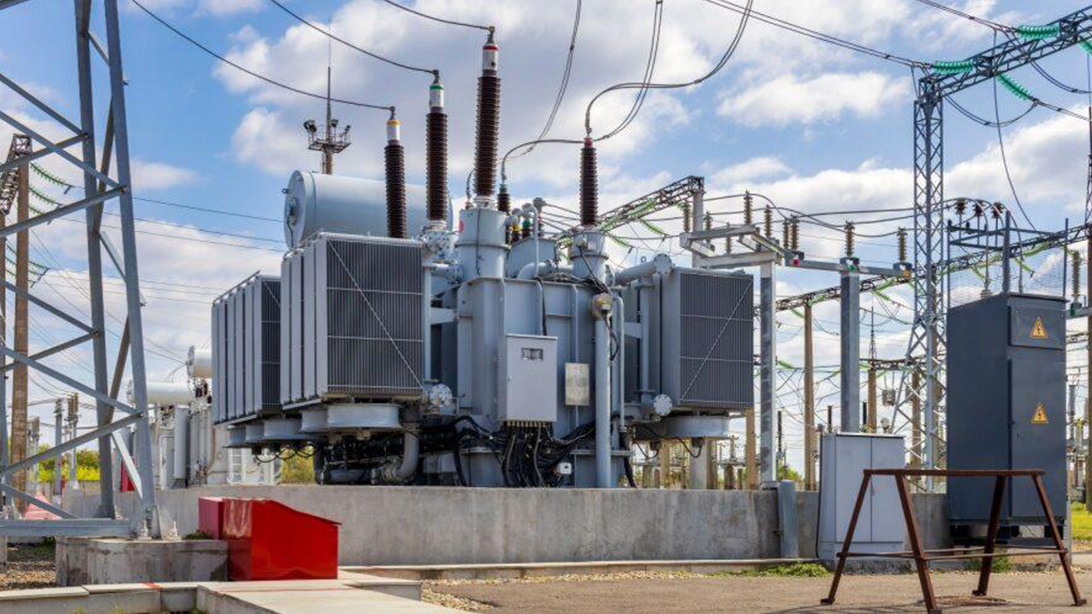
An alternating voltage applied to the primary winding produces changing magnetic flux in the core. That flux links the secondary winding and induces voltage in it. A winding is a coil of insulated conductor; the core provides the magnetic path. With a load connected, the secondary supplies current and the source supplies the corresponding input power, including losses.
For an ideal single-phase transformer, the winding-voltage ratio follows the turns ratio: V2/V1 = N2/N1. Here N is the number of turns. As a hypothetical teaching example, 1,000 primary turns and 100 secondary turns give a 10:1 step-down ratio. Applying 1,000 V would give 100 V in this ideal model. These are explanatory numbers, not a proposed product design. In a three-phase transformer, the line-voltage relationship also depends on the winding connections.
The US Department of Energy’s Electrical Science handbook, Module 13 explains induction, turns ratios and voltage/current relationships. Real equipment also has voltage drop and losses, so a turns-ratio example is not a guarantee of the loaded terminal voltage.
A generator step-up transformer connects generation voltage to a higher transmission voltage. A substation transformer may connect that transmission network to a lower-voltage industrial or distribution bus. At a given transferred power and power factor, raising voltage reduces current; this helps limit resistive losses in the transmission conductors. The transformer itself still dissipates energy.
Names such as “power transformer” and “distribution transformer” describe application families, but buyers should not assume that one universal MVA boundary separates them. Specify the actual voltage levels, duty and rating. A 110 kV / 115 kV power transformer page is a useful product starting point; the project datasheet must establish the offered secondary voltage and capacity.
| Part or system | Purpose | Why procurement should care |
|---|---|---|
| Core and windings | Provide the magnetic circuit and electrical circuits for energy transfer | The design must match the voltage, frequency and load duty |
| Insulation system | Separates energized parts and withstands electrical stresses | Voltage alone does not define every insulation requirement |
| Bushings and terminals | Bring electrical connections through the enclosure and connect external conductors | Confirm the cable or bus connection before the layout is frozen |
| Cooling equipment | Removes heat produced by losses | The stated rating must identify its cooling condition and auxiliary needs |
| Tank and liquid system, where used | Contain and support the liquid-immersed assembly | Liquid handling, access and site arrangements belong in the supply scope |
| Tap changer, where specified | Changes the effective winding turns to adjust the voltage ratio | Confirm whether adjustment requires an outage or is designed for operation under load |
These are functions to identify, not a promise that every transformer has the same accessories. An enquiry should distinguish required equipment from optional monitoring or controls. Siemens Energy’s power-transformer overview also illustrates how grid, generation and industrial duties lead to different configurations.
MVA means megavolt-amperes, a unit of apparent power; 1 MVA equals 1,000 kVA. A plant’s kW demand cannot simply be copied into an MVA box. Ask the electrical engineer for the load basis, operating cases and power factor. The guide to converting load kW into transformer kVA addresses that separate sizing question.
Frequency, site temperature and altitude are also purchase inputs. If an offer states two capacities for different cooling modes, ask which capacity remains available with the specified fans or pumps out of service. Record the answer against the owner’s operating requirement rather than choosing the largest number on the cover sheet.

Start with a single-line diagram: a simplified drawing showing the electrical buses and their connections. Mark the transformer location and the intended direction or directions of power flow. Add the required continuous rating, system frequency, voltage range on each side, site conditions and installation constraints. Identify unresolved values openly. A blank marked “owner confirmation pending” is more useful than an unexplained default.
Then ask for a coordinated datasheet, outline drawing, accessory list and proposed test schedule. IEC 60076-1 covers general requirements for single-phase and three-phase power transformers, with scope exceptions; the IEC publication description is a scope reference, not product certification. The purchase specification should name the applicable standards and editions. Use the datasheet approval guide when those inputs are ready for a controlled engineering review.
Send Zisheng Electric the two bus voltages, load requirement and single-line diagram for a power-transformer enquiry. State whether the equipment serves generation, a utility substation or an industrial plant. That gives the quotation a defined electrical task and helps the EPC team identify which decisions must be closed before an offer can be approved.
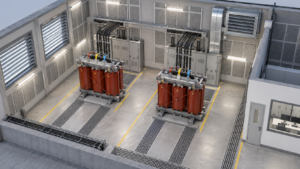
Review a dry-type transformer fan upgrade before ordering: confirm the approved rating, electrical capacity, room ventilation, failure response and handover evidence.
View details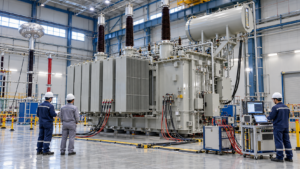
Compare transformer bids on a common lifecycle-cost basis. Align guaranteed no-load and load losses, capitalization factors, reference conditions and measurement uncertainty before award, then tie accepted values to the FAT record.
View details
Learn how EPC teams plan transformer logistics route surveys, including shipping dimensions, axle loads, bridge capacity, turning radius, site access and offloading requirements.
View details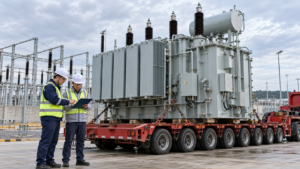
Compare core-type and shell-type power transformers using design evidence, loss guarantees, fault withstand, transport limits and EPC supply scope.
View details