 zishengelectric



news
News Center
Providing high-quality power to the world
Search productSearch post
news
Providing high-quality power to the world
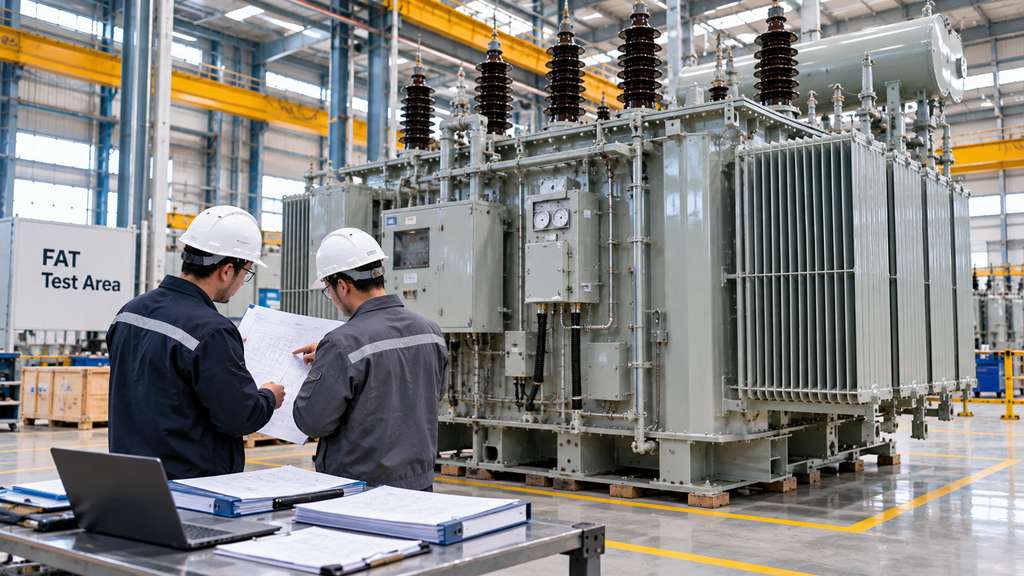
At Zisheng Electric, transformer delivery is treated as an engineered release rather than a logistics handoff. An EPC transformer delivery release checklist connects approved design data, factory evidence, transport controls and site readiness before a heavy asset leaves the manufacturer or arrives at the substation.
A power transformer can be mechanically complete and still be unready for dispatch. Missing drawings, an unresolved protection interface, an incomplete accessory list or an unprepared foundation can create delays that are expensive to recover. The transformer delivery release checklist gives the EPC team a controlled decision point: release, release with conditions, or hold.
The checklist also establishes ownership. The manufacturer confirms equipment evidence; the EPC contractor confirms transport and lifting interfaces; the owner or utility confirms the approved technical basis. This division prevents informal approvals from becoming site disputes.
Before release, the document register should show the latest approved general arrangement, rating plate data, winding and vector-group information, impedance, losses, cooling arrangement, bushing schedule, marshalling-box drawings and terminal details. The approved single-line diagram and protection interface matrix should match the equipment supplied. Revisions should be frozen against a transmittal number so the site team does not receive an obsolete drawing.
FAT reports, routine test results, inspection release notes, material certificates and non-conformance dispositions should be complete or clearly listed as conditional actions. Where a witness point remains open, the release note must identify the responsible party, due date and evidence required. A verbal statement that a report will follow is not a reliable release control.

| Release item | Decision evidence | Typical owner | Hold-point trigger |
|---|---|---|---|
| Rating and interfaces | Approved GA, nameplate and terminal schedule | Manufacturer / EPC | Mismatch with SLD or cable schedule |
| FAT and quality | Signed test report and closed NCR list | Manufacturer / owner | Unresolved critical NCR |
| Transport readiness | Route survey, tie-down plan and shock recorder | Logistics contractor | Unverified bridge, clearance or axle load |
| Site readiness | Foundation, oil containment and lifting access checklist | EPC contractor | Foundation or access not released |
| Handover records | Document index, spares and preservation log | EPC / owner | Missing controlled record |
Transformer delivery release checklist decisions must include the transport condition of the unit. Confirm the shipping configuration, oil level or nitrogen preservation arrangement, breather status, impact recorder installation and weather protection. The route survey should cover bridge capacity, turning radii, overhead lines, road gradients, escort requirements and the final access route into the substation.
At dispatch, photograph the tank, radiators, conservator, bushings, tap changer cabinet and accessories. Record seals, gauges and shock recorder values. On arrival, repeat the inspection before unloading. A transport event should trigger a documented engineering review rather than an assumption that the transformer is acceptable.
The foundation release should confirm anchor positions, rail or skid dimensions, grout condition, drainage, oil containment and clearances to adjacent equipment. Check that the planned lifting method matches the transformer mass, centre of gravity and available crane capacity. The unloading plan should define exclusion zones and communication responsibilities.
Before the truck arrives, the EPC team should verify cable trench access, earthing points, neutral connection, CT and VT wiring, marshalling-box termination space, fire protection interfaces and control-cable routes. The approved protection and SCADA signal lists should be available to the installation and commissioning teams.
A practical release meeting uses a single action register. Each open point is classified as critical, major or minor, with an owner and due date. Critical items affecting safety, insulation integrity, transport stability or statutory acceptance should block dispatch. Minor document formatting issues may be carried as conditions only when the owner has accepted the risk and the completion path is clear.
Zisheng Electric recommends a signed release note that records the decision, revision status, open actions, transport configuration and required arrival checks. This record becomes the baseline for receiving inspection, installation, commissioning and final handover.
Our engineering and project teams coordinate transformer configuration, interface drawings, FAT evidence, transport preparation and site support as one controlled workflow. We can review the release package against the EPC document register, identify missing evidence and align the equipment with the project single-line diagram and utility requirements.
For a transformer delivery release checklist review, send Zisheng Electric your drawings, datasheets, load list, technical specification, single-line diagram, grid parameters and environmental conditions. We will map the open interfaces, confirm the required evidence and return a practical release action list for your project team.

Plan transformer oil filling for EPC projects with controlled vacuum, compatibility checks, sampling, leak inspection and documented handover before energization.
View details
Review transformer pressure relief discharge routing through device selection, pipe supports, containment interfaces, site assembly and EPC handover records.
View details
Reconcile transformer cases, loose accessories and unit IDs across deliveries. Learn how to record a shortage and release only the installation kit that is complete.
View details
Build an auditable transformer commissioning punch list with risk classes, accountable owners, closure evidence, temporary controls and an EPC energization release gate.
View details