 zishengelectric





news
News Center
Providing high-quality power to the world
Search productSearch post
news
Providing high-quality power to the world
Zisheng Electric supports EPC teams that need transformer delivery to arrive as a controlled engineering activity, not an isolated trucking purchase. A transformer may comply with its electrical specification and still face serious schedule or damage risk if the port, road corridor, bridge limits, turning radii, crane position, foundation access, or temporary works are not verified. A disciplined transformer logistics route survey converts these interfaces into measurable decisions before shipment.
Transport planning should begin while the general arrangement drawing is still being coordinated. Shipping dimensions, total transport mass, center of gravity, lifting points, jacking pads, removable accessories, oil shipping condition, and shock-monitoring provisions all affect the route and offloading method. If the route survey is delayed until the transformer is packed, the project may discover that a gate, culvert, slope, overhead service, or internal road cannot accept the planned configuration.
The survey should have a named owner and approval path. The equipment supplier provides certified shipping data; the logistics contractor evaluates the corridor and transport equipment; the civil designer checks permanent and temporary works; the EPC contractor coordinates permits, shutdowns, site readiness, and interfaces. Assumptions must be recorded rather than passed verbally between parties.

The transport envelope is not always the same as the assembled outline. Bushings, conservator, radiators, fans, cable boxes, marshalling kiosk, and other accessories may be removed for shipment. The supplier should issue a shipping drawing that identifies the main tank envelope, separately packed components, transport mass, oil condition, nitrogen or dry-air requirements where applicable, center of gravity, support points, lifting lugs, pulling eyes, jacking pads, and prohibited handling areas.
Every route calculation must use the same revision of this drawing. A late change in cooler arrangement or cable box projection can invalidate clearance checks. The EPC document register should therefore link the route survey, transporter selection, lifting study, packing plan, and general arrangement drawing through a controlled revision process.
The route begins at the manufacturing dispatch point or port terminal and ends at the final foundation. It includes terminal handling areas, customs or inspection zones, road sections, intersections, roundabouts, bridges, culverts, railway crossings, overhead lines, urban restrictions, temporary laydown areas, site gates, internal roads, crane pads, and the final movement into position.
For each constraint, record location, coordinates where project procedures permit, photographs, measured clearances, road width, surface condition, longitudinal grade, crossfall, turning geometry, overhead clearance, allowable operating window, required temporary works, responsible party, and evidence needed for closure. A statement such as “route suitable” is not enough for engineering approval.
| Survey item | Required evidence | Decision supported | Risk if missed |
|---|---|---|---|
| Transformer shipping envelope | Approved drawing, mass breakdown, center of gravity | Trailer and handling arrangement | Clearance conflict or unstable loading |
| Bridge and culvert capacity | Owner records and engineer assessment | Axle-line configuration and route acceptance | Structural damage or route rejection |
| Turning radius and swept path | Measured geometry and vehicle model | Intersection modifications and traffic plan | Vehicle cannot complete a turn |
| Overhead services | Measured clearance and utility coordination | Isolation, lifting, or route change | Electrical and safety incident |
| Road surface and gradients | Survey levels, condition record, traction review | Prime mover, temporary works, weather limits | Loss of traction or schedule delay |
| Site gate and internal roads | As-built dimensions and readiness inspection | Final access and delivery release | Transformer stranded near site |
| Crane or jacking area | Lift study, bearing assessment, obstruction check | Offloading method and temporary works | Unsafe lift or foundation damage |
Gross cargo mass alone does not determine route suitability. The assessment must consider trailer tare mass, number and spacing of axle lines, load distribution, drawbar or gooseneck reactions, suspension equalization, speed, bridge geometry, and local authority requirements. The logistics contractor should provide the proposed vehicle configuration, while the responsible civil or structural engineer verifies bridges, culverts, pavements, shoulders, crane pads, and temporary crossings.
Do not publish a generic “allowable axle load” in the transformer purchase specification unless it comes from the responsible road authority or project engineer. Route limits are location-specific and may change with permits, season, road condition, or temporary works. Where records are incomplete, the project should define the required inspection, calculation, testing, or alternative route rather than guessing.
A long multi-axle transporter may clear a road width but fail at a tight turn because of swept path, tail swing, or trailer off-tracking. The route survey should model the actual vehicle configuration at critical intersections, gates, roundabouts, and switchbacks. It should also consider whether curbs, signs, barriers, poles, or landscaping must be temporarily removed and reinstated.
Vertical clearance is equally important. Measure bridges, gantries, tree canopies, power and communication lines, pipe racks, security structures, and temporary construction services. The minimum clearance should include the certified loaded height, suspension behavior, road profile, operational tolerance, and the method used to verify the measurement. Any utility isolation or line lifting requires written coordination and an approved work method.
For imported equipment, the port or terminal plan should address vessel discharge, lifting points, crane capacity, quay limitations, customs inspection access, storage area, weather protection, demurrage exposure, and transfer to the road transporter. Confirm whether the main tank arrives oil-filled, partially filled, or in another approved preservation condition, and define how separately shipped accessories will be identified and protected.
The packing list should match physical package marks and the installation sequence. Sensitive items such as bushings, monitoring devices, control cabinets, gaskets, and loose fittings need suitable environmental and impact protection. Storage conditions at port and site should be defined in the supplier instructions, including periodic checks and responsibility for preservation records.
The last kilometer often carries the highest interface risk because permanent roads, drains, trenches, fences, buildings, and foundations may still be under construction. The delivery readiness inspection should compare the approved route with actual site conditions. Confirm gate width and height, road compaction, drainage crossings, temporary ramps, gradients, laydown areas, exclusion zones, crane access, and emergency access.
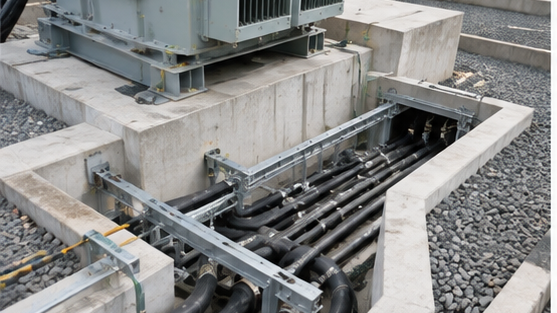
The foundation must be released before delivery. Check coordinates, elevation, levelness, rail or anchor arrangement, load capacity, oil containment, drainage, earthing points, cable trench openings, fire walls, and clearances. Any temporary support, jacking beam, skidding rail, or landing plate should be designed and approved for the actual loads.
Crane lifting is only one option. Depending on equipment configuration and site constraints, the plan may use a mobile crane, gantry, hydraulic jacks, skidding system, trailer self-offloading arrangement, or a controlled combination. The selected method must match supplier lifting and jacking points and must not impose unapproved loads on the tank, base, foundation, or accessories.
A lifting study should identify crane configuration, radius, load chart, rigging, spreader beams, sling angles, hook height, ground-bearing pressure, exclusion zone, wind limits, communications, and contingency measures. A jacking or skidding method statement should define sequence, support reactions, synchronization, temporary stability, and inspection hold points. The EPC team should confirm that competent personnel and certified equipment will be available on the planned date.
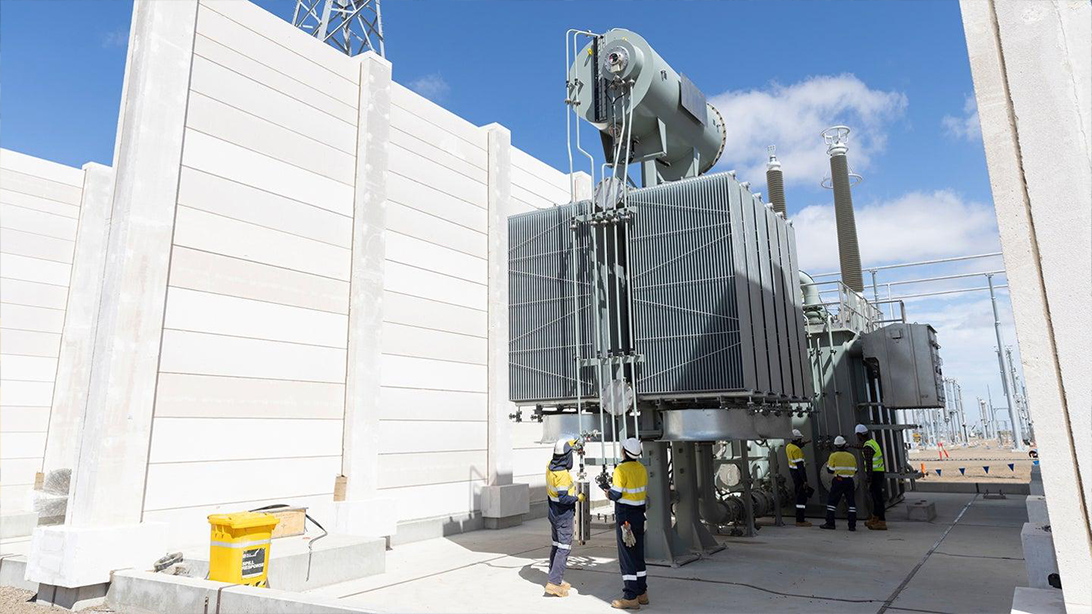
Each identified constraint should become a controlled action with owner, due date, evidence, and closure status. Typical risks include permit delay, bridge review, road strengthening, overhead-line shutdown, tree or sign removal, wet-weather restriction, port storage, unavailable crane pad, unfinished gate, conflicting construction traffic, and incomplete foundation release.
Useful hold points include approval of shipping drawings, approval of the route survey, permit confirmation, transporter inspection, port-release readiness, weather check, site access inspection, foundation release, lifting-plan approval, and post-delivery condition inspection. The shipment should not pass a hold point solely because the vessel or truck is waiting.
The following example is a template only and does not describe a real project.
For an effective transformer logistics route survey review, provide the approved transformer data sheet, shipping drawing, GA drawing, packing philosophy, destination and port, route map, bridge and road information, site layout, foundation details, cable-trench drawings, proposed transporter, lifting concept, delivery window, local permit requirements, and environmental restrictions.
Related EPC guidance covers transformer transport damage inspection, transformer foundation interfaces, and site assembly supervision. Relevant equipment references include our oil-immersed transformer range, 20 kV class distribution transformer, and project-specific oil-immersed transformer solutions.
A controlled transformer logistics route survey protects the transformer, civil works, schedule, and site team by resolving interfaces before dispatch. Our engineering team will review the requirements and respond to project inquiries within 24 hours.
In EPC projects, a transformer room must be designed as an operating space, not just a rectangle around the tank. Zisheng Electric engineers explain essential layout considerations including safety clearances, ventilation, lifting routes, and main...
View details
Evaluate transformer suppliers before tendering with an EPC checklist covering design, manufacturing, quality records, testing and site support.
View details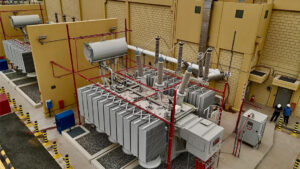
A practical EPC guide to evaluating transformer suppliers for Middle East and Africa projects, covering IEC compliance, testing, manufacturing, logistics, FAT, site service and after-sales support.
View details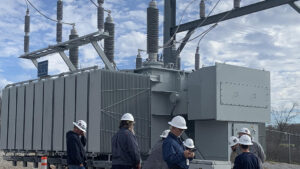
After years of working on-site with EPC projects, I have realized one critical truth: although transformers seem to be standard electrical equipment, every actual project requires customized support. Tiny differences in design parameters, dimensio...
View details