 zishengelectric





news
News Center
Providing high-quality power to the world
Search productSearch post
news
Providing high-quality power to the world
Choosing a distribution transformer is not simply a matter of selecting a kVA rating and comparing supplier prices.
The transformer needs to match the actual load, incoming grid voltage, secondary distribution system, frequency, installation environment, protection requirements, applicable standards, and future operating conditions.
A specification that looks correct on paper can still cause problems if one important parameter is overlooked.
For example, the transformer may have the correct kVA rating but the wrong voltage ratio, insufficient impedance, unsuitable insulation level, inadequate cooling, or accessories that do not match the project requirements.
From our engineering review experience, many transformer inquiries require clarification before a quotation can be prepared. In international projects, this is particularly important because grid voltage, frequency, standards, environmental conditions, and certification requirements vary between markets.
This guide follows the main technical checks our engineers use when reviewing distribution transformer inquiries. It is intended for EPC contractors, utilities, distributors, industrial users, electrical engineers, and project procurement teams.
The goal is simple:
Specify the transformer correctly before comparing supplier quotations.
Quick Distribution Transformer Selection Checklist
Before reviewing individual technical parameters, confirm the following:
Selection Item What to Check Capacity Actual demand, load profile, motor starting and future expansion Primary voltage Confirm with the utility or project electrical design Secondary voltage Match the downstream distribution system Frequency 50 Hz or 60 Hz Phase Single-phase or three-phase Installation Indoor, outdoor, coastal, high-altitude, etc. Transformer type Oil-immersed or dry-type Losses No-load loss and load loss requirements Winding Copper or aluminum Tap changer DETC or OLTC Protection Required monitoring and protection accessories Standards IEC, IEEE, ANSI or local standards Documentation Drawings, test reports, certificates and compliance documents Delivery Required production and project schedule These are the same basic parameters that should be clarified before a manufacturer prepares a detailed technical quotation.
Quick Distribution Transformer Selection Checklist
Before reviewing individual technical parameters, confirm the following:
Selection Item What to Check Capacity Actual demand, load profile, motor starting and future expansion Primary voltage Confirm with the utility or project electrical design Secondary voltage Match the downstream distribution system Frequency 50 Hz or 60 Hz Phase Single-phase or three-phase Installation Indoor, outdoor, coastal, high-altitude, etc. Transformer type Oil-immersed or dry-type Losses No-load loss and load loss requirements Winding Copper or aluminum Tap changer DETC or OLTC Protection Required monitoring and protection accessories Standards IEC, IEEE, ANSI or local standards Documentation Drawings, test reports, certificates and compliance documents Delivery Required production and project schedule These are the same basic parameters that should be clarified before a manufacturer prepares a detailed technical quotation.
2. Confirm Primary and Secondary Voltage
Voltage is one of the most important transformer specifications and should be confirmed before production.
The primary voltage must match the actual incoming network.
The secondary voltage must match the downstream electrical system.
Frequency must also be confirmed because transformer magnetic design is related to the operating frequency.
Common medium-voltage systems include:
Market / Region Common Examples Africa 11 kV, 33 kV, 6.6 kV and other local systems Southeast Asia 10 kV, 11 kV, 20 kV, 22 kV and other local systems South America 13.8 kV, 23 kV, 34.5 kV and other local systems Middle East 11 kV, 13.8 kV, 33 kV and other local systems Central Asia 10 kV, 35 kV and other local systems Low-voltage systems commonly include:
- 400/230 V
- 415/240 V
- 480/277 V
The actual utility requirement must always take priority over a general regional reference. The original article correctly emphasizes confirming the utility connection point rather than relying only on project drawings.
What Should Be Confirmed?
Before ordering, confirm:
- Primary voltage
- Secondary voltage
- Frequency
- Phase configuration
- Neutral arrangement
- Required voltage regulation
- Tap range
- Tap positions
- Vector group
From Zisheng’s Engineering Review Process
When a customer sends a transformer inquiry, our engineers first compare the requested primary voltage, secondary voltage and frequency with the project requirements.
If the specification appears inconsistent, we clarify it before preparing the final quotation.
This step is particularly important for international projects where the voltage stated on an old drawing may not match the latest utility requirement.
Confirm the actual grid connection requirement before the transformer enters production.
3. Check the Installation Environment
Transformer design should reflect the actual installation site.
The following conditions can influence the specification:
- Ambient temperature
- Altitude
- Humidity
- Dust
- Pollution
- Salt exposure
- Ventilation
- Fire-safety requirements
- Available installation space
- Seismic conditions
Outdoor Applications
Oil-immersed transformers are widely used for outdoor distribution because the insulating liquid provides both electrical insulation and heat transfer.
Pad-Mounted Transformers
Pad-mounted transformers are commonly used in underground distribution systems serving:
- Residential developments
- Commercial areas
- Industrial facilities
- Renewable energy projects
Their enclosed construction helps protect energized components while providing a compact installation.
Pole-Mounted Transformers
Pole-mounted transformers are widely used in overhead distribution networks, particularly in rural and utility applications.
The exact capacity range and configuration should be selected according to the local utility specification rather than relying on a generic range.
Indoor Applications
Dry-type transformers are often considered for:
- Commercial buildings
- Hospitals
- Data centers
- Industrial facilities
- High-rise buildings
- Locations with strict fire-safety requirements
The final decision should consider local building codes, ventilation, available space, fire protection and total cost of ownership.
Environmental Conditions and Their Impact
Site Condition Possible Design Consideration High ambient temperature Thermal design and temperature-rise requirements High altitude Cooling and insulation considerations Coastal environment Corrosion protection and enclosure materials High humidity Moisture control and insulation protection Dust / pollution Creepage distance and enclosure protection Seismic area Mechanical reinforcement and foundation requirements Zisheng Factory Experience
For coastal or high-humidity projects, we review the site conditions before finalizing the coating and enclosure specification.
Depending on the environment, the design may include:
- Enhanced anti-corrosion coating
- Stainless-steel hardware
- Sealed cable entries
- Improved enclosure protection
For high-altitude installations, insulation clearances and thermal performance are reviewed according to the actual site elevation.
This is more reliable than applying the same standard design to every project.
4. Oil-Immersed or Dry-Type Transformer?
There is no universally better transformer type.
The correct choice depends on:
- Installation location
- Fire-safety requirements
- Transformer capacity
- Maintenance requirements
- Environmental conditions
- Available space
- Project budget
- Local regulations
Oil-Immersed Transformers
Oil-immersed transformers use insulating liquid for electrical insulation and heat transfer.
They remain a common choice for:
- Utility distribution
- Outdoor substations
- Industrial power distribution
- Pad-mounted applications
- Pole-mounted applications
Main Advantages
- Effective heat dissipation
- Mature technology
- Wide application range
- Good outdoor performance
- Competitive cost for many applications
- Suitable for a broad range of transformer ratings
Mineral oil remains widely used because of its established performance and availability.
Natural ester fluids may be considered where fire safety and environmental requirements are more demanding. The actual specification and cost should be confirmed for the individual project rather than relying on a general percentage premium.
Typical Maintenance
Depending on the transformer design and project requirements, maintenance may include:
- Oil sampling
- Dissolved gas analysis
- Oil-level inspection
- Leak inspection
- Bushing inspection
- Oil condition monitoring
Dry-Type Transformers
Dry-type transformers use solid insulation instead of liquid insulation.
They are often selected where:
- The transformer is installed inside a building
- Fire risk needs to be minimized
- Oil containment is difficult
- The transformer is close to sensitive equipment
- Building regulations restrict oil-filled equipment
Important Considerations
Dry-type transformers also require appropriate:
- Ventilation
- Temperature control
- Humidity protection
- Dust protection
- Installation clearance
For indoor applications, dry-type may provide a practical solution. For outdoor utility distribution, oil-immersed transformers are often more economical and easier to integrate.
The final decision should be based on the complete project environment rather than transformer type alone.
5. Evaluate Transformer Losses and Winding Material
Transformer price is only one part of the purchasing decision.
For equipment that may operate continuously for many years, no-load loss and load loss can have a significant impact on total ownership cost.
No-Load Loss
No-load loss occurs whenever the transformer is energized, even when the connected load is low.
For example:
300 W × 24 hours × 365 days = 2,628 kWh/year
At an electricity price of $0.15/kWh, this represents approximately:
$394/year
The actual economic impact depends on the electricity tariff, operating hours, loading profile and transformer service life.
The original article uses this calculation to demonstrate why buyers should compare guaranteed loss values rather than only the purchase price.
Request Guaranteed Loss Values
When comparing transformer quotations, ask suppliers to provide:
- No-load loss
- Load loss
- Impedance
- Temperature-rise requirements
- Applicable efficiency standard
Do not compare two transformers only by kVA rating.
4. Oil-Immersed or Dry-Type Transformer?
There is no universally better transformer type.
The correct choice depends on:
- Installation location
- Fire-safety requirements
- Transformer capacity
- Maintenance requirements
- Environmental conditions
- Available space
- Project budget
- Local regulations
Oil-Immersed Transformers
Oil-immersed transformers use insulating liquid for electrical insulation and heat transfer.
They remain a common choice for:
- Utility distribution
- Outdoor substations
- Industrial power distribution
- Pad-mounted applications
- Pole-mounted applications
Main Advantages
- Effective heat dissipation
- Mature technology
- Wide application range
- Good outdoor performance
- Competitive cost for many applications
- Suitable for a broad range of transformer ratings
Mineral oil remains widely used because of its established performance and availability.
Natural ester fluids may be considered where fire safety and environmental requirements are more demanding. The actual specification and cost should be confirmed for the individual project rather than relying on a general percentage premium.
Typical Maintenance
Depending on the transformer design and project requirements, maintenance may include:
- Oil sampling
- Dissolved gas analysis
- Oil-level inspection
- Leak inspection
- Bushing inspection
- Oil condition monitoring
Dry-Type Transformers
Dry-type transformers use solid insulation instead of liquid insulation.
They are often selected where:
- The transformer is installed inside a building
- Fire risk needs to be minimized
- Oil containment is difficult
- The transformer is close to sensitive equipment
- Building regulations restrict oil-filled equipment
Important Considerations
Dry-type transformers also require appropriate:
- Ventilation
- Temperature control
- Humidity protection
- Dust protection
- Installation clearance
For indoor applications, dry-type may provide a practical solution. For outdoor utility distribution, oil-immersed transformers are often more economical and easier to integrate.
The final decision should be based on the complete project environment rather than transformer type alone.
5. Evaluate Transformer Losses and Winding Material
Transformer price is only one part of the purchasing decision.
For equipment that may operate continuously for many years, no-load loss and load loss can have a significant impact on total ownership cost.
No-Load Loss
No-load loss occurs whenever the transformer is energized, even when the connected load is low.
For example:
300 W × 24 hours × 365 days = 2,628 kWh/year
At an electricity price of $0.15/kWh, this represents approximately:
$394/year
The actual economic impact depends on the electricity tariff, operating hours, loading profile and transformer service life.
The original article uses this calculation to demonstrate why buyers should compare guaranteed loss values rather than only the purchase price.
Request Guaranteed Loss Values
When comparing transformer quotations, ask suppliers to provide:
- No-load loss
- Load loss
- Impedance
- Temperature-rise requirements
- Applicable efficiency standard
Do not compare two transformers only by kVA rating.
Copper or Aluminum Windings?
Both copper and aluminum are established transformer winding materials.
Characteristic Copper Aluminum Conductivity Higher Lower Weight Higher Lower Material cost Higher Lower Mechanical strength Higher Lower Thermal expansion Lower Higher The right choice depends on:
- Transformer rating
- Short-circuit requirements
- Space constraints
- Project budget
- Customer specification
- Manufacturing design
The conductor material itself does not determine transformer quality. Winding design, joints, insulation, clamping and manufacturing control are equally important.
Zisheng Manufacturing Practice
At Zisheng, winding conductors are inspected before production. During coil winding, manufacturing parameters are controlled to maintain consistent winding quality.
After winding, the active parts undergo the required drying process before final assembly. Completed transformers are then subjected to routine testing before shipment.
6. Select the Right Tap Changer
Tap changers allow the transformer voltage ratio to be adjusted.
DETC — De-Energized Tap Changer
A DETC can only be operated when the transformer is disconnected from the power supply.
It is commonly used where:
- Grid voltage is relatively stable
- Occasional voltage adjustment is sufficient
- A simple and economical solution is preferred
A common configuration is ±5%, although the actual tap range and step should follow the project specification.
OLTC — On-Load Tap Changer
An OLTC allows voltage adjustment while the transformer remains energized.
It may be considered for:
- Utility substations
- Long feeders
- Networks with significant voltage variation
- Industrial systems with changing loads
- Certain renewable energy applications
The trade-off is increased system complexity, cost and maintenance compared with a conventional DETC arrangement.
The correct choice should be based on actual network conditions rather than transformer capacity alone.
7. Specify Protection and Accessories Based on Transformer Criticality
A transformer should be considered as part of the complete electrical system.
Protection and monitoring should be coordinated with:
- Transformer rating
- Upstream protection
- Downstream equipment
- Network fault level
- Installation environment
- Project criticality
Common Protection and Accessories
Component Main Function Pressure relief device Relieves abnormal internal pressure Buchholz relay Detects gas accumulation and oil movement in applicable conservator-type designs Oil temperature indicator Monitors oil temperature Oil level gauge Monitors oil level Drain/sampling valve Allows oil sampling and draining Surge arrester Protects against overvoltage surges Winding temperature indicator Monitors winding thermal condition Fuses Provides protection in applicable distribution configurations Critical installations may also use:
- Online DGA monitoring
- Moisture-in-oil sensors
- Partial-discharge monitoring
- Bushing monitoring
Protection should not simply be selected from a standard accessory list. It should be coordinated with the complete electrical system.
Zisheng Engineering Practice
At the engineering stage, protection accessories are considered together with the transformer design.
This includes accessory positioning, temperature indicator wiring, alarm/trip contacts and other project-specific requirements.
8. Confirm the Applicable Transformer Standards
International transformer projects often involve multiple standards.
The applicable requirements depend on:
- Destination country
- Utility specification
- Project specification
- Transformer type
- Voltage class
- Efficiency requirements
Common standards and regulatory frameworks include:
Market / Application Common References International IEC 60076 series North America IEEE C57 series, ANSI and applicable UL requirements Europe IEC/EN standards and applicable EU requirements India IS standards and BIS requirements China GB standards Brazil Applicable ABNT standards Saudi Arabia / Gulf Applicable SASO and Gulf requirements Nigeria Applicable NIS and SONCAP requirements These should be treated as project references rather than a universal checklist. The exact edition and applicable part should always be confirmed before production.
Transformer Documentation
For international procurement, buyers may request:
- Routine test reports
- Type test reports where required
- Factory Acceptance Test documentation
- Technical drawings
- Nameplate information
- Technical data sheets
- Compliance declarations
- Packing documents
- Shipping documents
Certification and documentation should be confirmed before production, not after shipment. The original article correctly identifies documentation as an important part of international transformer procurement.
9. Define Customization Requirements Early
A distribution transformer is not always an off-the-shelf product.
Depending on the project, the following may require customization:
Parameter Why It Matters Capacity Must match actual load Voltage Must match the network Frequency 50 Hz or 60 Hz Vector group Determines phase relationship Impedance Affects fault current and voltage regulation Insulation level Must match system requirements Temperature rise Affects thermal performance Cooling Depends on loading and design Winding material Copper or aluminum Enclosure Depends on installation environment Tap range Depends on network voltage variation The original specification list covers these parameters and is worth retaining as part of the article.
How Zisheng Handles Customized Transformer Orders
Before quotation, Zisheng’s engineering team reviews the customer’s technical requirements.
Step 1 — Technical Review
We check:
- Capacity
- Primary voltage
- Secondary voltage
- Frequency
- Phase
- Vector group
- Impedance
- Insulation level
- Tap range
- Installation conditions
Step 2 — Design Confirmation
The transformer design is developed according to the applicable standard and project requirements.
Site conditions such as:
- Ambient temperature
- Altitude
- Humidity
- Installation method
are considered where applicable.
Step 3 — Production Planning
After design approval, production is arranged for:
- Core processing
- Coil winding
- Insulation processing
- Assembly
- Tank manufacturing
- Drying
- Oil filling
- Testing
Step 4 — Testing
Each transformer undergoes the applicable routine tests before dispatch.
Additional testing or witnessed FAT can be arranged for projects requiring customer or third-party inspection.
Step 5 — Documentation
The required drawings, test reports, nameplate information and compliance documents are prepared for customer review.
This workflow is particularly relevant to EPC projects, utility upgrades, renewable energy installations and industrial facilities where transformer specifications are often project-specific.
10. Engineering Example: How a Transformer Specification Is Developed
The following example illustrates the selection process. It should be treated as an engineering example, not as a claim about a specific customer project.
Initial Requirement
A customer requests a transformer for an industrial facility:
Parameter Initial Requirement Connected Load 800 kW Demand Factor 0.70 Power Factor 0.90 Primary Voltage 11 kV Secondary Voltage 415 V Frequency 50 Hz Installation Outdoor Preliminary Capacity Calculation
800 × 0.70 ÷ 0.90 ≈ 622 kVA
The next standard rating may therefore be:
630 kVA
However, the engineering review should continue.
The team should check:
- Largest motor starting current
- Future expansion
- Voltage drop
- Harmonic loads
- Ambient temperature
- Installation altitude
- Required impedance
- Vector group
- Tap range
- Applicable standard
- Protection requirements
Only after these items are confirmed should the final transformer specification be approved.
This is an important point for buyers:
Transformer selection is an engineering process, not simply a kVA selection exercise.
11. Evaluate the Transformer Manufacturer
A low purchase price does not necessarily mean a low project cost.
When comparing manufacturers, review the complete supply capability.
Manufacturing Capability
Ask whether the manufacturer has controlled processes for:
- Core cutting and stacking
- Coil winding
- Insulation processing
- Vacuum drying
- Tank manufacturing
- Leak testing
- Oil filling
- Electrical testing
- Final inspection
The original article’s manufacturing checklist is particularly suitable for this section.
Testing Capability
Routine testing may include:
- Winding resistance
- Voltage ratio and phase displacement
- No-load loss and current
- Load loss and impedance
- Applied-voltage test
- Induced-voltage test
Depending on the project, additional type testing or witnessed FAT may be required.
For international buyers, the important question is not simply:
“Does the factory test the transformer?”
Instead ask:
“Which tests are performed, according to which standard, and will the test results be provided with the shipment?”
After-Sales Support
For international projects, clarify:
- Warranty
- Technical support
- Spare parts
- Installation support
- Commissioning assistance
- Documentation
- Claim procedure
- Technical response time
A transformer may remain in service for decades, so supplier support should extend beyond shipment.
12. Common Distribution Transformer Selection Mistakes
Mistake 1: Sizing Only From Connected Load
Connected load does not always equal actual operating demand.
Review demand factor, power factor, motor starting and future expansion.
Mistake 2: Assuming the Voltage From an Old Drawing
Project drawings can be outdated.
Confirm the latest utility requirement before production.
Mistake 3: Ignoring the Installation Environment
A transformer designed for standard conditions may require modifications for:
- High temperature
- High altitude
- Coastal environments
- High humidity
- Dust
- Industrial pollution
Mistake 4: Comparing Suppliers Only by Price
Two transformers with the same kVA rating may have very different:
- Losses
- Winding materials
- Accessories
- Testing requirements
- Documentation
- Warranty
- Delivery conditions
Compare the complete technical offer, not only the unit price.
Mistake 5: Confirming Certification Too Late
Applicable standards and certifications should be identified before production.
Late certification requirements can create redesign, testing and delivery problems.
Mistake 6: Treating Every Transformer as a Standard Product
International projects often require customization of:
- Voltage
- Impedance
- Vector group
- Tap range
- Insulation level
- Protection
- Enclosure
- Cooling
These requirements should be clarified during the quotation stage.
13. Transformer RFQ Checklist
Before requesting a quotation, prepare as much of the following information as possible:
Electrical Parameters
- Capacity
- Primary voltage
- Secondary voltage
- Frequency
- Phase
- Vector group
- Impedance
- Tap range
- Insulation level
Installation Conditions
- Indoor / outdoor
- Ambient temperature
- Altitude
- Humidity
- Coastal / corrosive environment
- Installation space
Commercial Information
- Quantity
- Destination country
- Required delivery date
- Applicable standard
- Required certificates
- Inspection requirements
Protection & Accessories
- Buchholz relay
- Pressure relief device
- Temperature indicators
- Oil level gauge
- Surge arresters
- Fuses
- Monitoring system
The more complete the RFQ information, the fewer technical clarifications will be required before production.
14. Frequently Asked Questions
Can an oil-immersed transformer be installed indoors?
Yes, but the installation must comply with applicable fire-safety, ventilation, containment and electrical requirements.
The final decision depends on local regulations and the specific transformer design. Dry-type transformers are often preferred in buildings where fire protection and oil containment are major considerations.
How long can a distribution transformer operate?
A properly designed and maintained transformer can provide a long service life, but actual life depends on:
- Loading
- Temperature
- Insulation condition
- Maintenance
- Moisture
- Operating environment
- Fault history
Rather than relying on a fixed number of years, buyers should evaluate the transformer’s thermal design, insulation system, operating conditions and maintenance requirements.
What is the difference between a distribution transformer and a power transformer?
The distinction depends on the rating, voltage level, application and industry practice.
Distribution transformers are generally associated with final or local distribution networks, while larger power transformers are commonly used in substations and transmission/distribution interfaces.
There is no single universal kVA boundary that applies to every market.
Is copper always better than aluminum?
No.
Copper has higher conductivity and mechanical strength, while aluminum can offer advantages in weight and material cost.
The overall transformer design is more important than the conductor material alone.
How long does a custom transformer take to manufacture?
Lead time depends on:
- Transformer rating
- Design complexity
- Material availability
- Testing requirements
- Quantity
- Customer inspection
- Production schedule
For this reason, lead time should be confirmed against the actual project specification rather than presented as a fixed industry-wide number. The original article appropriately identified these variables, but this version avoids presenting generalized delivery periods as guarantees.
What information is needed for a transformer quotation?
At minimum, provide:
- Capacity
- Primary voltage
- Secondary voltage
- Frequency
- Phase
- Installation environment
- Applicable standard
- Quantity
- Destination country
Additional information such as vector group, impedance, tap range, protection and site conditions will help the manufacturer prepare a more accurate quotation.
About Zisheng Transformer
Zisheng is a transformer manufacturer supporting international power distribution projects with engineering review, customized transformer production, routine testing and technical documentation.
Our product range includes:
- Oil-immersed distribution transformers
- Dry-type transformers
- Pad-mounted transformers
- Pole-mounted transformers
- Substation transformers
- Related power distribution equipment
The company’s manufacturing process covers material inspection, core processing, coil winding, insulation processing, assembly, vacuum drying, tank manufacturing, oil filling and routine testing.
Manufacturing Process
Production Stage Main Process Quality Control Material Inspection Core steel, conductors, insulation, bushings Incoming inspection Core Processing Cutting and stacking Dimensional and process checks Coil Winding Controlled winding process Winding inspection Insulation Insulation processing and drying Moisture control Assembly Core and winding assembly Alignment and clamping checks Vacuum Drying Moisture removal Vacuum process monitoring Tank Manufacturing Welding, leak testing and coating Weld and leak inspection Oil Filling Vacuum oil filling Oil quality inspection Routine Testing Electrical performance testing Test records
Transformer Testing
Before shipment, the applicable routine tests are performed on each transformer.
Typical tests include:
- Winding resistance measurement
- Voltage ratio and phase displacement
- No-load loss and current
- Load loss and impedance
- Applied-voltage test
- Induced-voltage test
For critical projects, additional type tests or witnessed factory acceptance tests can be arranged according to the project specification.
Why Work With a Manufacturer Instead of Buying Only on Price?
For international transformer procurement, the supplier should be evaluated on more than the initial quotation.
A capable manufacturer should be able to support:
Technical Review → Customized Design → Manufacturing → Testing → Documentation → Delivery
This is particularly important for EPC contractors, utilities, industrial users and distributors who need consistent technical communication throughout the project.
Zisheng supports overseas customers with technical specification review, customized production, testing documentation and delivery coordination.
Conclusion: Specify the Transformer Before Comparing the Price
The right distribution transformer is not necessarily the cheapest transformer.
It is the transformer that correctly matches the:
- Actual load
- Primary and secondary voltage
- Frequency
- Installation environment
- Efficiency requirements
- Protection system
- Applicable standards
- Testing and documentation requirements
- Future operating conditions
A clear technical specification also makes supplier comparison much easier.
When several manufacturers quote against the same technical requirements, buyers can compare:
- Capacity
- Losses
- Winding material
- Impedance
- Accessories
- Testing
- Certification
- Delivery
- Warranty
on a meaningful basis.
The best transformer purchase starts with the right technical specification.
Need a Transformer Quotation?
If you are working on a power distribution project, send the following information to the Zisheng engineering team:
- Required capacity
- Primary voltage
- Secondary voltage
- Frequency
- Indoor / outdoor installation
- Ambient temperature
- Altitude
- Applicable standard
- Quantity
- Destination country
Request a Technical Quotation →
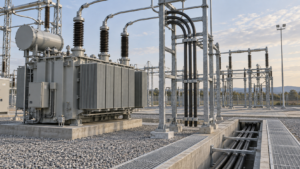
A practical EPC guide to transformer neutral grounding design, NGR sizing, parallel neutral control, protection coordination, factory tests and commissioning evidence.
View details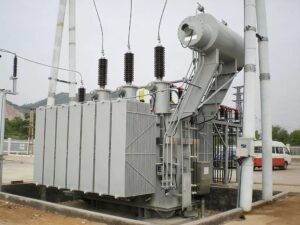
Close transformer datasheet, GA drawing, protection, equipment configuration, FAT, and MDR interfaces in EPC power projects with a controlled workflow.
View details
Oil immersed transformers are used in power transmission and distribution systems where reliable voltage conversion is required. The transformer core and windings are submerged in insulating oil, which provides both electrical insulation and heat ...
View details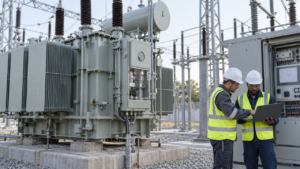
Define transformer OLTC control interfaces for AVR measurement, raise-lower commands, tap position, parallel operation, FAT and commissioning.
View details