 zishengelectric



news
News Center
Providing high-quality power to the world
Search productSearch post
news
Providing high-quality power to the world
A Buchholz relay can detect gas collecting in the relay and, on an appropriate model, a rapid flow of insulating liquid toward the conservator. Those signals tell an operator that something needs attention. They do not identify the exact fault. When an EPC buyer reviews a Zisheng Electric transformer offer, the first question is where the device sits in the proposed oil system and which conditions its contacts indicate.
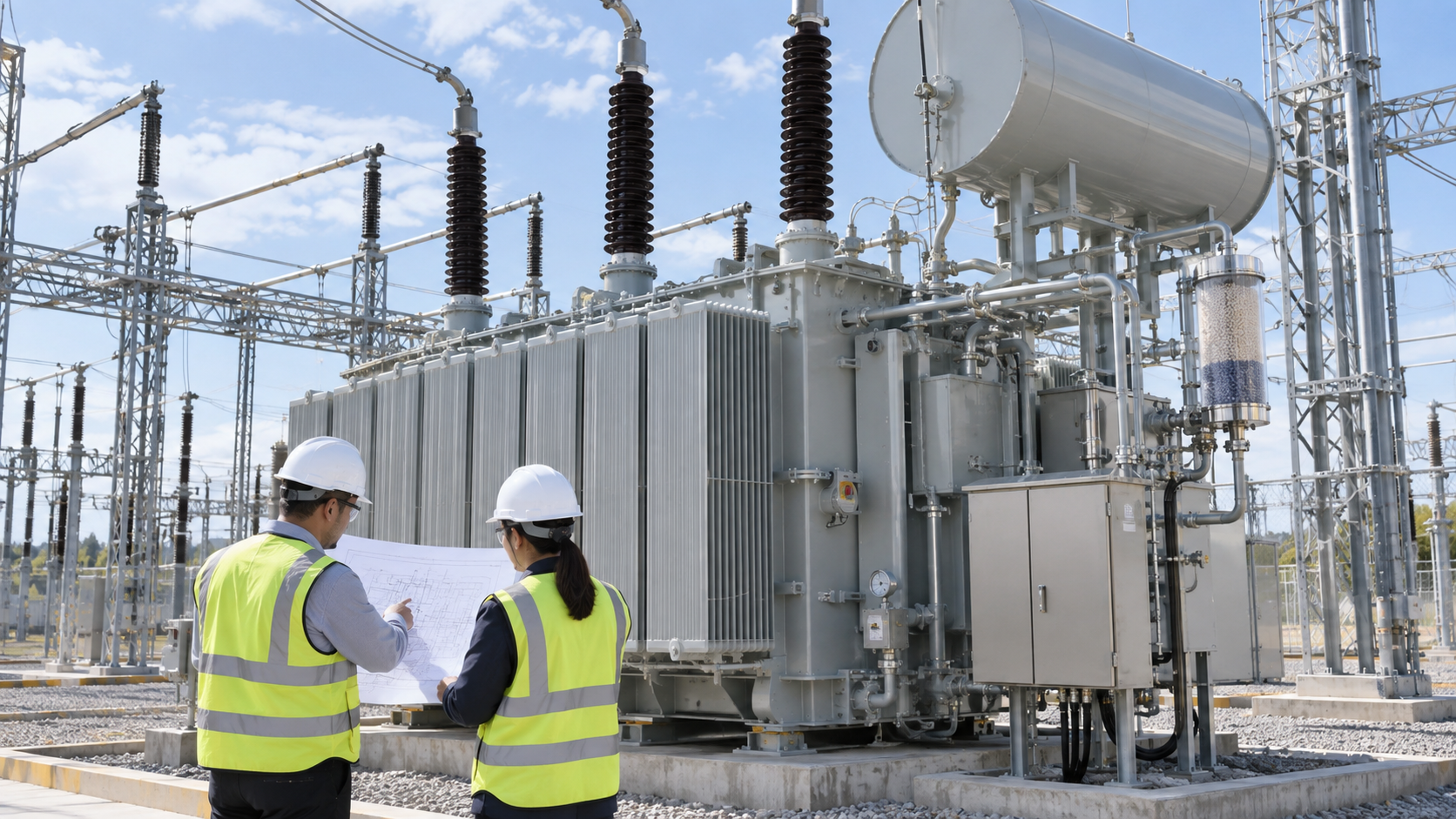
The conservator is a vessel that accommodates changes in oil volume as the transformer warms and cools. On a suitable conservator-type design, the Buchholz relay is installed in the pipe connecting the main tank to that vessel. Gas that reaches the relay can accumulate there. Liquid moving through the same passage can actuate a flow-sensitive mechanism. The location explains both the usefulness and the limits of the device.
Look at the offered arrangement before adding a standard accessory list to the order. A sealed tank without that connecting pipe does not have the same place for a conventional main-tank Buchholz relay. Ask the manufacturer what protective devices are offered for that construction. The oil preservation system guide shows how the choice of tank and conservator affects the equipment fitted around them.
Gas may be generated by an internal abnormal condition. In a typical two-element design, accumulated gas operates the warning contact. A sufficiently rapid surge of oil from the tank toward the conservator can operate a trip contact. Loss of liquid can also operate contacts, depending on the device. Check the actual model and manufacturer’s instructions before assigning these meanings to a control-room display.
Consider a purchase schedule listing only “gas relay included.” One bidder has supplied a relay with separate warning and trip contacts. Another has included the device but excluded the wiring back to the transformer control cabinet. Both schedules can carry the same tick in a bid comparison. Only one may meet the requested terminal boundary. Ask for the device designation, contact schedule, terminal numbers and included wiring before closing the line item.

An alarm indicates that the relevant contact operated. It does not establish the composition of the gas, the location of a defect or whether the equipment can return to service. A wiring simulation during factory acceptance can show that an input reaches an annunciator. It cannot by itself demonstrate the flow response of the installed relay. Ask for separate records of the device evidence and of the project wiring check.
For an example of product-specific operating mechanisms, see Reinhausen’s MESSKO GQ relay description. Do not copy a flow setting from a different model into the project schedule. The supplier should identify the specified setting and the applicable installation instructions. Any investigation after operation belongs with the responsible site team under its approved procedures.
Start with one row per signal. Record the initiating device, contact function, destination and required response. Identify who provides the cable beyond the transformer cabinet and who approves the trip logic. If the relay serves the main tank, label it accordingly. A tap changer may have a separate protection arrangement. Mixing the two descriptions can send the operator to the wrong equipment after an alarm.
Ask the design reviewer to mark the relay on the approved drawing and confirm access for inspection under the manufacturer’s instructions. Obtain the model-specific manual and the final terminal schedule with the handover documents. The buyer can then check three things at delivery: the supplied model matches the order, each contact has a documented purpose, and responsibility for the external circuit has an owner.
For a 2500 kVA oil-immersed transformer enquiry, send Zisheng Electric the proposed oil preservation arrangement and the owner’s alarm and trip requirements. Request confirmation of the applicable device and the wiring boundary for the offered unit.
Build a transformer protection interface matrix covering CTs, relays, trips, alarms, SCADA, auxiliary power, FAT and commissioning responsibilities.
View details
Coordinate transformer protection interfaces for EPC projects, including CT inputs, mechanical trips, alarms, relay logic, SCADA, FAT and handover.
View details
Transformer vector group selection guide for EPC substations covering phase shift, grounding, zero-sequence behavior, protection, parallel operation, FAT and site phasing.
View details
Compare autotransformers and two-winding transformers for EPC procurement. Check electrical isolation, system compatibility, ratings and tender deviations.
View details