 zishengelectric



news
News Center
Providing high-quality power to the world
Search productSearch post
news
Providing high-quality power to the world
The first question is whether the project requires electrical separation between the input and output circuits. An autotransformer uses a common winding connection and does not provide that separation. A two-winding transformer has separate primary and secondary windings. When discussing a transformer specification with Zisheng Electric, EPC buyers should establish this requirement before comparing dimensions or price.
That distinction can decide whether an alternative offer is acceptable. A lower-cost unit with the correct voltage ratio is not an equivalent substitution if it changes the approved system arrangement. This guide explains the checks a procurement team can request without having to redesign the network itself.

In an autotransformer, part of the winding is common to the two circuits. The input and output are therefore electrically connected. In a two-winding transformer, energy transfers through the magnetic field between separate windings; there is no intended conductive connection between those windings.
Electrical separation, often called galvanic isolation, means the absence of a direct conductive path between the circuits. It does not mean that every two-winding transformer automatically satisfies every safety-isolation application. The selected insulation system, construction, earthing arrangement and applicable requirements still need engineering review.
Hitachi Energy’s autotransformer overview identifies the common winding and absence of electrical isolation. It also describes the potential for a smaller design where the input and output voltages are relatively close. Its published product range is manufacturer-specific; it is not a declaration of Zisheng Electric’s offered range.
| Question | Autotransformer | Two-winding transformer |
|---|---|---|
| Are the two circuits electrically connected? | Yes, through the common winding arrangement | The windings are separate |
| Can a voltage ratio alone establish equivalence? | No; system connection and isolation requirements also matter | No; connection, insulation and performance still need confirmation |
| What may support a size or cost advantage? | A suitable design, often with relatively close voltage levels | The design is selected around separate winding requirements and project duty |
| Who accepts a change of arrangement? | The responsible system designer and approving owner | The same approval route applies to material design changes |
Start with the approved single-line diagram: the simplified drawing showing the main electrical connections. Ask the engineer to confirm whether separate windings are an explicit requirement, what earthing arrangement is intended on each side, and whether any project rule excludes a common winding connection. A requirement can arise from the system design, the connected load or the owner’s specification.
For a hypothetical example, suppose a project needs a modest voltage adjustment and a bidder proposes an autotransformer. The owner also requires the two circuits to have no direct conductive connection. The proposed autotransformer fails that requirement even if its voltage and full-load capacity match the tender. It should be recorded as a technical deviation, not accepted as a price-saving equivalent.
This is an illustrative purchasing scenario, not a completed Zisheng Electric project. It demonstrates a decision sequence: mandatory system requirements first, then compliant commercial options.
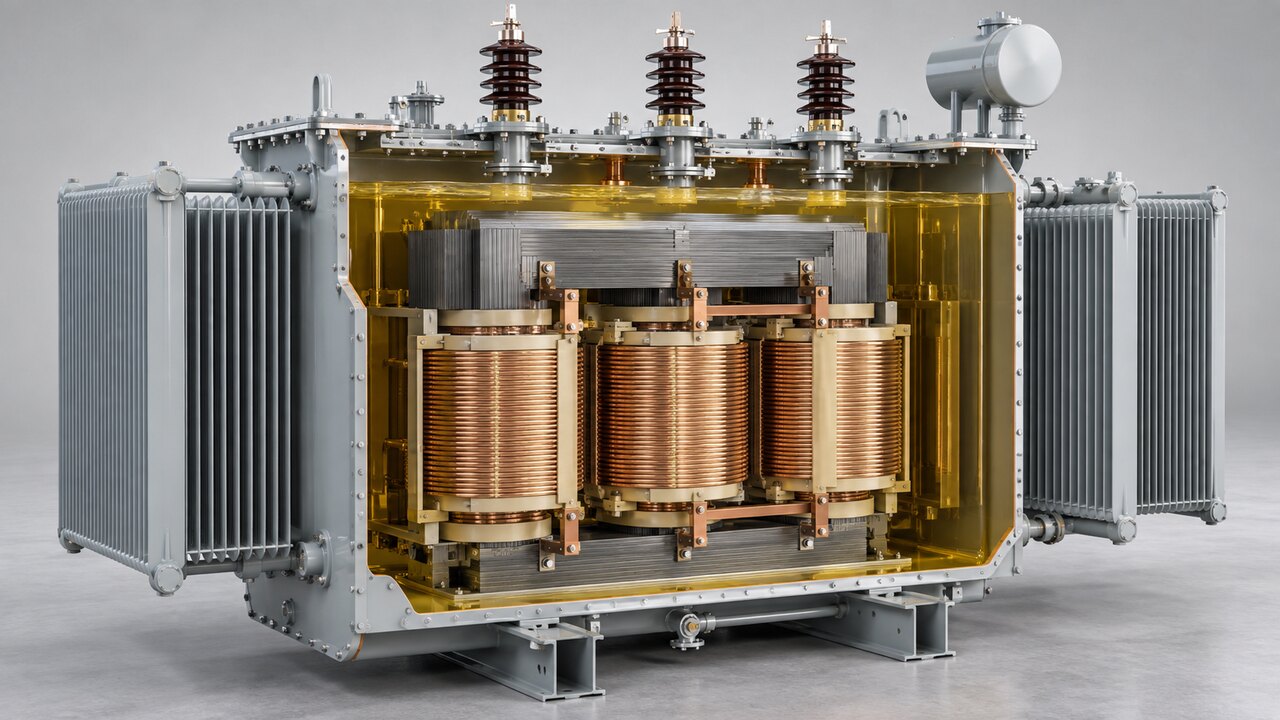
Replacing separate windings with a common winding arrangement can change how the connected systems interact. Ask the responsible engineer to review earthing, fault behavior, insulation coordination and protection requirements. Insulation coordination means matching the equipment’s insulation capability to the electrical stresses expected in the system. Procurement should obtain the review outcome and approved conditions rather than assume the original protection settings remain suitable.
Do not infer fault current from the transformer label alone. The result depends on the actual impedances and source network. Likewise, a general claim that one arrangement is always more efficient or always cheaper is not a project evaluation. Compare guaranteed losses, physical constraints, accessories and installed scope on a common basis.
Connection details also matter for phase relationships and compatibility with other equipment. The transformer vector group selection guide explains why the approved connection designation needs to remain consistent across project documents. A familiar designation does not eliminate the need to review a proposed change of transformer arrangement.
Request the rated input and output voltages, frequency, complete-unit apparent power in kVA or MVA, duty, cooling arrangement and site conditions. Apparent power is the rating used to express the combined voltage-and-current loading of AC equipment. For an autotransformer offer, ask the supplier to distinguish the load capacity of the complete assembly from any separately stated winding or transformed-power figure. Comparing different rating bases can produce a misleading price comparison.
Include the required connection diagram, impedance information on a stated base, insulation levels, terminals, neutral arrangements where applicable, accessories and guaranteed losses. Ask bidders to identify exclusions and deviations explicitly. Do not invent a universal percentage for material savings or impose a winding-capacity calculation without the actual design and rating definitions.
Carry the accepted arrangement into the purchase order and approved drawings through the transformer datasheet approval process. Any subsequent alternative needs the same technical review; a procurement clarification is not permission to alter the approved system.
For a power transformer enquiry, give Zisheng Electric the required voltages, frequency, MVA, site conditions, single-line diagram and explicit isolation requirement. State whether alternatives are allowed and who must approve them. Ask for confirmation of the offered winding arrangement and its project suitability; do not assume an autotransformer option is available from a general product listing.
This gives the purchasing team a practical acceptance test: the offered arrangement must meet the system requirements, its guarantees must use the requested rating basis, and every deviation must have a recorded technical disposition before award.

Compare OLTC and de-energized tap changers for EPC procurement. Define outage needs, voltage control, package scope and acceptance evidence before ordering.
View details
Compare mineral oil and natural ester transformers by fire requirements, cooling design, cold operation, preservation systems and EPC procurement documents.
View details
Prepare transformer harmonic load data for EPC bids with a practical checklist covering system boundaries, current spectra, operating modes, unbalance, thermal conditions, PCC compliance, supplier assumptions and deliverables before design freeze.
View details
Learn what a power transformer does, how magnetic induction changes voltage, and which ratings, components and project inputs EPC buyers should confirm.
View details