 zishengelectric



news
News Center
Providing high-quality power to the world
Search productSearch post
news
Providing high-quality power to the world
At tender stage, the transformer supplier can only assess nonlinear-load duty as well as the project data allows. Zisheng Electric works with EPC teams that need a clear boundary between a useful load schedule, a thermal capability review, and system-level harmonic compliance. The practical aim is to freeze the inputs before transformer design—not to imply that one current-distortion number can describe every operating case.
A bid package that says only “VFD loads, THDi 35%” leaves key questions open: which drives run together, where was the spectrum measured, what is the fundamental current, and what ambient condition applies? The checklist below helps procurement and engineering teams ask for comparable offers.

Total harmonic distortion of current (THDi) expresses the harmonic content relative to the fundamental component, but it does not state the absolute current or the spectrum by order. Two loads can have a similar THDi while producing different heating effects because their harmonic orders, magnitudes, duty cycles, and phase relationships differ. The transformer assessment therefore needs the expected current spectrum and the operating condition that produces it.
Keep the measurement or model boundary explicit. A drive manufacturer’s input-current spectrum at a stated operating point is not automatically the same as the aggregate spectrum at the transformer secondary. Filters, upstream impedance, multiple converters, transformer connections, and system configuration can change what appears at the point being assessed. Where data are estimated, label them as estimates and state the assumptions.
| Data item | Minimum bid input | Why it matters |
|---|---|---|
| System boundary | Single-line diagram, rated voltage and frequency, transformer connection | Establishes where load current and system limits are evaluated |
| Nonlinear loads | Equipment register, ratings, quantities, operating modes | Prevents a partial load list from being treated as the full duty |
| Current spectrum | Harmonic magnitudes by order, fundamental current, source and operating point | Supports a defensible transformer thermal assessment |
| Time profile | Simultaneous operation, duration, peak and continuous cases, growth allowance | Separates sustained heating from short-duration conditions |
| Site conditions | Ambient, altitude, cooling and installation constraints | Connects the electrical duty to the available heat-rejection conditions |
| Acceptance basis | Standard edition, calculation boundary, assumptions and required report | Lets EPC, owner and supplier review the same compliance basis |
IEEE C57.110 addresses determining the capability of liquid-immersed and dry-type transformers under nonsinusoidal load currents. It is useful when the question is how a harmonic current spectrum affects transformer loading capability. It does not by itself establish that the complete installation meets the project’s harmonic limits.
IEEE 519 addresses harmonic control in electric power systems, with limits applied at the PCC under its defined conditions. That system-level objective is different from a transformer thermal-capability assessment. An EPC specification should name the standard editions, measurement or calculation boundary, responsible party, and acceptance criteria; avoid asking a transformer supplier to guarantee a site-wide PCC result that depends on the network and other equipment.
For procurement context, compare the harmonic review with the assumptions used for transformer loss evaluation in EPC bids. Both topics benefit from a declared operating basis, but the loss schedule and nonlinear-current spectrum answer different engineering questions. For product configuration discussions, see Zisheng Electric’s 2500 kVA oil-immersed transformer listing; final suitability depends on the project rating, system study, specification, and supplier review.

A hypothetical example shows why the boundary matters. Suppose an industrial package adds several converters after the transformer bid. The original estimate may have used a diversified operating case, while the final plant can operate more units at once. The correct response is to update the load register and operating cases, then review the transformer capability and system harmonic study against the agreed project criteria. This example is illustrative only; it is not a Zisheng Electric project record or test result.
Ask for a concise technical response that identifies the submitted spectrum and duty cases, the assessment method and standard edition, the thermal or loading assumptions, any proposed design measures, and unresolved data. Require the supplier to mark deviations from the specification rather than burying them in general notes. If the study depends on final drive data or a network model, record that dependency as an EPC action with an owner and due date.
During FAT planning, keep the boundary realistic. Routine transformer tests verify specified characteristics and test values; they do not reproduce every future plant harmonic operating condition unless the contract explicitly defines a suitable test method and setup. Avoid treating a standard routine-test certificate as evidence of system-level harmonic performance. The project team should agree which calculations, records, and acceptance checks close the nonlinear-load review.
Store the approved load schedule, spectrum source files, revision, assumptions, supplier response, and final operating cases together. When a drive rating or operating mode changes, the reviewer can see whether the change affects the original assessment. This simple revision trail prevents a tender-stage estimate from silently becoming a final design guarantee.
For a project-specific transformer quotation, send Zisheng Electric the single-line diagram, equipment register, available harmonic spectra, operating scenarios, site conditions, and applicable project criteria. The engineering team can then clarify the missing inputs and define the correct scope for a transformer capability review.
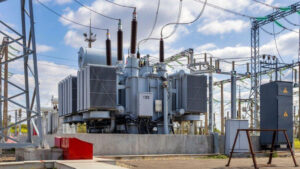
Compare mineral oil and natural ester transformers by fire requirements, cooling design, cold operation, preservation systems and EPC procurement documents.
View details
Compare ONAN and ONAF transformer ratings before ordering. Match required MVA to cooling availability, fan supply, site conditions and guaranteed performance.
View details
Review a dry-type transformer fan upgrade before ordering: confirm the approved rating, electrical capacity, room ventilation, failure response and handover evidence.
View details
Learn what a power transformer does, how magnetic induction changes voltage, and which ratings, components and project inputs EPC buyers should confirm.
View details