 zishengelectric





news
News Center
Providing high-quality power to the world
Search productSearch post
news
Providing high-quality power to the world
A project in Vietnam last year ordered a 3.15 MVA transformer. The RFQ had capacity, voltage, vector group, delivery date. No altitude.
The site was at 1,850 meters.
We caught it during drawing review — thermal margins and bushing creepage both needed adjustment. Three weeks delay, $9,000 in engineering changes. The client wasn’t happy. Neither were we.
But I’ve seen worse. A transformer that ships and then fails on site costs ten times more than one that gets corrected during design review.
This guide is what I cover in the first technical call with any new client. It’s based on what actually goes wrong, not what textbooks say should be checked.
A food processing plant in Thailand sent us an RFQ for 2,000 kVA. Their equipment list totaled 1,200 kW, and someone had added a safety factor.
We asked for the load schedule.
Actual maximum demand: 880 kW. Diversity factor: 0.55. Most equipment ran in different shifts. With power factor correction to 0.92, the real requirement was 1,250 kVA.
The smaller unit cut equipment cost by roughly $4,200 and reduced no-load losses by about $1,400 per year at Thailand’s industrial tariff. Over 25 years: $35,000+ saved.
The reverse happens too. A concrete plant in Saudi Arabia specified 1,000 kVA based on running load. But six 75 kW mixer motors started simultaneously at 6.5× rated current. The momentary voltage drop was unacceptable. Final solution: 1,600 kVA with higher impedance to limit starting current.
| Data to Provide | Why It Matters | What Happens Without It |
|---|---|---|
| Maximum demand | Determines required kVA | Over- or under-sizing |
| Load schedule | Shows simultaneous operation | Manufacturer guesses |
| Diversity factor | Prevents oversizing | Wasted capacity |
| Power factor | Directly affects kVA | Capacity inflated |
| Largest motor rating | Determines starting voltage drop | Motors won’t start |
| Starting method (DOL, soft start, VFD) | Affects required impedance | Wrong impedance, voltage problems |
| Harmonic sources | Requires additional loss evaluation | Premature insulation aging |
| Future expansion | Sets capacity margin | Short service life or wasted capital |
If you don’t have a load schedule, send the SLD and equipment list. We’ll work through it together before quoting.
“10 kV” means different things in different places. China: 10 kV standard. Vietnam industrial: often 22 kV. Indonesia: commonly 20 kV. Middle East: 13.8 kV in some grids. Nigeria: a 33 kV transformer may need to handle 28–38 kV actual voltage swings.
What the manufacturer needs:
A batch of transformers we shipped to the Philippines was specified as “13.8 kV.” Standard design. After the equipment reached the port, the consultant flagged that the local utility’s maximum system voltage on that network is 15.5 kV. The insulation margin was thinner than the project spec required. Extra testing, port storage, delay: about $7,000.
One question during RFQ review would have avoided it.
If your project allows oil-immersed, choose it. Lower cost, better efficiency, better overload tolerance, lower noise.
A 1,000 kVA oil-immersed unit: roughly $14,000–$18,000. Equivalent dry-type: $19,000–$24,000. Efficiency gap: oil-immersed 98.5–99.0% vs dry-type 97.8–98.5% at full load. Noise: 45–52 dB vs 52–62 dB.
Dry-type is the right call when:
But not every indoor installation needs dry-type. A Bangkok commercial complex specified four dry-type 2,000 kVA units. The building had proper fire-rated transformer rooms with ventilation. We proposed oil-immersed instead. Equipment savings: $110,000**. Long-term loss savings: another **$150,000+.
Would I suggest that for a hospital transformer room? No.
Send us your installation details and we’ll give you a straight comparison.
Standard transformers are designed for ≤1,000 m. Above that, air density drops and two things degrade: cooling capacity and external insulation strength.
The derating data below comes from our factory temperature-rise tests on units shipped to high-altitude sites:
| Altitude | Oil-Immersed Derating | Dry-Type Derating |
|---|---|---|
| 1,000 m | 0% | 0% |
| 1,500 m | ~3% | ~4% |
| 2,000 m | ~6% | ~8% |
| 2,500 m | ~9% | ~12% |
| 3,000 m | ~12% | ~16% |
| 3,500 m | ~15% | ~20% |
| 4,000 m+ | ~18–22% | ~25% |
A copper mine in Peru at 4,250 m ordered a 4 MVA unit. Standard 4 MVA design at that altitude: roughly 3.4 MVA usable capacity. We oversized cooling radiators, extended bushing creepage, increased air clearances. Final unit cost about 35% more than standard — a “standard” 4 MVA would have failed within months.
Altitude is not a minor correction. It changes the design.
Outdoor installation in Dubai in August: 50°C+. Indoor plant room in Malaysia with poor ventilation: 45°C year-round. Standard IEC design reference: 40°C maximum.
For Middle East outdoor projects, specify 50°C ambient. For indoor installations, calculate the actual room temperature first — including heat from other equipment. A 5°C difference in ambient shortens insulation life significantly under continuous full-load.
We supplied transformers to a coastal substation in Qatar. No coating specification, standard industrial paint.
Eighteen months later: extensive rust on cooling fins, corrosion around terminal box gaskets. Repair cost: about 8% of the transformer price. C5-M coating at time of manufacture: about 4%.
Within 5 km of the coast or in chemical/heavy industrial areas, specify C5-M.
Transformer impedance (%Z) affects fault current, voltage regulation, and motor starting voltage dip. Most buyers never specify it. Standard values are 4–6%, which works for many applications — and fails badly for others.
An Indonesian coal mine ordered 800 kVA dry-type transformers with standard 4% impedance. The mine ran 132 kW crusher motors on direct-on-line starting. When those motors started, secondary voltage dipped more than 15%. Contactors dropped out. PLCs reset.
For the remaining units, we increased impedance to 6%. Voltage dip dropped to about 10% — acceptable. The first units required soft starters as a retrofit: $4,800 per unit plus downtime.
If your largest motor exceeds 25% of transformer capacity, ask the manufacturer to run a starting voltage drop calculation. It takes an hour.
On-load tap changers add 15–25% to transformer cost, plus contact inspection, oil filtration, control complexity, and additional failure modes. Many RFQs specify OLTC without a voltage regulation study to justify it.
OLTC is justified when grid voltage regularly varies more than ±5%, or the transformer supplies voltage-sensitive processes, or it’s part of an actively managed network.
A European solar project specified ±10% OLTC on a 6.3 MVA transformer. The inverter system already provided reactive power control. The plant-level control system handled grid operator requirements. ±2×2.5% NLTC was sufficient: €19,000 saved.
A transformer runs 24/7/365 for 25+ years. Purchase price is maybe 25–30% of total cost.
1,600 kVA oil-immersed, 11kV/400V, 50Hz, 55% average loading, $0.08/kWh:
| Cost Item | Standard | High-Efficiency |
|---|---|---|
| Purchase price | $18,000 | $21,000 |
| No-load loss | 1,450 W | 1,050 W |
| Load loss at 75°C | 13,500 W | 12,000 W |
| Annual energy cost | ~$3,883 | ~$3,284 |
| Payback on premium | — | ~5 years |
| 25-year net savings | — | ~$12,000 |
One thing most guides miss: if your transformer runs lightly loaded most of the time (rural distribution, backup units, solar at night), prioritize no-load loss reduction. If it runs near full load continuously, load loss dominates. Tell your manufacturer your load profile, not just “low losses.”
A transformer manufactured and tested to IEC 60076 can still face acceptance problems.
| Market | Standard | Additional Requirements |
|---|---|---|
| China | GB 1094 | CCC or CQC certification |
| USA/Canada | IEEE C57 / CSA | UL/CSA listing for certain applications |
| Saudi Arabia | IEC + SEC specs | SASO certification, additional short-circuit verification |
| Indonesia | IEC + SNI | SNI mark required |
| Australia | AS/NZS 60076 | Additional fire-safety requirements |
| UAE | IEC + utility specs | Utility-specific testing |
We learned this the expensive way. A Saudi utility project: transformers manufactured and tested to IEC 60076, passed factory testing. At Saudi customs, the local utility required verification against SEC’s own standard, including additional short-circuit withstand testing. Freight, testing, demurrage: $23,000. Plus four weeks delay.
Before quoting any international project now, we ask for the local utility standard or confirm acceptance criteria. If the client can’t provide it, it’s flagged as a risk in the quotation.
Factory acceptance testing isn’t paperwork. Things we’ve caught during FATs:
All cheaper to fix at the factory than on site.
FAT checklist:
Factory testing photos and FAT process walkthrough
text
- Rating: _____ kVA/MVA
- Primary voltage: _____ kV rated / _____ kV maximum system
- Secondary voltage: _____ V
- Frequency: _____ Hz
- Phase: Single / Three
- Installation: Indoor / Outdoor
- Standard: IEC 60076 / IEEE C57 / GB 1094 / Other
- Quantity: _____
- Delivery: _____
- Date required: _____
text
- SLD: Attached
- Load schedule: Attached
- Maximum demand: _____ kW
- Power factor: _____
- Largest motor: _____ kW, starting method: _____
- Altitude: _____ m
- Ambient temperature: _____°C min / _____°C max
- Humidity: _____%
- Corrosion: Normal / Coastal / Industrial / Chemical
- Tap changer: NLTC / OLTC / Advise
- Tap range: ±_____% in _____ steps
- Impedance: _____% or "recommend"
- Loss requirements: Standard / Low loss / Custom
- Vector group: _____
- Special tests: _____
- Local utility spec: Attached / Not available
- FAT: Yes / No
Download printable RFQ checklist (PDF)
2,100 m altitude, -8°C to 42°C daily swing, heavy dust, intense UV.
Specified: 2 × 31.5 MVA oil-immersed, cooling design for 2,500 m, C5-M coating, extended creepage bushings (25 kV class on 22 kV system), dust-resistant enclosure.
Result after 18 months: zero unplanned outages, clean oil samples.
The extra cooling capacity cost about 4% at purchase. It eliminated the risk of thermal shutdown during summer peak.
Project photos: transformer delivery and site installation
Remote areas, no maintenance, low average loading, theft risk.
Specified: no-load loss ~90 W on 50 kVA (standard ~145 W), sealed construction, anti-theft bolts, lightweight for pickup truck transport.
Unit cost premium: ~12%. Annual savings across 2,000 units: ~$95,000. Payback: ~3.5 years.
For lightly-loaded rural networks, no-load loss dominates. Standard “efficient” designs for full-load operation are the wrong choice.
85%+ humidity, dust, large motors with frequent starts.
Initial: standard 4% impedance. 132 kW crusher motors DOL starting. Voltage dip >15%. Contactor dropout, cascade shutdowns.
Correction: impedance increased to 6% on remaining units, condensation heaters added, enclosure upgraded to IP44.
Preventable cost: ~$22,000 including retrofits and production downtime.
One hour of calculation during design would have prevented it.
| Mistake | Consequence | Prevention |
|---|---|---|
| Installed capacity as transformer rating | Oversized unit, wasted capital | Use maximum demand |
| Altitude omitted from RFQ | Thermal/insulation problems | Always include altitude |
| “Standard” voltage assumed | Mismatch, insulation issues | Confirm from SLD |
| OLTC without regulation study | +15–25% cost, extra maintenance | Evaluate actual variation |
| Motor starting ignored | Voltage dips, production loss | Check largest motor vs. capacity |
| Price-only comparison | Higher lifetime cost | Calculate total ownership cost |
| Local standards discovered late | Customs delays, re-testing | Confirm before production |
| FAT skipped | Field failures that could’ve been caught | Attend or hire inspector |
| “IEC compliant” without utility specifics | Equipment rejected | Get utility standard |
| Documentation ignored | Drawing approval delays | Agree on document schedule upfront |
“800 kW connected load, machines at 60% capacity. What size transformer?”
Depends on diversity factor and power factor. If maximum simultaneous demand is ~500 kW and PF is 0.85 uncorrected, that’s ~600 kVA. With 20% future margin: ~750 kVA. Send the load schedule and we’ll verify.
“Project at 2,800 m in Colombia. Supplier said a standard transformer will be fine.”
A standard unit at 2,800 m loses roughly 10–15% of cooling capacity. Ask for the derating calculation for your specific altitude and loading. If the supplier can’t produce one, that’s a problem.
“Price difference: oil-immersed vs dry-type for 1,000 kVA?”
From recent quotations: oil-immersed $14,000–$18,000; dry-type $19,000–$24,000. 30–40% premium for dry-type. But installation environment matters more than cost.
“How long does a distribution transformer last?”
Properly designed, loaded within rating, maintained: 25–35 years oil-immersed, 20–30 years dry-type. Seen failures in 5 years from overload or moisture. Seen 40-year-old units still running.
“Do we need to attend FAT?”
If the transformer is critical, yes. Reports give numbers but not noise during induced voltage testing, oil leaks during temperature-rise, tap changer feel, paint quality, or terminal tightness. If travel isn’t possible, hire a third-party inspector.
“Consultant specified OLTC. Can we change to NLTC?”
Ask for the voltage regulation study that justified the OLTC. If there isn’t one — often there isn’t — propose NLTC with technical justification. Consultants respond to engineering, not silent compliance.
“4% vs 6% impedance — practical difference?”
4%: better steady-state regulation, higher fault current. 6%: limits fault current, more voltage drop during motor starting and heavy loading. For large motors or sensitive loads, the choice should come from calculation.
“One manufacturer is 20% cheaper. Suspicious?”
Ask why. Loss guarantees? Core material? Copper vs aluminum windings? Design margins? Testing scope? Ask for a line-item breakdown. Lower price is fine if you understand the trade-off.
Send your SLD, load schedule, and site conditions. We’ll review and provide:
Typical turnaround: 2–3 working days. No cost.
Request a Technical Review | Download RFQ Checklist | Contact Engineering
[Winding process photos] [Core stacking photos] [FAT testing photos] [Packing and loading photos] [Site delivery photos]
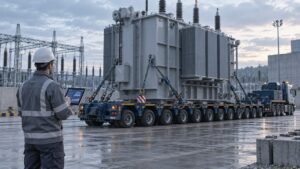
Plan transformer transport shock monitoring for EPC deliveries: recorder setup, data continuity, receiving inspection and documented release decisions.
View details
Plan substation auxiliary power design with station-service transformers, AC/DC loads, batteries, transfer logic and commissioning checks.
View details
A practical EPC guide to transformer neutral grounding design, NGR sizing, parallel neutral control, protection coordination, factory tests and commissioning evidence.
View details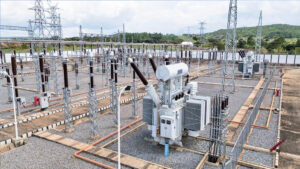
Essential reading for African power projects. Based on real‑cases of industrial parks, PV plants and mines, discover transformer selection tips under special climate and unstable grid conditions.
View details