 zishengelectric



news
News Center
Providing high-quality power to the world
Search productSearch post
news
Providing high-quality power to the world
A transformer tertiary winding is a third winding added for a defined electrical duty. It may supply an external circuit, or it may form an internal stabilizing circuit without an external three-phase load connection. For an EPC buyer discussing a transformer with Zisheng Electric, those are different procurement requirements. The word “tertiary” alone does not promise spare capacity for site auxiliaries.
This guide explains the distinction from an engineer’s perspective. It helps procurement and technical coordination teams ask the right questions before the winding arrangement becomes a manufacturing commitment.
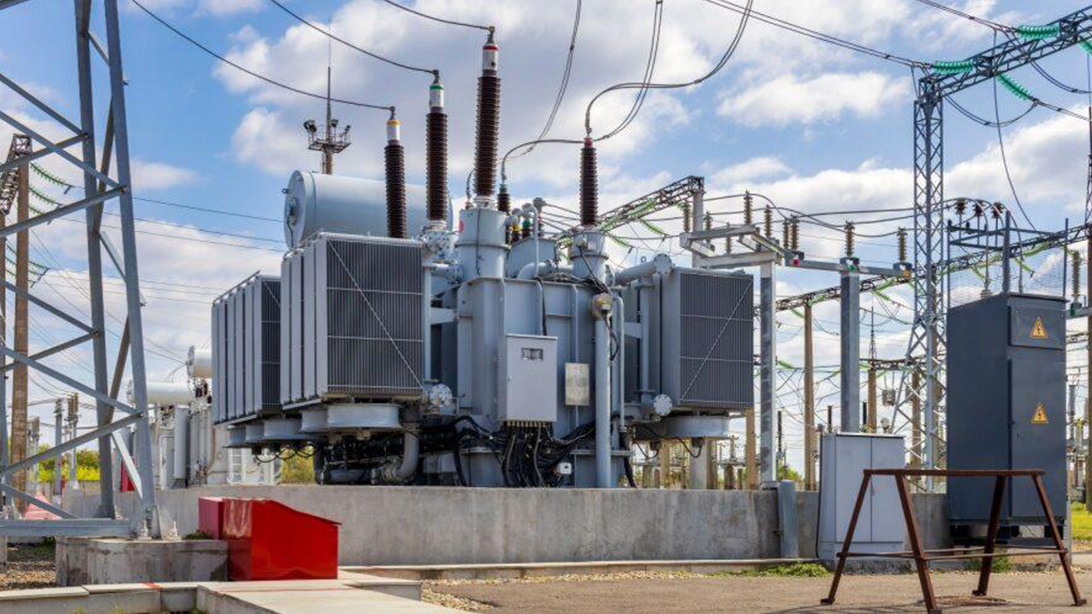
A load-serving tertiary has an intended external duty, with its own voltage, capacity, terminals and operating conditions. Depending on the design, it may support an auxiliary supply or other specified equipment. Its available loading must be stated by the manufacturer; it cannot be inferred from the main transformer MVA rating.
A stabilizing winding has a different purpose. Schneider Electric defines it as a supplementary delta-connected winding in specified star-connected arrangements, used to decrease zero-sequence impedance and not intended for external three-phase connection. A delta is a closed three-phase winding loop. It can carry circulating currents internally even when no external load is attached.
Zero-sequence currents are three phase-current components that are in phase with one another. They matter in earth-fault and unbalanced operating conditions. EPRI also describes a delta stabilizing winding as providing an internal path for zero-sequence and third-harmonic currents. These functions affect system behavior; they do not turn that winding into an unrestricted power outlet.
| Project need | Question for the supplier | Document required |
|---|---|---|
| External auxiliary supply | Is this winding designed and rated to supply the stated load? | Voltage, MVA, terminals and simultaneous loading limits |
| Stabilizing duty only | What system function does the internal winding provide? | Connection diagram and relevant system-study data |
| Future external use | Is future loading explicitly included in today’s design? | Agreed future duty and interface provisions |
| Fault-study model | What winding and impedance data represent the proposed design? | Manufacturer-reviewed model inputs and reference bases |
The transformer vector group selection guide explains the broader connection and phase-displacement issues. A tertiary requirement should be coordinated with that choice rather than added as an isolated note on a commercial offer.
Do not assume every star-star transformer needs the same tertiary arrangement. Core construction, grounding and the network duty affect the design decision. The project engineer and transformer manufacturer should resolve the need using the actual system requirements.

Consider a hypothetical enquiry that requests a main transformer plus a separate auxiliary load from its tertiary. The useful question is whether both loads can be supplied simultaneously under the specified cooling and ambient conditions. Adding the two nameplate MVA figures is not a valid way to establish the transformer’s total permissible loading.
Ask for the allowed combinations of winding loading and the conditions attached to them. Include the external circuit’s voltage range, load profile, starting duty where relevant and protection requirements. If the tertiary will not supply an external circuit, describe its stabilizing purpose explicitly and avoid assigning a usable auxiliary rating without engineering confirmation.
A tertiary also needs adequate thermal and mechanical capability for the duties it experiences. An internal winding is not exempt from fault-duty review merely because there are no external bushings. Request the supplier’s applicable design justification and make its scope clear in the technical submission list.
For an externally connected winding, coordinate terminal access, cable or busduct interfaces, earthing arrangements, switching and protection. For a buried stabilizing winding, the important deliverables are the connection identity, design basis and relevant study inputs. The installation team must not assume an inaccessible internal winding can later be brought out on site.
Put the accepted duty into the approved transformer datasheet. Check that the single-line diagram, quotation exclusions and test-document schedule use the same terminology. Where an offer says only “tertiary provided,” return it for clarification before treating it as compliant.
For a 110 kV or 115 kV power transformer enquiry, send Zisheng Electric the required third-winding function, any external load, system grounding information and fault-study requirements. Ask the engineering team to confirm the available configuration and its limits.
Technical references: Schneider Electric’s stabilizing-winding definition and EPRI Power Transformer Maintenance and Application Guide. These explain functions; they do not certify a particular offered design.
Why Tropical-Ready Design Determines Project Reliability A transformer failure in a Vietnamese coastal industrial park or a Thai solar farm is never just a component issue. Production halts. Revenue slides. The unplanned maintenance costs no proje...
View details
Compare OLTC and de-energized tap changers for EPC procurement. Define outage needs, voltage control, package scope and acceptance evidence before ordering.
View details
Power infrastructure across Saudi Arabia, the UAE, Qatar, and Oman operates under conditions that would quickly derate or destroy standard electrical equipment. In these environments, transformer failure is rarely a manufacturing defect—it is almo...
View details
Learn practical transformer maintenance experience to extend service life. Cover oil‑immersed & dry‑type transformer inspection, DGA oil testing, temperature control, overload management, environment‑adapted checklists for Middle East & Africa pro...
View details