 zishengelectric





news
News Center
Providing high-quality power to the world
Search productSearch post
news
Providing high-quality power to the world
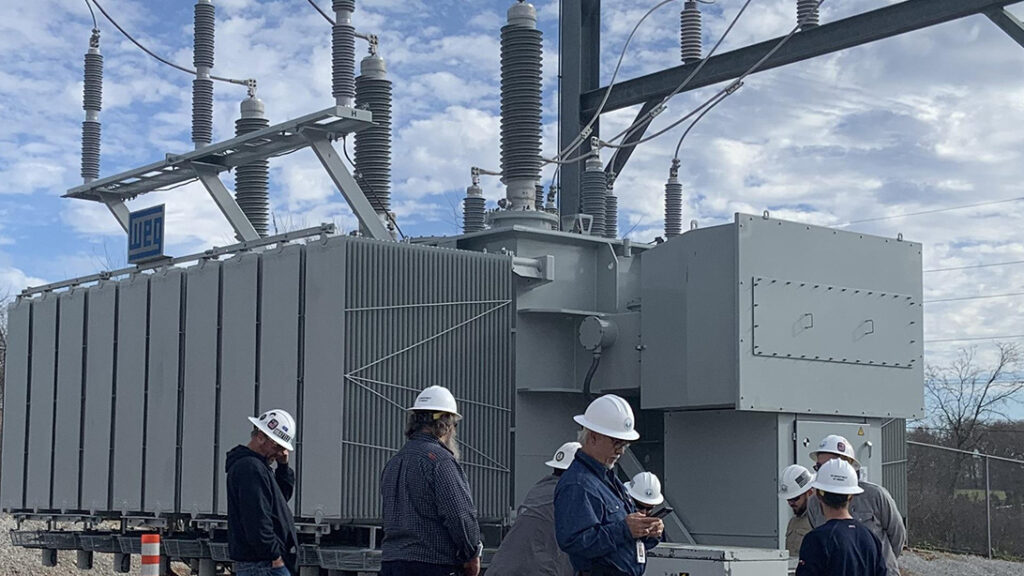
After years of working on-site with EPC projects, I have realized one critical truth: although transformers seem to be standard electrical equipment, every actual project requires customized support. Tiny differences in design parameters, dimensions, and interface standards can lead to on-site installation failures, protection mismatch, and delayed power transmission. As a professional transformer solution supplier for EPC projects, Zisheng Electric shares why EPC contractors must choose experienced solution providers instead of simply purchasing standard transformer equipment.
The core of an EPC project is turnkey delivery. The project owner does not care how many interfaces are involved or how many disciplines overlap. What matters is whether the project can be energized on schedule and whether the system can operate reliably over the long term.
The transformer sits at the intersection of several critical interfaces. In many delayed projects, the problem is not the transformer manufacturing lead time itself, but the fact that interfaces between the transformer, civil works, secondary electrical systems, and protection systems were not fully coordinated in advance.
On the upstream side, the transformer may connect to HV switchgear, cable terminations, or GIS. Downstream, it may interface with LV switchboards, busduct systems, and reactive power compensation equipment. Around the transformer, there are also civil foundations, embedded parts, grounding grids, and oil drainage systems. On the control side, it must communicate with protection relays, control and monitoring panels, and SCADA or communication systems.
If any one of these interfaces does not match, the impact is not limited to the transformer itself. It can affect the entire energization chain. The later the problem is discovered, the higher the cost of correction.
The value of a professional transformer supplier is to identify and eliminate these problems before they reach the site.
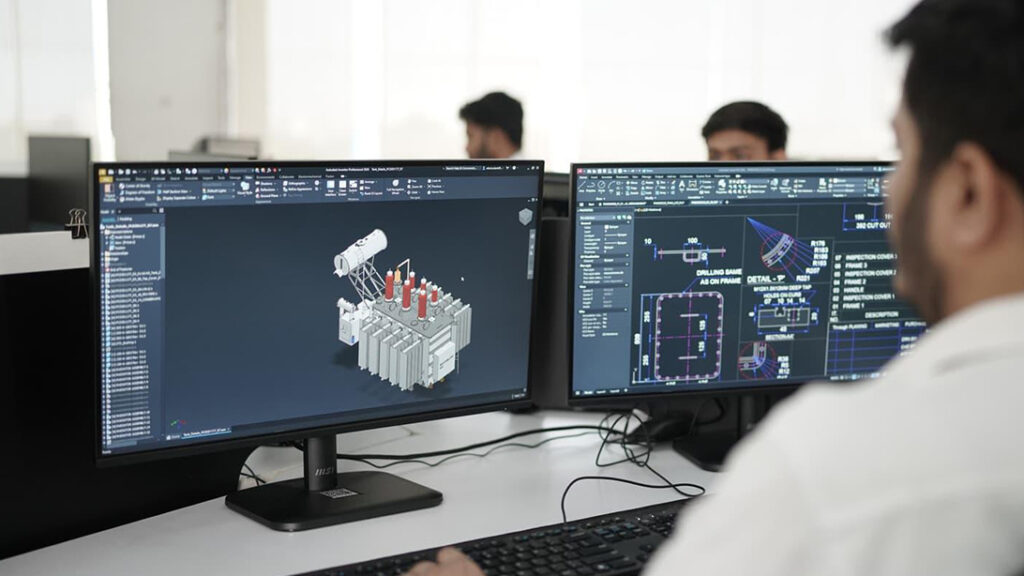
The design schedule of an EPC project is usually very tight, and many EPC contractors begin requesting quotations as soon as the preliminary design is available. At this stage, two problems occur particularly often.
For example, the specification may simply state “SCB13-2000/10,” while leaving out critical details such as the required short-circuit impedance, whether the vector group should be Dyn11 or Yyn0, whether the tap range needs to be extended, and which standard should apply to the noise limit.
If these requirements are not clearly defined, some suppliers may quote based on their standard configuration. This can lead to parameter changes during the later technical clarification stage.
Once the transformer reaches the site, the consequences can be much more serious. For example, if the protection settings were calculated based on an 8% impedance but the supplied transformer has a 6% impedance, the entire protection coordination may need to be recalculated.
In some projects, the electrical room has already been constructed before the transformer design is finalized.
For example, the entrance height may be 2.8 meters. A supplier quotes a standard transformer with an overall height of 2.75 meters without cooling fans, but once the fans are installed, the height increases to 2.85 meters.
At that point, there are only a few options: remove the fans before moving the transformer into position, or modify the doorway on site.
A professional transformer supplier handles the process differently.
When our technical engineers receive an RFQ, we do not start with the price. We first check the actual application conditions:
What is the load profile of the transformer? Will it operate continuously at full load, or remain lightly loaded for most of the year?
What is the installation altitude?
Are there any special ambient temperature conditions?
Are there any special requirements for the incoming and outgoing connections? Will the transformer be connected by cable or busbar?
Are there any height restrictions along the transportation route?
Are suitable lifting and installation conditions available on site?
If these details are confirmed during the quotation stage, many repeated technical revisions can be avoided later.
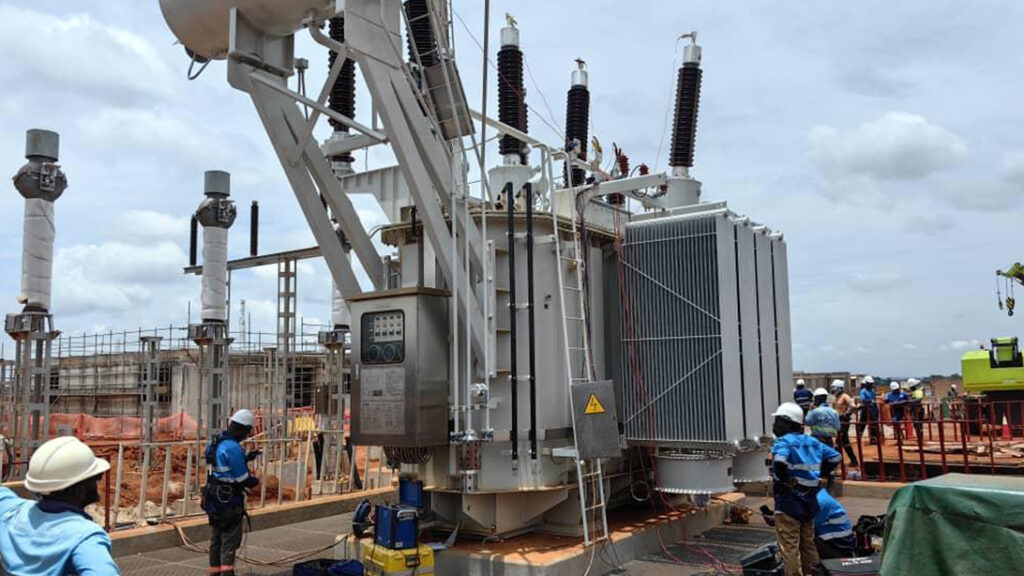
Delivering a transformer for an EPC project is not finished once the equipment arrives and the delivery note is signed. In many cases, the real coordination work starts only after the transformer reaches the site.
Our field service engineers have seen many situations like these: the transformer is already in position, but the elevation of the embedded foundation steel differs from the transformer base by several millimeters, so new holes have to be drilled on site; the position of the neutral grounding copper bar does not align with the cable trench outlet, requiring temporary modification; or the interface definition for the cooling fan control wiring does not match the plant control system, making communication commissioning impossible.
None of these are quality defects in the transformer itself, but every one of them can delay the energization milestone.
What a professional supplier provides is predictable technical coordination.
Before shipment, we normally complete several checks:
These may look like tasks outside the supplier’s basic scope, but in an EPC project, every issue confirmed in advance can eliminate one potential rework item at site.
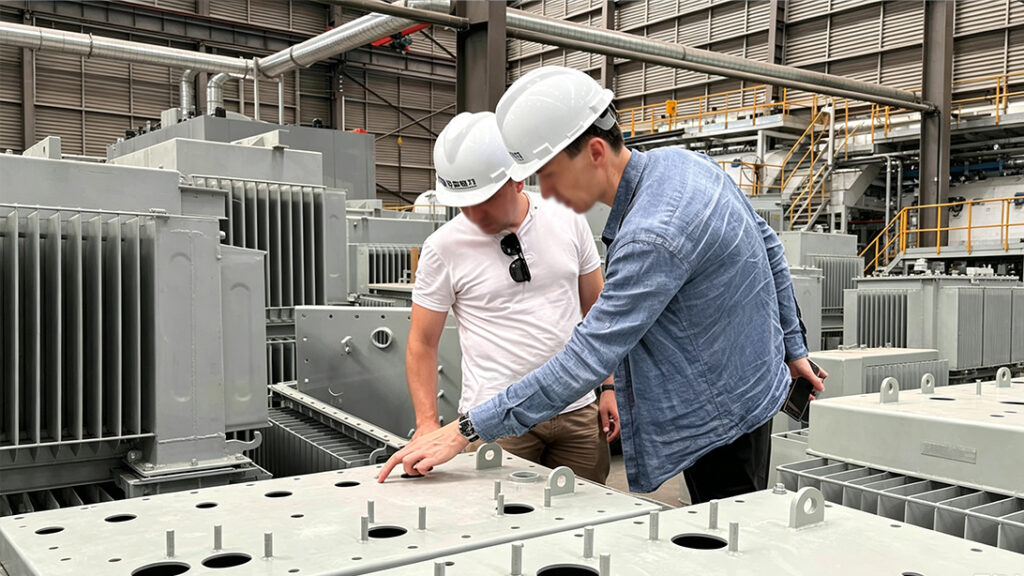
The warranty period for an EPC project is usually one to two years. But the design life of a transformer is typically around 30 years.
If a problem occurs during the warranty period, the supplier is contractually responsible for handling it. But what happens after the warranty expires? That is where the real difference between suppliers begins to show.
We have worked in the transformer industry for many years and supported a large number of EPC customers. Even after the warranty period ends, many project owners continue to contact Zisheng Electric. Some need spare parts, some are planning upgrades or capacity expansion, while others simply want technical advice on abnormal operating conditions.
This kind of long-term relationship is not built by contract clauses. It comes from the professional support delivered every time the customer needs help.
For an EPC contractor, choosing this kind of supplier also adds another layer of assurance to the overall quality of project delivery.
The following table is based on the framework we use internally during technical coordination. It also highlights several areas that are often overlooked when selecting transformers for EPC projects.
| Evaluation Area | Typical Supplier Approach | Professional Supplier Approach | Impact on EPC Project |
|---|---|---|---|
| Technical Parameter Coordination | Quotes based on standard models, with parameter deviations discussed later | Reviews load characteristics, site conditions, and protection coordination item by item, with all parameters finalized before production | Avoids later modifications caused by protection-setting mismatch or excessive temperature rise |
| Overall Dimensions and Interfaces | Manufactures according to standard drawings; site issues are left to the contractor | Obtains civil embedded-part drawings, doorway dimensions, and transportation-route data in advance and prepares project-specific drawings | Reduces on-site drilling, cutting, and civil modification, helping maintain the installation schedule |
| Accessories and Auxiliary Equipment | Supplies the minimum standard configuration | Selects cooling fans, temperature controllers, enclosure protection ratings, anti-condensation heaters, and other accessories according to actual site requirements | Improves environmental adaptability and reduces the risk of equipment failure |
| Factory Testing and Reports | Provides basic factory test reports | Provides comprehensive type and test documentation covering items such as partial discharge, temperature rise, and short-circuit impedance, with support for third-party inspection | Helps satisfy owner audit, quality assurance, and acceptance requirements |
| On-Site Installation Support | Only responds to quality claims and does not participate in installation | Provides technical guidance and verification at key stages such as positioning, connection, and testing | Reduces installation errors and improves the probability of successful first-time energization |
| Warranty Service Response | Handles issues during warranty; post-warranty support is charged separately | Provides proactive support during warranty and continues to offer technical consultation and spare-parts support afterward | Reduces maintenance uncertainty and supports longer equipment service life |
| Completeness of Interface Documentation | Provides basic certificates and manuals | Delivers complete primary and secondary wiring diagrams, terminal diagrams, and operation and maintenance manuals | Makes it easier for engineering consultants to archive documentation and for owners to carry out future modifications |
The biggest cost in an EPC project is often not the equipment itself, but uncertainty.
If a transformer arrives three days late, every downstream commissioning milestone may need to be rescheduled. If one key parameter is wrong, the labor, rework, and schedule impact can easily cost more than the original price difference between two suppliers.
A professional transformer supplier is ultimately helping the EPC contractor remove those uncertainties.
Our job is to lock down the technical parameters, interfaces, documentation, and coordination requirements as early as possible. After that, the process becomes much more predictable: manufacture according to schedule, deliver as agreed, and provide service according to the required standards.
Zisheng Electric has been working in the transformer industry for nearly two decades. Our technology and products continue to evolve, but the principle behind our service has remained the same: make sure the transformer part of the project is handled properly from beginning to end.
Our product range includes Oil-immersed transformers、Substation transformers、Packaged transformers、Pole-mounted transformers、Dry-type transformers、Other power distribution equipment We support IEC-compliant design, Factory Acceptance Testing (FAT), and third-party inspection and supervision.
When it comes to transformers, we want to help you make the project more predictable and reliable.
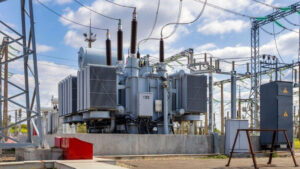
Learn practical transformer maintenance experience to extend service life. Cover oil‑immersed & dry‑type transformer inspection, DGA oil testing, temperature control, overload management, environment‑adapted checklists for Middle East & Africa pro...
View details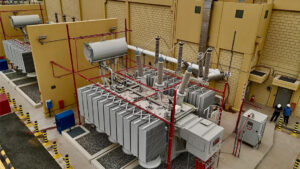
Build a transformer inspection and test plan that links hold points, witness notices, test records and release authority to an EPC project's delivery schedule.
View details
Build a practical transformer FAT witness plan for EPC projects, covering hold points, document readiness, routine tests, functional checks, punch items and shipping release.
View details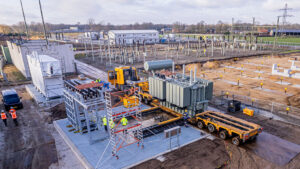
Evaluate transformer suppliers before tendering with an EPC checklist covering design, manufacturing, quality records, testing and site support.
View details