 zishengelectric



news
News Center
Providing high-quality power to the world
Search productSearch post
news
Providing high-quality power to the world
A low pressure indication on an arriving transformer can put an EPC team under immediate schedule pressure. The crane is ready, the unloading window is short, and someone wants to restore the gauge to the number on the dispatch sheet. Zisheng Electric recommends discussing preservation evidence at the shipping-plan stage so the site has a decision route before this situation arises.

This guide is for quality inspectors, logistics coordinators and project electrical engineers receiving a transformer shipped with a nitrogen preservation arrangement. It is a document and escalation guide, not a procedure for pressurizing a tank or entering it. The shipped configuration and the manufacturer’s instructions determine the actual limits and permitted interventions.
Begin with the serial number and shipping arrangement. A liquid-filled unit with a gas space is not the same configuration as an active part shipped without its normal liquid fill. A connected gas-maintenance system also creates a different evidence trail from a sealed transport arrangement. Do not apply a pressure value from one arrangement to another.
The dispatch pack should state the preservation medium, shipping configuration, applicable pressure instructions, gauge identification and baseline readings. Ask for the time and temperature associated with those readings. Record the condition and identity of seals, shipping covers, valves and any regulator equipment supplied with the unit.
Make these requirements part of the receiving checklist alongside the broader transformer transport damage inspection. Pressure evidence supplements the mechanical receiving record; it does not replace checks of bushings, packaging and external condition.
Record the gauge reading, units, sign, time and ambient conditions from a safe accessible position. Photograph the gauge and its installation, not only a close crop of the dial. The surrounding fittings help the manufacturer determine whether the reading comes from the intended tank connection. Include any visible damage, contamination or displaced protective cover.
Keep the original dispatch record and the new arrival record together. If a transit logger or cylinder-pressure record forms part of the supplied preservation system, preserve its original file and configuration information. A typed transcription is useful for comparison but should not replace the original evidence.
Do not instruct the receiving team to vent or top up the tank merely to match an expected reading. Such an action changes the evidence and may exceed the intended receiving scope. The manufacturer should determine whether an intervention is necessary and provide the equipment-specific method and acceptance criteria.
Virginia Transformer’s liquid-filled installation and operation manual pairs pressure-vacuum readings with temperature observations and explains that pressure changes can follow temperature changes. It also warns of the nitrogen atmosphere’s suffocation hazard. These are useful review principles; its numerical instructions are for its equipment and must not be copied as universal Zisheng Electric limits.
For an idealized sealed gas volume, absolute pressure divided by absolute temperature is constant when gas quantity and volume do not change. Gauge pressure cannot be substituted directly into that relationship. Real transformer gas-space behavior can also involve changing liquid volume, unequal temperatures and a connected regulating system, so this calculation is only a screening illustration.
Assume a hypothetical rigid sealed gas space reads 20 kPa gauge at 30°C. Assume atmospheric pressure is 101 kPa and the gas later reaches 10°C, with no gas loss or volume change. The initial absolute pressure is 121 kPa. The estimated final absolute pressure is 121 × 283.15 / 303.15, or about 113 kPa. Subtracting the assumed atmospheric pressure gives approximately 12 kPa gauge.
This change does not require a leak in the simplified model. It also does not prove that a real transformer with a similar reading is leak-free. The values are illustrative, not a dispatch requirement, measured transport record or acceptance threshold. Send the actual configuration and observations to the manufacturer for interpretation.

A practical receiving record separates what the inspector observed from what the engineer concludes. Use wording such as “gauge indicates zero at arrival” rather than “tank leaked during transport” unless the latter has been established. This protects the investigation from an early assumption becoming a contractual fact.
| Observed condition | Evidence to preserve | Proposed project action |
|---|---|---|
| Pressure differs from dispatch | Both readings, temperatures, times and shipping configuration | Request manufacturer comparison against its preservation instructions |
| Zero or negative indication | Gauge installation, scale, visible condition and transit records | Hold the affected release decision until the reading and preservation condition are assessed |
| Damaged gauge or fitting | Overview and detailed photographs, package and serial identification | Obtain an approved verification or replacement instruction |
| Regulating system appears depleted or disconnected | Supply equipment identity and available operating history | Escalate the possible preservation interruption without assuming its duration |
| Pressure history unavailable | Known dispatch and arrival facts plus missing-document list | Seek a documented disposition for the evidence gap |
These are suggested project-management actions. The responsible engineer and equipment manufacturer should decide the actual hold points. Safe unloading, custody acceptance, preservation assessment and energization release can be separate approvals. Do not let one signature silently authorize all four.
A manufacturer disposition should identify the affected unit, reviewed evidence, technical conclusion, required action, responsible party and release condition. If further inspection or testing is required, connect it to an approved procedure and report reference. A telephone reassurance is difficult to hand over to the next shift or commissioning contractor.
If the unit enters storage, transfer the accepted preservation condition and monitoring responsibility into the transformer site storage plan. Keep receipt and storage records connected so a later abnormal reading can be compared with a reliable starting point. Storage staff should know whom to contact and which interventions require approval.
Nitrogen is not a breathable atmosphere. Tank access requires the project’s authorized confined-space controls and equipment-specific instructions; a pressure indication or a timed purge alone is not an entry clearance. Receiving personnel should not open the tank to investigate a gauge concern without that controlled engineering and safety process.
For a 35kV–46kV transformer package, request a shipping-preservation schedule that matches the actual supplied arrangement. Include dispatch records, arrival criteria, monitoring duties, escalation contacts and manufacturer response expectations. This keeps the site from borrowing limits from a different product manual.
Send Zisheng Electric your transformer specification, transport duration, expected site conditions and receiving responsibilities. Agree the preservation evidence and abnormal-arrival response before dispatch so the project can protect both the equipment and the delivery schedule.

Plan transformer transport shock monitoring for EPC deliveries: recorder setup, data continuity, receiving inspection and documented release decisions.
View details
Distinguish assembled transformer mass, the heaviest transport package and total consignment weight. Use a worked example to check supplier figures before award.
View details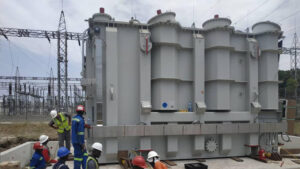
Plan transformer transport damage inspection before unloading: preserve shock records, document leaks and missing items, and separate receipt from energization approval.
View details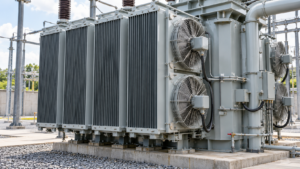
Review transformer temperature-rise FAT evidence with a practical EPC checklist. Align the test duty, cooling mode, measurement channels, calculations, uncertainty and deviation closure before acceptance.
View details