 zishengelectric





news
News Center
Providing high-quality power to the world
Search productSearch post
news
Providing high-quality power to the world
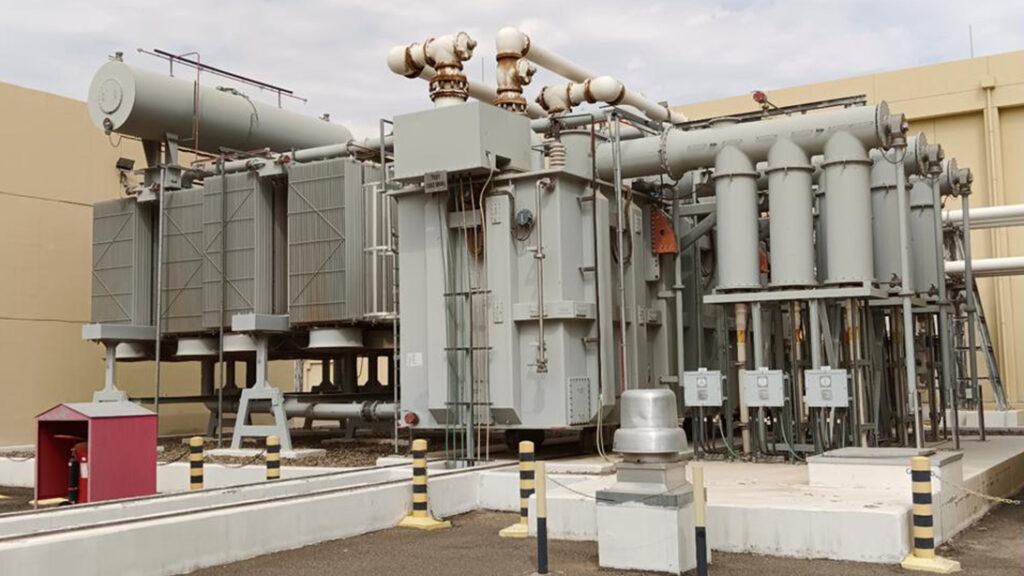
Transformer supply within EPC projects is fundamentally different from standalone equipment procurement. Owners do not merely evaluate quotations; they focus on the entire delivery chain — from translating design parameters on engineering drawings into physical foundations, all the way to energization of high-voltage switchgear. Any disconnect along the chain will ultimately place schedule pressure on the general contractor. This is especially true for Middle East and African markets, characterized by long distances, diverse standards and volatile logistics. Based on years of field experience, breaking down workflows and clarifying responsibility boundaries delivers greater value than anything else.
This phase usually kicks off immediately after project award, sometimes even in advance during bid technical clarification. Transformer selection for EPC projects must iterate synchronously with system design, rather than adjusting transformer parameters after full set equipment drawings are finalized.
Core tasks include:
A frequent issue we encounter is over-optimistic load forecasting from design institutes paired with chronically elevated actual grid voltage locally. Our recommendation is to complete an EPC transformer technical parameter review at this stage. Secure signed confirmation for all nameplate data including voltage combination, vector group, impedance percentage and cooling method, to avoid subsequent change orders and manufacturing delays.
High-voltage bushings, OLTC (On-Load Tap Changer) and certain special-spec materials are long-lead items. Actual procurement lead time depends on voltage class, brand, technical specs and supply chain status, which must be separately flagged in the master project schedule. EPC projects often have tight timelines from award to site handover. Therefore, right after contract signing, we initiate pre-production scheduling for critical long-lead materials. Even before drawings are fully frozen, once core ratings (capacity, voltage, impedance) are confirmed, orders for grain-oriented silicon steel and winding conductors can be released.
Third-party inspection supervision is also arranged in this phase. Many African and Middle Eastern owners mandate witnessed key processes by Bureau Veritas, SGS or local authorized inspection bodies. We reserve dedicated inspection windows within the production timeline, covering core stacking, coil winding and factory acceptance tests after final assembly. Notifications are sent to the owner two weeks ahead of each milestone to prevent inspection delays caused by scheduling conflicts.
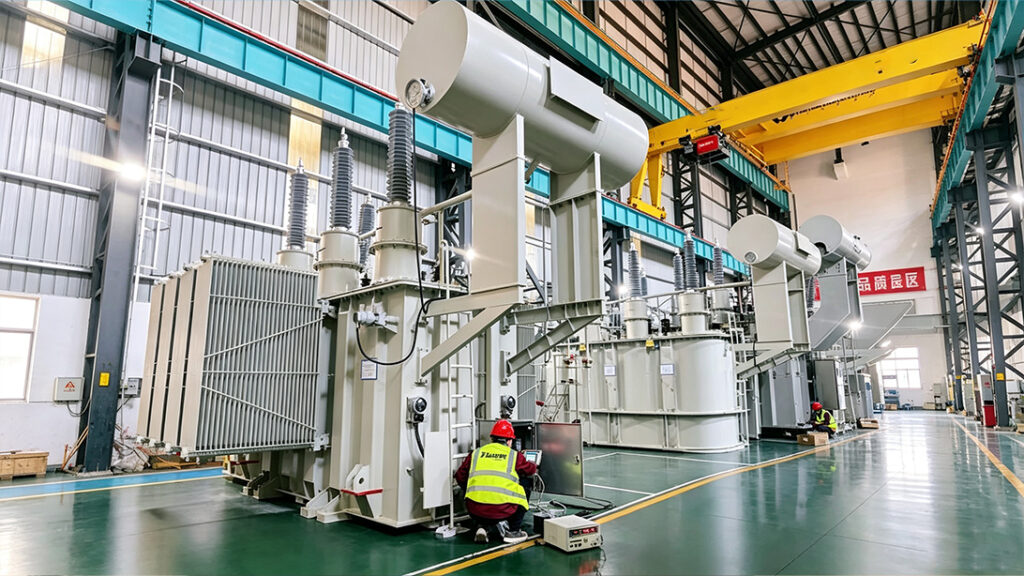
Factory acceptance tests include not only routine and type tests but also full item-by-item testing in accordance with IEC 60076, with complete English test reports issued accordingly. For EPC projects, test report formats and technical details are frequently audited and questioned by owner consulting engineers, such as ambient temperature correction methods for temperature rise tests and evaluation criteria for short-circuit withstand tests.
Our standard practice is to submit the full test procedure for owner approval in advance, clarifying all test items, applicable standards and judgment criteria in writing before formal implementation.
Meanwhile, complete export documents for EPC transformers must be fully prepared in advance, including commercial invoice, packing list, certificate of origin, weight certificate, product manual, maintenance manual, 2D/3D outline drawings, foundation load drawings, and oil volume & fire protection specifications. Any missing document may cause customs clearance detention at the destination port, resulting in high daily demurrage fees.
Port conditions across the Middle East and Africa vary greatly. Ports such as Dammam and Jebel Ali are well-developed, while many African ports including Lagos, Mombasa and Dar es Salaam have limited crane capacity and yard space. Our EPC transformer transportation solutions are divided into three customized modes:
Moisture-proof, rust-proof and shock-proof treatment are basic packaging standards. For humid African coastal regions and long-term marine transportation, we configure desiccants, moisture barrier materials and humidity indicators, and adopt aluminum-plastic composite vacuum packaging according to packaging volume and shipping cycle. Before delivery, local agents will verify bridge load limits, road height limits and passage conditions for railway and highway transit.
Customs clearance is the most unpredictable stage in overseas EPC projects. Many African countries require import permits or pre-shipment product registration for power transformers. We engage local customs brokers from the design phase, submitting the full document checklist and document templates for owner confirmation in advance to ensure consistency among invoice value, HS code, product description and letter of credit terms.
Inland transportation is equally challenging. Most project sites are hundreds of kilometers away from ports, with poor road conditions and muddy roads during rainy seasons. Low-bed trailers equipped with jacks and traction tools are adopted. For large and over-dimensional transformers, we verify local road axle load, total weight limit, height & width restrictions and turning radius in advance, and apply for oversize transportation permits when necessary.
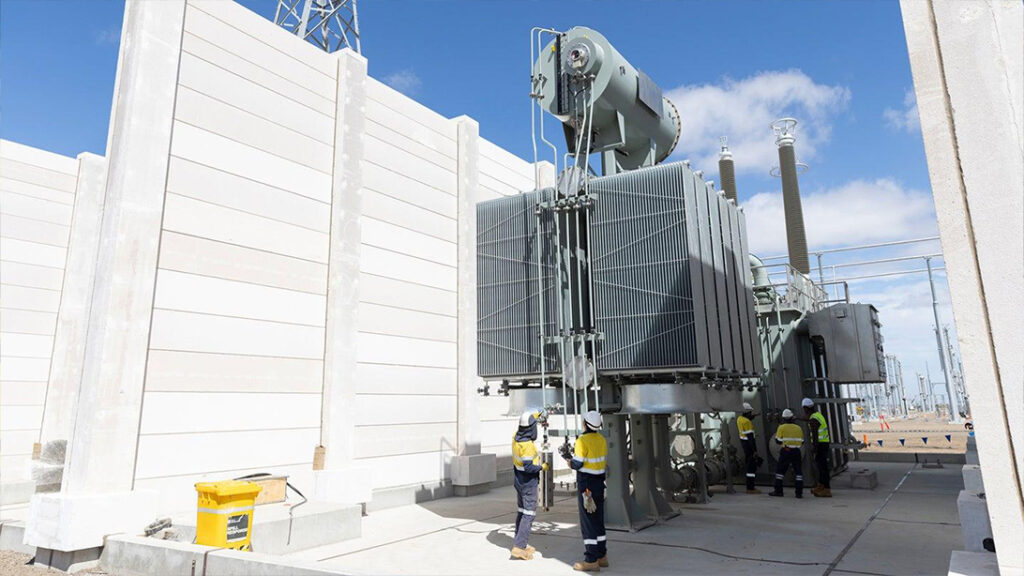
After the equipment arrives at the site, the first task is unpacking inspection. Check each item against the packing list one by one and take photos for filing. In case any transportation damage is found, it shall be noted on the bill of lading and the insurance company shall be notified immediately. Our installation supervision team will arrive at the site in advance to inspect the foundation levelness, embedded part positions and earthing grid resistance, and then carry out the work in sequence: main unit positioning, accessory installation, vacuum oil filling, hot oil circulation, standing for air venting, and handover tests.
Handover tests include: transformation ratio test, DC resistance measurement, insulation resistance & absorption ratio, dielectric dissipation factor, induced voltage withstand test and partial discharge measurement. These data shall be compared with factory values. If the deviation exceeds the specified range, the root cause must be investigated. African projects often suffer unstable on-site power supply which may prevent testing instruments from working normally, so we are equipped with self-provided generator sets and stabilized power supplies as a backup.
The final step is no-load impulse switching and on-load trial operation. Before the first energization, protection inspection, phase sequence confirmation, insulation test and pre-energization inspection shall be completed in accordance with the project commissioning plan and local grid requirements. The number of no-load impulse switching times, interval duration and observation items shall comply with the approved commissioning procedure and requirements of the owner / local power grid.
The warranty period is normally 24 months, but we will additionally provide a recommended spare parts list for EPC transformers. For components that may be hard to procure locally, such as oil temperature indicators, Buchholz relays, pressure relief valves and tap changer operating mechanisms, the list specifies model numbers and order codes, and recommends the owner to stock parts for two years of operation.
Below is the summary table of key milestones of the whole process for EPC project planning reference.
| Stage | Deliverables from EPC Party | Main Output from Supplier | Key Control Documents |
|---|---|---|---|
| Technical Clarification | SLD, Load List, Specification | Datasheet, Deviation List | TBE / Technical Agreement |
| Design Freeze | Interface Dimensions, System Parameters | GA Drawing, Foundation Drawing, Terminal Diagram | Approved Drawing |
| Manufacturing | Approved Drawing | Manufacturing Records, Quality Records | ITP / QAP |
| FAT | Approved FAT Procedure | Test Report | FAT Release Note |
| Shipment | Shipping Instruction | Packing List, Packing Drawing | Shipping Documents |
| Installation | Site Conditions | Installation Manual | Installation Checklist |
| Commissioning & Handover | Commissioning Procedure | Final Test Records | As-built Dossier |
For EPC projects, transformer delivery neither starts from manufacturing nor ends after the equipment is loaded on board. From technical parameter freeze, manufacturing and FAT, to packaging & transportation, on-site installation and final energization, every stage requires clear input documents, clarified responsibility boundaries and acceptance milestones.
Zisheng Electric can support transformer selection, technical clarification, manufacturing documentation, factory acceptance testing and export delivery coordination. The scope of support should be agreed in the project contract.
Our product range includes Oil-immersed transformers、Substation transformers、Packaged transformers、Pole-mounted transformers、Dry-type transformers。
Plan a transformer first-service thermal survey with safe access, representative load records, cooling checks, evidence ownership and clear EPC handover decisions.
View details
A field-focused EPC guide to transformer cable termination interfaces, covering bushings, cable boxes, clearances, earthing, FAT checks and commissioning handover.
View details
A practical EPC guide to evaluating transformer suppliers for Middle East and Africa projects, covering IEC compliance, testing, manufacturing, logistics, FAT, site service and after-sales support.
View details
Build a transformer DGA baseline for EPC handover: connect oil history, sample identity, laboratory methods and first-service review responsibilities.
View details