 zishengelectric



news
News Center
Providing high-quality power to the world
Search productSearch post
news
Providing high-quality power to the world
At Zisheng Electric, an elevated-site transformer inquiry is most useful when the project team shares the actual installation elevation and service conditions before the technical offer is frozen. “High altitude” is not a single design class. It affects outdoor insulation coordination, air cooling assumptions, accessories and the evidence the EPC team should request. Treating it as a line in the datasheet without a defined design basis can leave a gap between the equipment rating and the site duty.
Lower air density changes the external dielectric environment and the ability of air to remove heat. Those effects do not translate into one universal transformer derating factor. The outcome depends on the equipment type, insulation system, cooling arrangement, ambient temperature, load profile, altitude, and the project’s specified withstand levels. A transformer tank, an air-insulated bushing, a cable termination and nearby switchgear may also be governed by different equipment standards and interfaces.
For an EPC team, the practical objective is to give the manufacturer and insulation-coordination engineer a consistent design basis. Freeze the installation elevation, site temperature envelope, system highest voltage, grounding arrangement, lightning and switching overvoltage assumptions, and the required service loading. Then record which party confirms each external clearance and thermal guarantee.
Request project data from the owner and grid study rather than substituting regional averages. A mine, hydro facility or renewable-energy substation can occupy a materially different elevation and exposure from the nearest town. The tender package should distinguish the equipment location from the elevation of access roads, control buildings or temporary laydown areas.
| Design input | What the EPC package should state | Why it matters |
|---|---|---|
| Installation elevation | Site coordinates and elevation reference, including transformer and outdoor terminal elevations | Supports atmospheric correction and equipment application review |
| System insulation basis | Highest voltage for equipment, specified power-frequency and impulse withstand levels, and study assumptions | Aligns transformer terminals with the insulation-coordination study |
| Ambient envelope | Maximum, minimum and relevant seasonal temperatures; solar exposure if specified | Defines cooling and temperature-rise conditions |
| Duty and loading | Continuous rating, cyclic loading, overload expectations, harmonics and cooling stages | Prevents a nameplate rating from being mistaken for every service scenario |
| Interfaces | Bushing, cable box, bus, surge arrester and neighboring equipment clearances | External insulation is an installation-level coordination task |
| Environmental exposure | Wind, dust, ice, pollution, humidity and enclosure requirements where relevant | May affect creepage, sealing, cooling surfaces and maintenance access |
IEC 60071-1 and IEC 60071-2 provide the framework for selecting insulation levels for three-phase AC systems above 1 kV. IEC 60076-3 specifies transformer insulation requirements, dielectric tests and recommended external air clearances where the purchaser has not specified them. At elevated sites, the project engineer should apply the relevant atmospheric and altitude method in the applicable edition of the standard and confirm whether it covers only external insulation or also affects a specific equipment interface.
Do not ask a transformer supplier to “increase insulation for altitude” without stating the withstand levels and terminal arrangement. That wording can produce different interpretations: a change to winding insulation, a change to external clearances, a higher bushing rating, or simply a different test requirement. The coordination study should identify phase-to-earth, phase-to-phase and longitudinal requirements and establish surge-arrester protective levels and lead arrangements. The transformer data sheet can then identify the assigned terminal insulation levels and any special application conditions.
Where air clearances are part of the transformer scope, confirm how the manufacturer applies the specified altitude correction and what dimensions appear on the approved general-arrangement drawing. Where the clearance belongs to a GIS, cable box, bus duct or site bus, assign it to the corresponding package owner. This is the same revision-control discipline used when freezing transformer datasheet ratings: the value, drawing and calculation should share one approved revision.
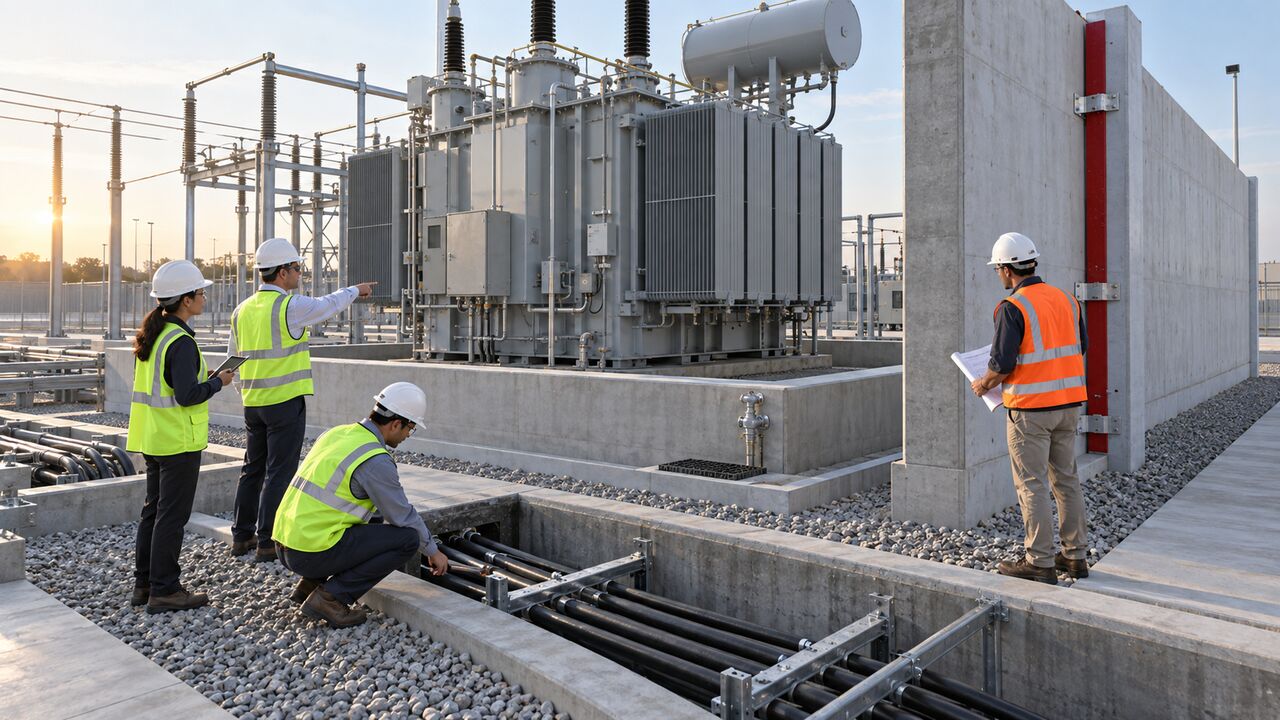
For liquid-immersed units, IEC 60076-2 addresses cooling methods, temperature-rise limits and temperature-rise test methods. The EPC team should state the actual site ambient conditions and required loading, then request the manufacturer’s confirmation of the applicable rating and cooling stages at those conditions. Do not infer a guaranteed output at altitude from the standard kVA rating alone.
Lower air density can reduce heat transfer from radiators and fans. A design review should therefore look beyond the transformer’s electrical losses: confirm radiator arrangement, fan performance and control logic, available auxiliary supply, fan-group alarms, and access for cleaning. Dust accumulation or icing can further reduce cooling performance. If the site sees large day-night temperature swings, ask how the declared ambient basis and the project’s loading curve interact.
IEC 60076-2 includes temperature-rise test procedures for liquid-immersed transformers. If the project requires a special site duty, agree the guarantee and the test basis before manufacturing. The witness plan should name the test configuration, cooling stage, measurement channels, ambient correction or substitution method where applicable, and the records included in the final dossier. A generic FAT certificate cannot demonstrate an unagreed high-altitude service rating.
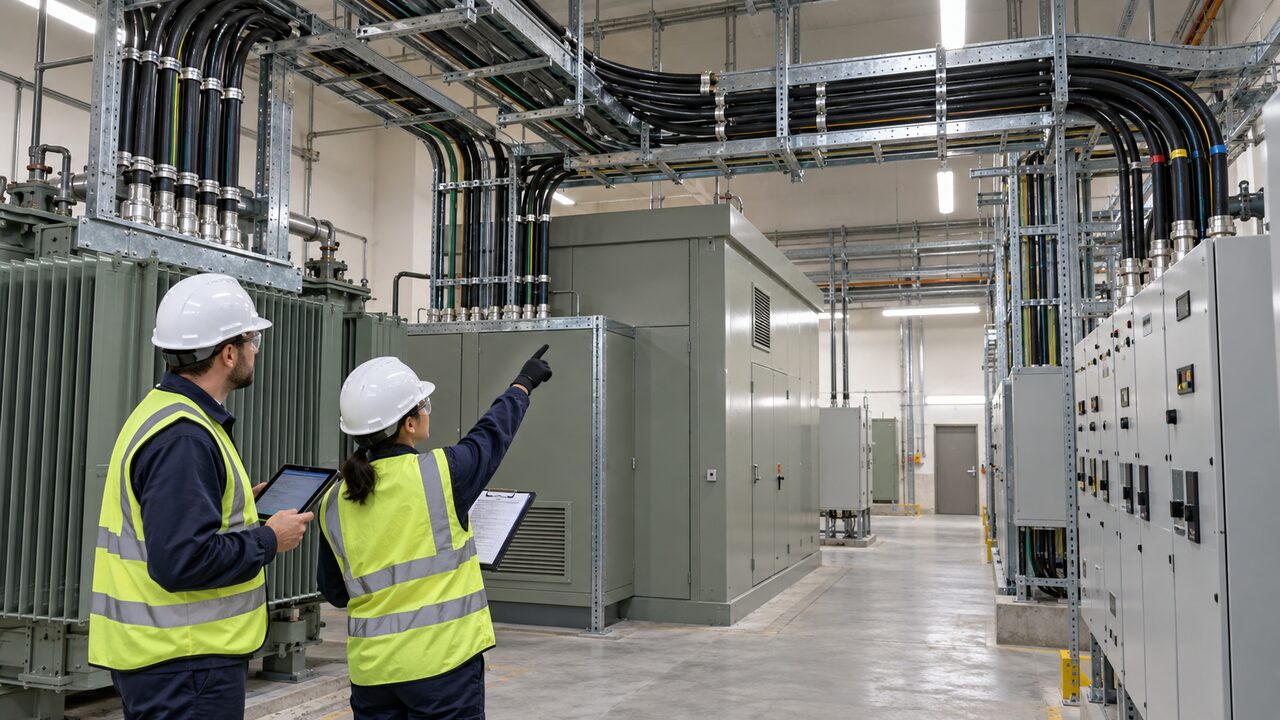
Ask for a short, traceable application statement rather than a vague assurance that the transformer is “suitable for high altitude.” It should identify the site elevation used, applicable standards and editions, guaranteed rating and cooling mode at site, terminal insulation levels, the basis for any external clearances, and any limitations on accessories or neighboring equipment. If a rating is conditional on fans, heaters or control power, list the condition explicitly.
Review the approved datasheet against the general arrangement, bushing schedule, outline of the cable or bus connection, auxiliary-load schedule, control schematic and insulation-coordination study. During FAT, verify that the nameplate and test report correspond to the approved configuration. At site, confirm that installation clearances, cable approach, radiator airflow and surge-arrester connections match the released drawings. The EPC site-acceptance checklist should be adapted to capture these project-specific conditions before energization.
Consider a hypothetical EPC package for a remote industrial site where the transformer location is substantially higher than the project’s regional office. Before equipment selection, the engineer records the site coordinates and confirms the elevation with the civil team. The grid study supplies the system voltage and insulation levels; the owner confirms the ambient envelope and required overload duty. The transformer supplier returns a design statement describing insulation application, cooling performance and any limits. None of those values should be guessed from a nearby city or copied from another project.
The design review then checks that the external terminals, connection bus and surge-arrester layout have compatible clearances and that the transformer’s guaranteed rating covers the agreed load at site. Any deviation is returned against a drawing or data-sheet line item, not left as an informal meeting note. This process lets procurement compare bids on the same technical basis and gives commissioning a defined release point.
For a multi-package substation, the transformer supplier cannot independently approve every outdoor electrical gap. The EPC should place terminal elevations, phase spacing, bushing orientation, cable approach and surge-arrester location on coordinated drawings, then obtain written acceptance from the responsible equipment suppliers and the insulation-coordination engineer. If a project uses different transformer voltage classes, each data sheet must carry its own site basis; a product-family page is not a project guarantee.
Product reference data can help start the review. For example, Zisheng lists a standard altitude condition and higher-altitude design availability on its 10 kV oil-immersed transformer page, while its 35–46 kV power transformer page identifies insulation level, cooling and other items that can be project-configured. These are product references, not substitutes for a project-approved datasheet and guarantee.
No single derating percentage applies to every transformer. The supplier and project engineer must evaluate equipment type, site conditions, insulation requirements, cooling method and specified duty against the applicable standard and project specification.
Only for the interfaces assigned to its package. The purchaser should define responsibility for transformer terminals, cable or bus connections, arresters, switchgear and site conductors in the interface register and approved drawings.
FAT confirms the agreed factory tests and configuration. A special service condition must be stated in the contract and linked to an agreed guarantee and test or calculation basis; it should not be assumed from routine test results.
For an EPC bid or design review, share the site elevation, ambient data, system insulation basis and loading profile with Zisheng Electric. Our engineering team can review the transformer specification and identify the project inputs that should be confirmed before the design is released.

Understand transformer BIL, distinguish impulse withstand from operating voltage, and check the terminal, test basis and supplier evidence before approving an EPC datasheet.
View details
Review the substation surge arrester interface for EPC projects: insulation coordination, placement, lead and earth paths, procurement boundaries, installation checks and documented handover.
View details
Reconcile transformer cases, loose accessories and unit IDs across deliveries. Learn how to record a shortage and release only the installation kit that is complete.
View details
Distribution transformer selection based on real project data: altitude derating tables, impedance calculations, loss comparisons, FAT checklists, and field failure analysis.
View details