 zishengelectric





news
News Center
Providing high-quality power to the world
Search productSearch post
news
Providing high-quality power to the world
Zisheng Electric treats a transformer lifting plan review as an interface between equipment design, transport, construction and the specialist lifting contractor. A transformer can arrive with a complete electrical test file while the site still lacks the information needed to plan its movement. The missing item may be the mass of the actual shipping configuration, a drawing revision or a clear statement of who accepts the prepared ground.
This guide is for EPC engineers, equipment buyers and project owners reviewing the information package before a lift. It is not a rigging procedure or a substitute for a site-specific engineered lifting plan. The appointed competent lifting team must determine the equipment, calculations, limits and operating method for the actual load and location. The EPC team’s role is to make sure that team receives reliable inputs and that the interfaces are closed.
Begin with the equipment tag, serial identity where available and the specific movement being planned. Unloading a transport vehicle, moving a main tank to temporary storage and placing a completed assembly on its foundation may involve different configurations. Do not describe all three simply as “lifting the transformer.” The supporting documents need to identify which movement they address.
Ask the manufacturer to confirm the mass and dimensions for that configuration. Distinguish transport mass from the completed operating assembly. Separately shipped radiators, bushings, conservator components and fluid arrangements can change the relevant data. The review should reconcile the packing list, shipping drawing and manufacturer handling instructions before the lifting contractor finalises its engineering.
If the packing list and drawing disagree, do not average the values or let the site choose the more convenient document. Return the discrepancy to the document owner and obtain a controlled correction. Retain the superseded reference in the review record so that a contractor who received an earlier package can identify what changed.
The lifting planner also needs the manufacturer’s approved handling interfaces and any configuration restrictions. Ask for a drawing that identifies the intended lifting points and distinguishes them from other attachments. A visible lug, bracket or radiator connection should not be assumed suitable for the proposed movement merely because it looks substantial.

The purchase order should make clear which party supplies equipment data, who develops the lift plan, who prepares the standing area and who coordinates site access. These responsibilities may sit in different contracts. A gap between them can remain hidden until a crane is mobilised and several teams are waiting for a decision.
The UK Health and Safety Executive’s construction lifting guidance discusses the distinction between crane hire and an arrangement where lifting responsibilities are expressly taken on by the contractor. This is a useful prompt for scope review, not a claim that UK rules govern every EPC project. The project must establish the applicable local requirements and contractual responsibilities.
| Review input | Accountable interface | Evidence needed before release | Reason to hold the package |
|---|---|---|---|
| Load identity and configuration | Transformer supplier and equipment engineer | Consistent shipping drawing, packing list and handling information | Unresolved mass, dimension or configuration discrepancy |
| Approved handling points | Manufacturer and lifting planner | Equipment-specific drawing and applicable restrictions | Attachment suitability inferred from appearance |
| Lifting engineering | Appointed competent lifting specialist | Accepted site-specific plan and supporting engineering package | Generic arrangement that does not match the load or site |
| Ground and standing area | Civil or geotechnical authority and lifting planner | Confirmed ground assessment and prepared-area acceptance | Unverified ground, buried-service or excavation interface |
| Electrical and construction boundaries | Site controller and relevant discipline leads | Agreed access, isolation and interface arrangements | Conflicting work fronts or unresolved proximity hazards |
| Placement and receiving conditions | Civil team, installer and equipment representative | Accepted foundation interface and receiving inspection scope | Destination not ready for the approved configuration |
This table allocates review questions; it does not certify competence or approve a lift. Replace the generic role names with named project responsibilities. Where an organisation supplies more than one role, retain the separate technical decisions so that the equipment review is not confused with acceptance of the lifting method.
A route survey establishes whether the equipment can reach the site, but it does not by itself establish that the unloading position is ready. Review the final vehicle location, the intended load path, temporary storage if required and the destination interface. Ask the logistics and construction teams to work from the same arrangement drawing.
The transformer logistics route survey should feed the site review with the final approach and access constraints. If a delivery configuration changes after the survey, confirm whether the site handling package is still valid. A revised transport envelope may affect more than the route permit or vehicle selection.
Request a current site layout that identifies known underground services, nearby excavations, existing structures and electrical interfaces. Refer questions about ground acceptance to the responsible civil or geotechnical authority. The lifting specialist needs verified site inputs; an equipment supplier’s general arrangement drawing cannot establish the bearing capacity of a temporary standing area.
Foundation acceptance should identify the correct equipment orientation, support arrangement and relevant dimensional checks. Review the transformer foundation interface with the installation team before the movement is released. A unit that reaches its destination safely can still create costly rework if its placement prevents the approved cable, cooling or maintenance arrangement.
Keep future assembly in view. Components may need access after the main tank is positioned. The review should confirm that the approved construction sequence remains feasible, including any temporary access that will later disappear. Decisions about handling the equipment must remain with the manufacturer and competent site specialists; the EPC coordinator records and resolves the interfaces between them.
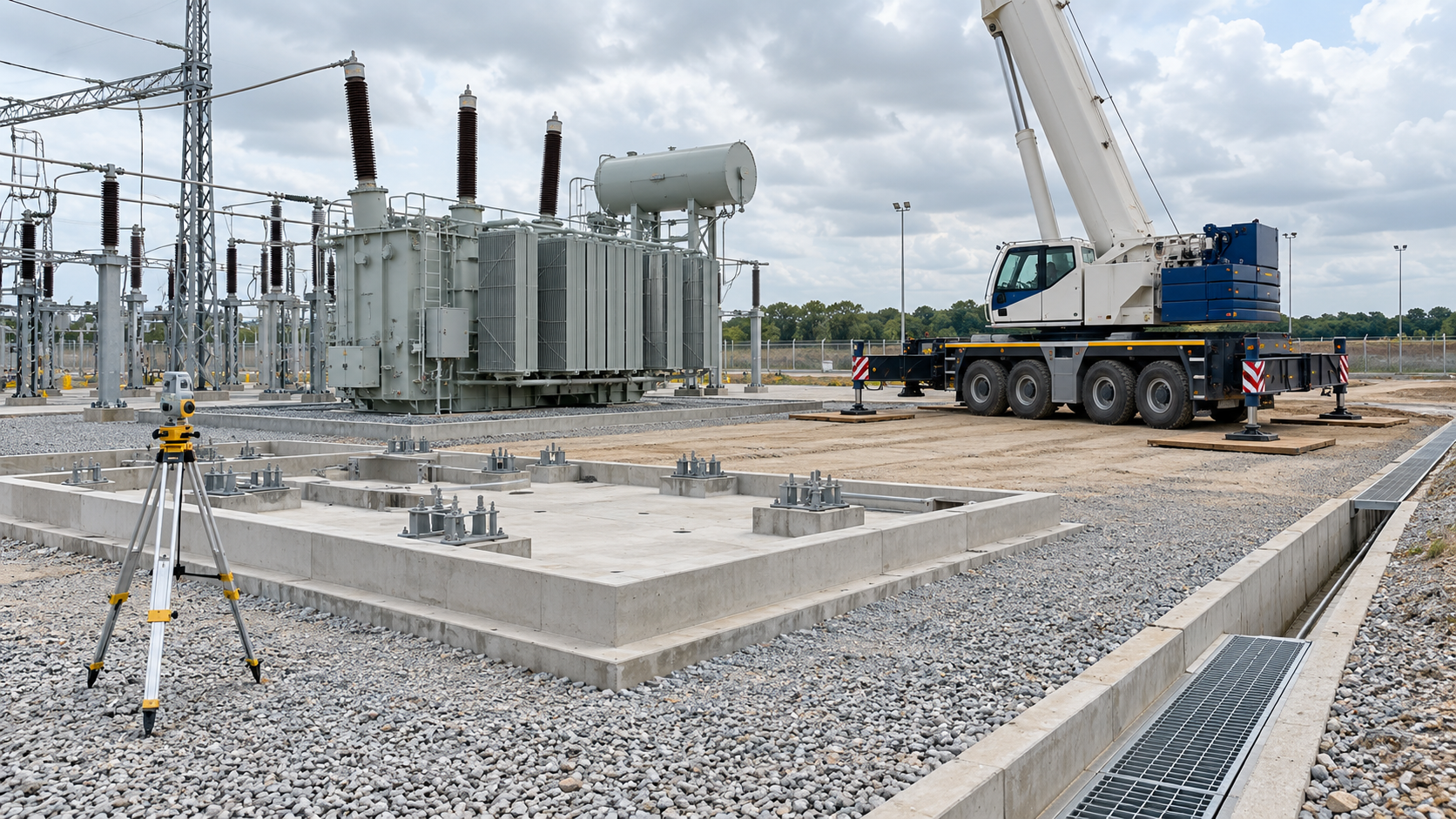
A plan should identify its input revisions and the conditions under which it is valid. Ask the lifting contractor to show how the actual transformer configuration, site arrangement and proposed equipment are represented in the engineering package. Reviewers should be able to trace a key input back to its approved source without relying on a verbal explanation.
HSE’s guidance on planning and organising lifting operations emphasises competent planning, clear responsibilities and consideration of foreseeable hazards, including nearby structures, overhead lines, excavations and buried services. These planning principles help frame the interface questions. The project’s appointed specialists must set the applicable controls and operating limits for the actual operation.
Avoid adding generic wind speeds, crane capacities, sling angles or exclusion distances to a procurement article or equipment checklist. Such numbers can appear authoritative while being unrelated to the selected crane, rigging arrangement, load or site. The review record should instead identify the approved source of each limit and the person responsible for applying it.
Consider how changing conditions will be communicated. A different crane, altered load configuration, revised access position or unexpected site condition may require reassessment. The plan should state who can approve a revision and how the team receives the new controlled version. A date change alone does not prove that the technical basis remains unchanged.
Keep a short open-item register with the missing evidence, decision owner and required closure date. Separate an editorial correction from an unresolved engineering input. The question is whether the missing information prevents the appointed team from producing or accepting a valid plan, not whether the document package looks nearly complete.
For example, a drawing may identify lifting points but omit the configuration to which the stated mass applies. The equipment engineer should obtain the manufacturer’s clarification, the lifting planner should assess the effect and the document controller should distribute the accepted revision. Closing only the correspondence task would leave the engineering question unanswered.
A review stamp is useful only when its scope is understood. Record who reviewed the equipment information, who accepted the site inputs and who approved the lifting package under the project’s procedures. Include any conditions that remain active. A supplier’s confirmation of handling points does not constitute approval of the contractor’s crane arrangement or the site’s ground preparation.
Hold a coordination review early enough for unresolved issues to be corrected without pressure from an arriving vehicle. The attendance list should follow the actual interfaces, which may include equipment engineering, logistics, civil works, electrical construction, site operations and the lifting specialist. Keep the meeting focused on decisions and evidence rather than repeating the whole method statement aloud.
Agree the receiving inspection scope before the movement. Record the equipment identity, approved placement configuration and the condition observations required by the manufacturer’s instructions and project procedures. Where a discrepancy is found, route it to the responsible technical authority before subsequent work conceals the issue or changes the evidence.
Distinguish the end of the lifting operation from acceptance of the transformer installation. Subsequent assembly, electrical checks and commissioning have their own responsibilities and release conditions. The handover between teams should identify what has been completed, what remains open and which records are available for the next activity.
Photographs can support a condition record when their equipment identity, date and context are clear. They cannot replace approved engineering, inspection decisions or the manufacturer’s instructions. Keep any actual project evidence in the controlled project file, with references that allow the next team to retrieve it.

A previous plan can provide a document structure, but its engineering inputs and approvals belong to the earlier operation. Ask the appointed lifting specialist to assess the new load, configuration, equipment and site. Similar rated capacity or appearance does not establish identical handling requirements.
The owner of the conflicting equipment information should issue the corrected basis. The lifting planner then assesses the consequence for the proposed operation. The EPC coordinator makes sure the correction reaches everyone who received the superseded data and that affected approvals are revisited.
No. A transformer drawing review addresses the equipment information within its stated scope. The site-specific lifting package, ground inputs, construction interfaces and operational authorisations still require the responsible project reviews. Keep those decisions separate in the release record.
Zisheng Electric can discuss equipment data and delivery interfaces for a 35kV or 46kV power transformer or a 110kV or 115kV power transformer. Confirm the required shipping configuration, document deliverables and site support scope while the supply package is being defined.
For an equipment-specific transformer lifting plan review, send drawings, datasheets, the load list, technical specifications, single-line diagram, grid parameters, environmental conditions and installation-site conditions. Include the delivery arrangement, available site layout and the appointed lifting contractor’s information requirements. Our engineering team will review the requirements and respond to project inquiries within 24 hours.
Build an EPC transformer document register that controls submittals, revisions, approval codes, manufacturing release, FAT records, logistics files and final handover evidence.
View details
Factory-Direct Transformer Supply for Global EPC Projects For an EPC contractor, choosing a transformer supplier is rarely just about line items on a datasheet. The manufacturer standing behind the equipment has a direct bearing on how smoothly de...
View details
Build a practical substation cable interface schedule for EPC projects, covering power, control and fiber cables, terminal data, routing, scope ownership, construction release and commissioning evidence.
View details
Build an EPC transformer spare parts list with checks for component compatibility, stock scope, preservation, traceability and maintenance handover.
View details