 zishengelectric



news
News Center
Providing high-quality power to the world
Search productSearch post
news
Providing high-quality power to the world
An IP23 dry-type transformer enclosure offers a defined level of protection against access, solid objects and water spray. The code alone cannot tell you whether the transformer will suit an outdoor loading bay or a dusty process room. When reviewing a Zisheng Electric offer, ask which enclosure carries the rating and what exposure the manufacturer has allowed for at the installation site.

IP stands for ingress protection. Under the IEC 60529 enclosure classification, the first digit in IP23 identifies protection against access to hazardous parts with a finger and against solid foreign objects 12.5 mm in diameter and larger. Fine dust is outside that claim. The second digit identifies protection against water sprayed at angles up to 60 degrees on either side of vertical under the specified test conditions.
Think of a louvered enclosure beneath a canopy. A buyer may reasonably want to know whether wind-driven rain can reach the ventilation openings. “IP23” gives the engineer a defined spray condition to compare with the exposure. It does not answer questions about water jets during cleaning, flooding from below, condensation inside the cabinet or corrosion from salt. Describe those conditions individually in the enquiry.
Ask the bidder to mark the rated enclosure on the outline drawing. The transformer body, a separate terminal box and an auxiliary controls cabinet may have different enclosures. A high rating on a small controls box tells the buyer little about the ventilated housing around the windings. Obtain a schedule that identifies each enclosure, its rating and the supplied configuration.
Pay particular attention to cable entries and site-installed parts. If one party supplies a blank gland plate and another cuts the entries, record who selects the glands and who verifies the completed arrangement. The picture of a control kiosk below illustrates this interface. Its construction is not evidence of a rating for the transformer housing.
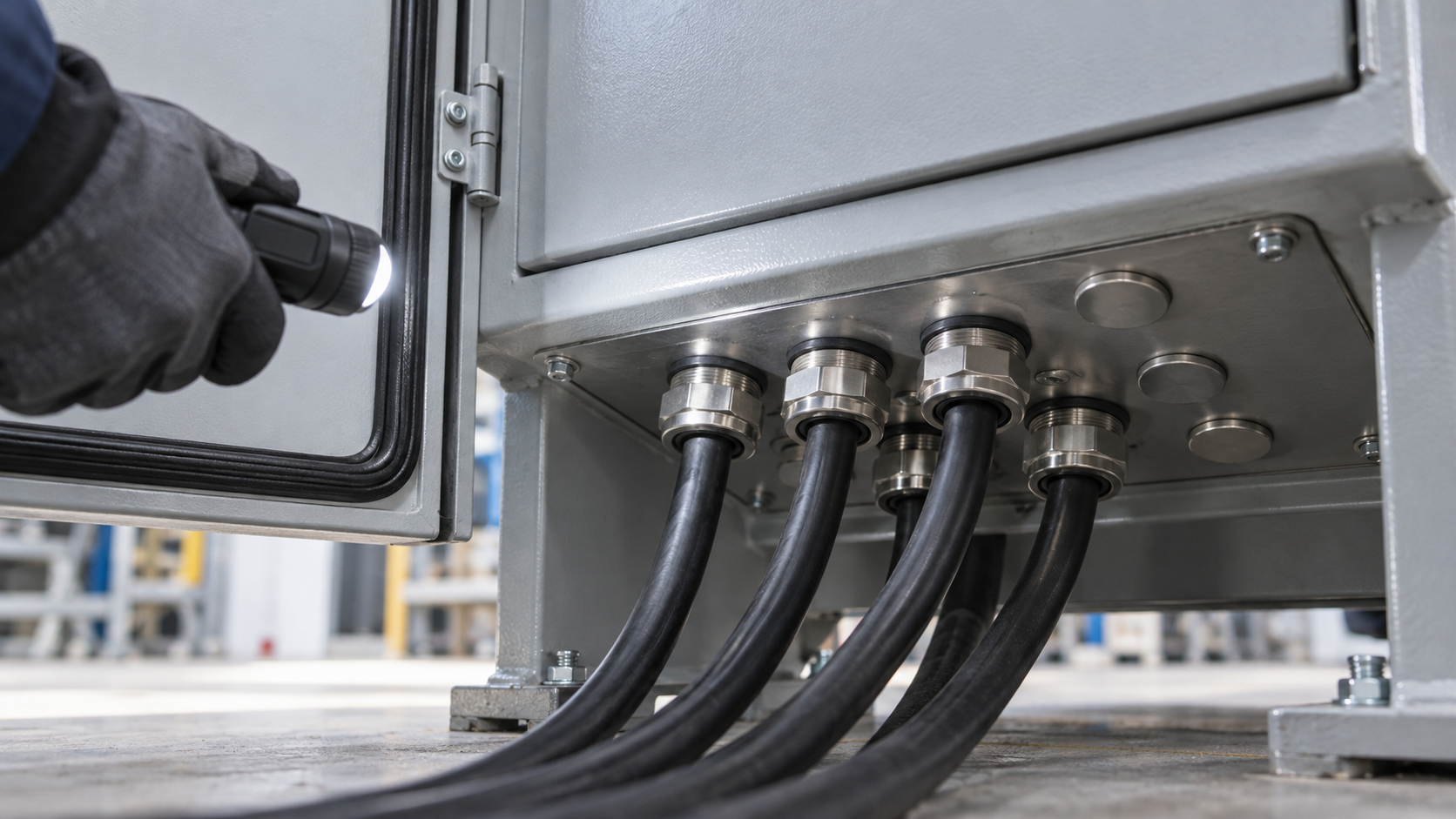
Take two hypothetical locations with the same electrical duty. The first is a clean indoor room with a stable air supply. The second is beside a washdown area where a hose can reach the doors. Putting “IP23” in both purchase schedules conceals an important difference. For the second location, identify the actual cleaning method and spray directions. Ask engineering whether relocation, a barrier or a different suitable enclosure is required.
Ventilation also belongs in that decision. Air openings form part of the cooling path of a ventilated dry-type unit. Adding a screen or rain hood after award may change airflow and maintenance needs. Ask the supplier to confirm the transformer’s continuous rating inside the complete proposed enclosure at the stated ambient temperature. Coordinate inlet and outlet positions with the transformer room layout review so the room does not recirculate heated discharge air.
Product ranges differ. Schneider Electric’s Trihal enclosure guidance lists an indoor IP23 option and separate outdoor options for that range. Those examples illustrate why indoor or outdoor suitability should be confirmed for the offered design. They are not specifications for other manufacturers’ equipment.
Give the supplier a short description of normal exposure and foreseeable cleaning or maintenance conditions. Include the installation drawing, ventilation restrictions, cable approach and any separate cabinets. Request the enclosure designation, applicable evidence, exclusions and installation conditions in the bid. If a catalogue image shows a different door or ventilation pattern, ask which configuration the quoted rating covers.
For a 100 kVA dry-type transformer enquiry, send Zisheng Electric the proposed location and site conditions together with the electrical rating. Ask for confirmation of the enclosure and thermal duty as one assembly. That response lets the purchasing team compare complete offers and assigns responsibility for the openings that will be made on site.

Compare OLTC and de-energized tap changers for EPC procurement. Define outage needs, voltage control, package scope and acceptance evidence before ordering.
View details
Compare VPI and VPE transformer offers by resin, processing, environmental duty and guaranteed performance. Learn which supplier evidence makes an EPC comparison useful.
View details
Learn what a power transformer does, how magnetic induction changes voltage, and which ratings, components and project inputs EPC buyers should confirm.
View details
Understand transformer BIL, distinguish impulse withstand from operating voltage, and check the terminal, test basis and supplier evidence before approving an EPC datasheet.
View details