 zishengelectric



news
News Center
Providing high-quality power to the world
Search productSearch post
news
Providing high-quality power to the world
A transformer can be electrically ready and still be unsafe to move if its foundation rails are not aligned with the approved transport and installation arrangement. Small dimensional discrepancies may become difficult to correct after the unit is positioned, especially when jacking points, wheel sets, anchor details or adjacent equipment constrain movement. Zisheng Electric uses a pre-placement survey to convert drawings into a documented field release decision.
This guide is for EPC civil, mechanical and electrical interface engineers before a main transformer is moved from its unloading area to the foundation. The survey does not establish a universal rail gauge or elevation tolerance. Those values must come from approved general arrangement drawings, manufacturer interface data, civil design documents and the project’s acceptance criteria.
Collect the latest approved foundation plan, transformer outline, rail or wheel details, lifting and jacking plan, movement route, and civil handover record. Verify revision status and confirm the equipment tag, orientation, high- and low-voltage sides, conservator end and terminal box access. A drawing revision mismatch can invalidate otherwise accurate measurements.
Agree the coordinate system and survey datum with the EPC surveyor and civil contractor. Identify permanent control points outside the area likely to be disturbed by crane mats, temporary roads or excavation. Record the instrument type, calibration or verification status, survey date and environmental conditions where they affect measurement quality. A total station or precise level may be appropriate, but method selection should follow project accuracy needs and the approved survey procedure.
The inspection should capture more than nominal rail spacing. Measure rail gauge at defined stations, longitudinal straightness, parallelism, elevation and cross-level. Check the rail ends, stops, splice joints, anchor bolts, embedded plates, grout pockets and concrete edges. Confirm that the measured length covers the full travel path, not only the final footprint.
Check route geometry as well as the foundation. Survey approach alignment, turning clearances, transitions, temporary ramps, floor or road capacity interfaces and any elevation change between unloading and final position. The transformer’s actual shipping configuration can differ from its operating configuration; confirm the installed movement dimensions, wheel arrangement and any removable accessories with the manufacturer’s approved documents.
| Survey item | Why it matters | Record for release |
|---|---|---|
| Gauge at multiple stations | Confirms wheel or skid interface along the complete path | Station chainage, measured value, design value, deviation |
| Rail parallelism and straightness | Reduces binding and uneven load transfer during movement | Offsets by station and reference baseline |
| Elevation and cross-level | Controls drainage, transfer level and equipment attitude | Datum, points, differential values, acceptance criteria |
| Ends, stops, joints and anchors | Prevents travel beyond the intended limit and identifies discontinuities | Detail reference, fixation condition, obstruction notes |
| Route width and clearance | Protects bushings, radiators, accessories and nearby structures | Clearance envelope, temporary obstructions, route owner sign-off |
Enter each measurement alongside the drawing value, tolerance source and disposition. A deviation is not acceptable merely because it appears small. Its significance depends on the interface: rail spacing may affect the wheel set; elevation mismatch may affect transfer plates; a local high point may change load distribution; a route obstruction may threaten a radiator or bushing during movement.
Use a hold-and-disposition workflow. If a point exceeds the approved tolerance, record the exact location and measurement uncertainty, notify the responsible civil and transformer package engineers, and request a written disposition. The response may require rework, an approved shim or transition detail, a revised movement method, or no action with documented technical justification. Do not field-cut or weld rails, alter stops, or change jacking locations without approved design and manufacturer review.
Related risk controls belong in the transformer lifting plan review and the delivery damage inspection. If the unit will remain staged, maintain the site storage controls while the civil issue is resolved.
Before movement, hold a joint walkdown with the surveyor, civil lead, rigging supervisor, transformer package engineer and site safety representative. Check that the route is cleared, foundations have reached the required handover status, temporary works are accepted, movement equipment is rated and configured for the planned loads, and communications and exclusion zones are established under the approved method statement.
The survey dossier should include the signed drawing revision, marked-up plan, measurement table, instrument details, photographs, deviation log, approved dispositions and a clear status: accepted, accepted with conditions, or on hold. Any conditional release should identify owner, due date and whether the condition affects travel or only final commissioning. Connect the inspection to the project’s commissioning punch-list control only when the item is genuinely permissible to defer.
Use the equipment and project drawings. Rail gauge depends on the wheel or skid arrangement and the approved installation design; there is no safe universal value for every transformer.
No. The survey verifies defined geometry. Concrete strength, embedment, reinforcement, grout and other civil acceptance requirements remain under the project’s civil quality process.
Only if the responsible design authority issues a documented disposition and the approved movement plan reflects it. Otherwise keep the hold point open.
For an EPC transformer placement review, provide Zisheng Electric with the approved foundation and general arrangement drawings, wheel or skid data, route survey, lifting plan, civil handover status and proposed movement equipment. Our engineering team will review the requirements and respond to project inquiries within 24 hours.

Build an EPC transformer installation quality dossier with torque, earthing, oil, cable termination and as-built evidence before commissioning.
View details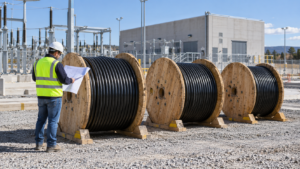
Build a substation cable drum schedule linking route take-off, approved cut lengths, drum allocation, stock balances and installation release for EPC projects.
View details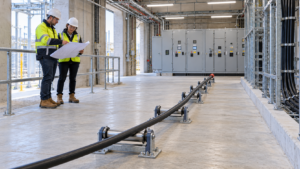
Review a substation cable pulling plan: verify tension, bend geometry, route readiness, temporary equipment and installation release evidence for EPC projects.
View details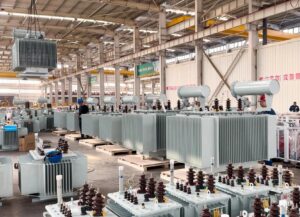
Engineered Transformer Systems That Match Your Project Specifications A power system is only as strong as its weakest link. With over 15 years of manufacturing experience and transformers operating in more than 40 countries, we've seen how the rig...
View details