 zishengelectric



news
News Center
Providing high-quality power to the world
Search productSearch post
news
Providing high-quality power to the world
A step-down transformer may produce a higher voltage when supplied from its low-voltage winding, but that does not automatically make it suitable as a step-up transformer. The exact design and intended connection must be approved. For a Zisheng Electric enquiry, specify which winding will receive the supply and which will feed the load, rather than asking only for a reversible voltage ratio.

This is a procurement decision for the electrical engineer and buyer. It is not a wiring procedure. An attractive stock unit can become an expensive substitution if its connection, protection or permitted duty does not match the project.
Reverse feeding means energizing the winding that was designated as the output in the original application. Reverse power flow describes real power moving in the opposite direction through an already connected system, as can happen when generation exports power. The two situations raise related questions, but they are not identical approval cases.
A solar export arrangement, for example, needs its specified operating modes assessed. The fact that a transformer can transfer power in both directions does not prove that any winding may be energized from any source. State the startup sequence and all intended supply modes in the enquiry.
The turns ratio explains the basic voltage transformation. Some smaller transformers have compensated windings, meaning extra turns are used to offset voltage drop in their intended direction. Reverse connection can then deliver a voltage different from the buyer’s simple ratio calculation. The applicable size range depends on the manufacturer and design.
Hammond Power Solutions highlights this effect and recommends a purpose-designed step-up transformer. Schneider Electric also identifies restrictions for its general-purpose and industrial control transformer ranges. These are manufacturer-specific instructions, not evidence that every distribution transformer follows the same rule.
| Question | Evidence needed before acceptance |
|---|---|
| Is this exact unit approved for reverse feeding? | Written confirmation identifying the design or serial number and proposed connection. |
| What voltage reaches the load? | Expected no-load and loaded output over the specified source-voltage range. |
| Can the source energize it successfully? | Design-specific inrush information and a coordinated protection assessment. |
| Will the system have the required neutral? | Reviewed winding connections, phase relationship and earthing arrangement. |
| What rating remains applicable? | Confirmed kVA, frequency, cooling and site-duty limits for the proposed use. |
Taps normally adjust the effective turns of a particular winding. When that winding becomes the output, moving its tap does not provide the same control over core excitation as adjusting turns on the energized winding. A supplier must review the actual incoming voltage and frequency against the winding being energized.
Schneider’s reverse-feed guidance specifically warns that the original primary taps cannot perform their usual incoming-voltage compensation function in this arrangement. Do not assume that selecting another tap makes a mismatched supply acceptable. Request an approved tap position and the resulting output range.
Inrush is the transient magnetizing current drawn during energization. It can cause nuisance trips and requires coordination with the source and protective devices. Obtain information for the proposed energization direction. Increasing a breaker rating to make the trip disappear is not a substitute for the engineer’s protection review.
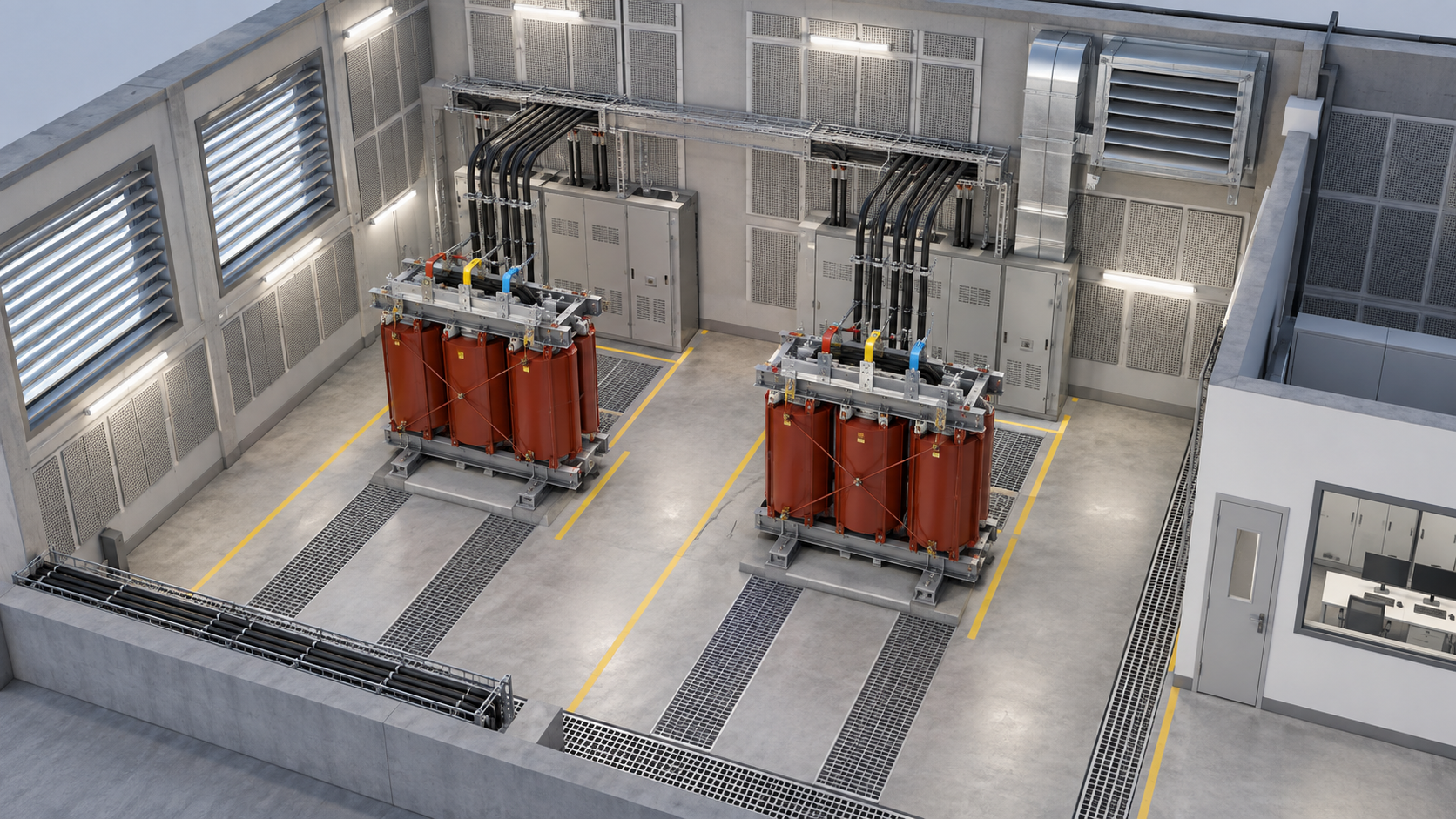
A winding arrangement that supplies a neutral in the original direction may not provide the neutral required by the new load. Phase displacement and earth-fault behavior also belong in the assessment. Use the vector-group selection guide to organize those system questions, and obtain the approved connection drawing from the manufacturer. Do not copy a neutral-bonding instruction from another product’s manual.
Ask the supplier to confirm any effect on product approvals, warranty conditions, terminal identification and instructions. If the supplier cannot support the proposed arrangement, compare a purpose-designed step-up offer instead. A shorter delivery promise alone does not close an unresolved technical requirement.
For the enquiry record, attach the source voltage range, frequency, required loaded output, kVA, single-line diagram, neutral requirement and protective-device details. Carry the accepted arrangement into datasheet approval. The dry-type transformer product page provides a starting point for a specification discussion, not authorization to reverse-feed that product. Ask Zisheng Electric to review the actual duty before a purchase decision.
Technical references: Schneider Electric reverse-feed restrictions, tap limitations when backfeeding and Hammond Power Solutions reverse-connection guidance.

Check a 60 Hz transformer offer for a 50 Hz project. Review voltage-to-frequency ratio, output voltage, capacity, auxiliaries and written manufacturer approval.
View details
Compare VPI and VPE transformer offers by resin, processing, environmental duty and guaranteed performance. Learn which supplier evidence makes an EPC comparison useful.
View details
Compare autotransformers and two-winding transformers for EPC procurement. Check electrical isolation, system compatibility, ratings and tender deviations.
View details
Compare mineral oil and natural ester transformers by fire requirements, cooling design, cold operation, preservation systems and EPC procurement documents.
View details