 zishengelectric



news
News Center
Providing high-quality power to the world
Search productSearch post
news
Providing high-quality power to the world
Check a split transformer shipment at three levels: the case that arrived, the items it contains and the transformer each item belongs to. A signed receipt for six cases answers only the first question. On a Zisheng Electric enquiry involving several units, ask for a packing list that connects each loose item to a case number and an equipment tag before the first load leaves the factory.

One purchase order may cover two transformers, several consignments and a shared set of spares. A consignment is a group of goods dispatched together. Case 1 in the first consignment and Case 1 in the second can both be legitimate labels. If the receiving log uses the case number alone, the second arrival can overwrite the first in the site record.
Build the receiving key from the order, shipment reference and package mark. Then record the transformer tag or serial number, item designation, drawing or part reference, expected quantity and destination. For common spares, name the stores location instead of allocating the parts to the first unit unloaded. Request a dated revision of the list whenever the supplier moves an accessory between cases.
The Indian Electrical and Electronics Manufacturers’ Association power transformer manual recommends checking the incoming equipment against the arrangement drawing and shipping list. The following reconciliation method is a practical way to carry that comparison through several deliveries. Project-specific packing and preservation instructions still govern the handling of each case.
At the gate, record the visible package mark, arrival date, external condition and storage or laydown location. A case that must stay sealed under the supplier’s preservation instructions can be recorded as received with contents unverified. Give the team a planned inspection point and a responsible person. Treating that row as complete can leave a shortage undiscovered until the installation crew is waiting.
When opening is authorized, compare the actual contents with the current packing list. Count by the specified unit of measure. One kit may contain several pieces, while one bag may hold components for more than one assembly. Keep identification with the items after repacking or moving them into controlled storage. The transport damage inspection guide covers the separate decision required when a case or component shows signs of impact.
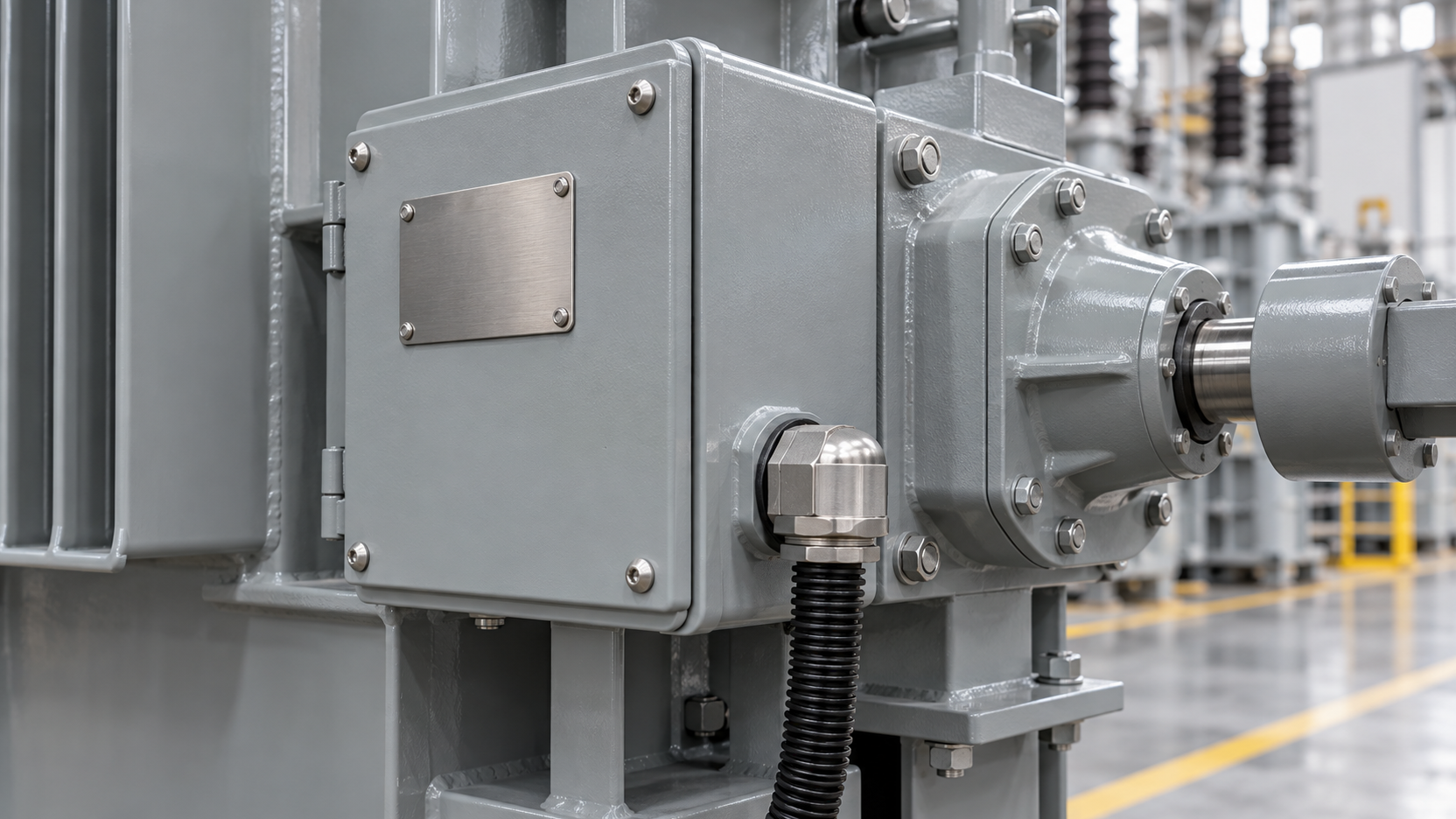
Consider a hypothetical shipment for transformers T1 and T2. The approved list assigns one drive enclosure to each. Two enclosures arrive in one crate. Both carry T1 labels, while the count on the delivery note is correct. Quantity reconciliation passes, but allocation fails. The site cannot conclude from similar appearance that either item is suitable for T2.
Record both labels, the crate reference and the affected line items. Ask the supplier whether the discrepancy is a marking error, a packing error or a revised allocation, and request the controlled evidence supporting its answer. Keep the affected item on hold until the responsible engineer accepts the disposition. The equipment identification guide explains how to compare accessory plates with approved records. This example illustrates the decision only.
Report shortages against a particular work package. A missing common spare may be a stores handover issue. A missing unit-specific connection part can block assembly even when the main tank and most cases have arrived. Ask the installer which work step depends on the item and whether proceeding would conceal an unresolved interface. Record the engineering decision and the delivery owner alongside the promised recovery date.
Close a shortage when replacement contents have been received, checked and assigned. A courier tracking number establishes dispatch, not acceptance. If the contract allows a partial release, identify the transformer, assembly and exclusions explicitly so that the next team can use the record without reconstructing the entire delivery history.
When requesting a 2500 kVA transformer package, send Zisheng Electric the number of units, planned shipment sequence, site storage restrictions and installation priorities. Ask for a sample packing-list format that identifies separately shipped accessories and common spares. Reviewing one populated line before dispatch gives the logistics and installation teams a concrete test of whether the proposed record will work on site.

Use an EPC transformer delivery release checklist to control documents, FAT evidence, transport hold points, site readiness and handover decisions before dispatch.
View details
In EPC projects, transformer issues rarely appear during the quotation stage. They usually become visible later — during installation, inspection, or commissioning, when changes are costly and project schedules are already under pressure. A transf...
View details
Review transformer temperature-rise FAT evidence with a practical EPC checklist. Align the test duty, cooling mode, measurement channels, calculations, uncertainty and deviation closure before acceptance.
View details
Plan a substation water ingress walkdown for EPC handover: inspect roof drainage, thresholds, cable penetrations, trenches and electrical enclosures; assign repairs and release evidence.
View details